


Carved Column Wine Table
A carved column wine table brings compact elegance to a corner, offering a sturdy pillar base and a useful surface for glasses or lamps.
Carved Column Wine Table
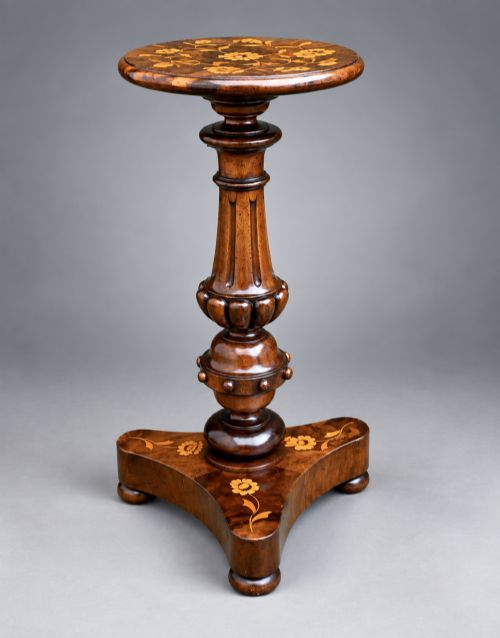
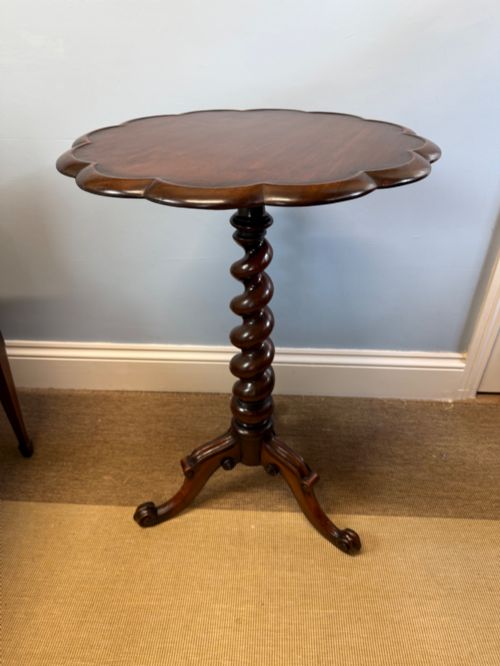
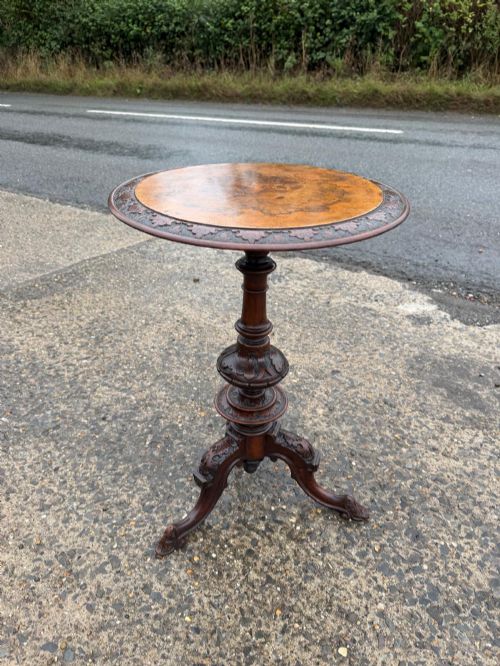
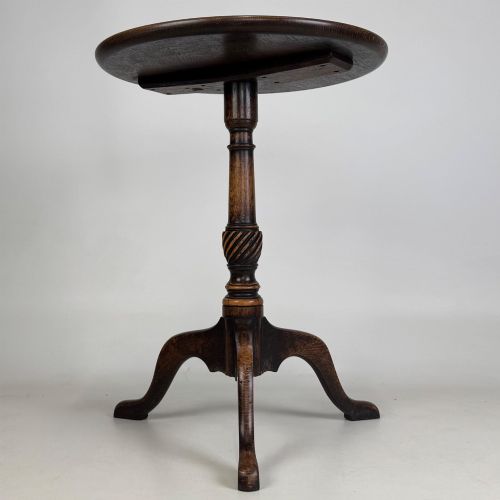
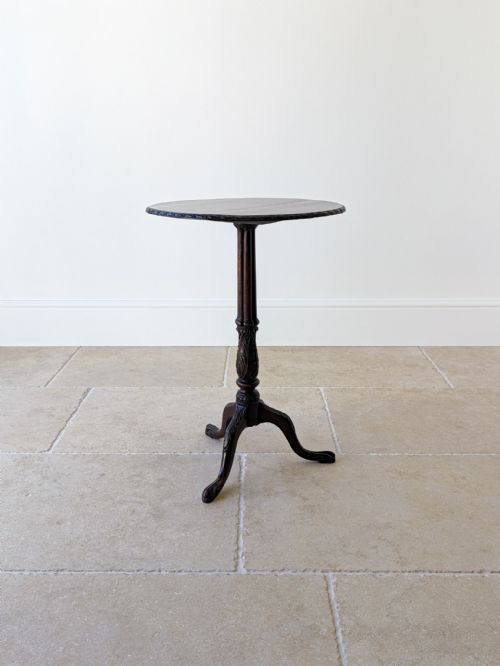
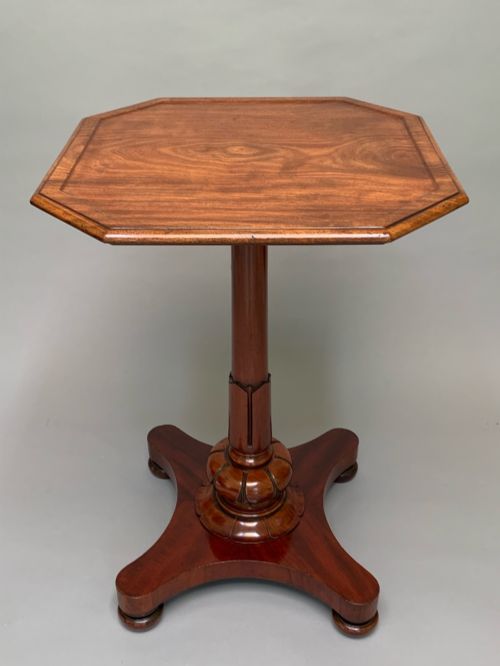
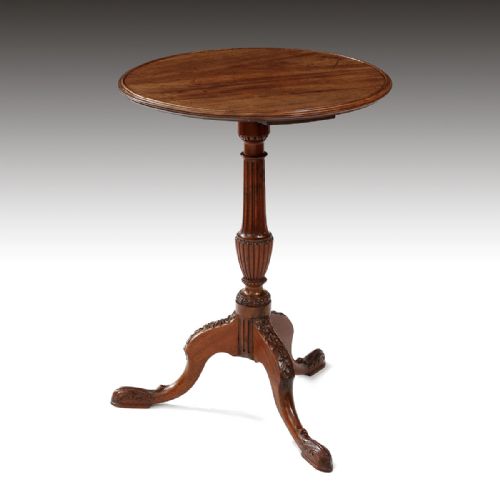
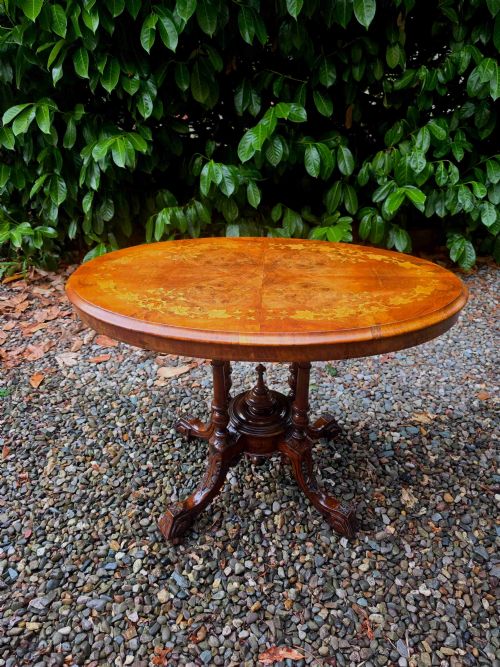
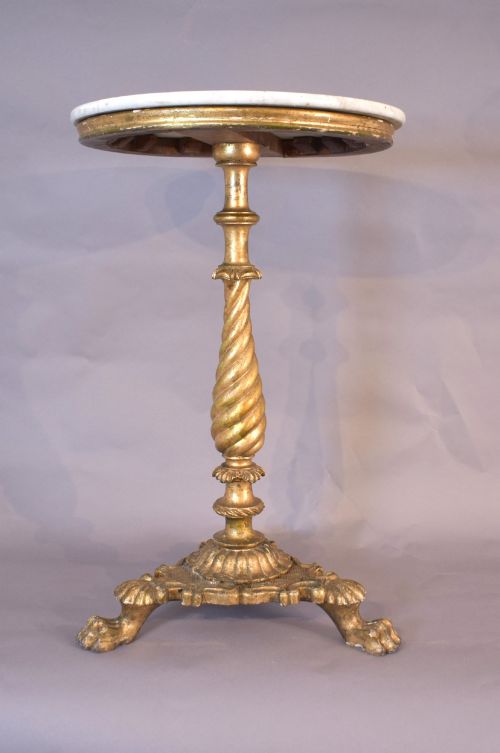
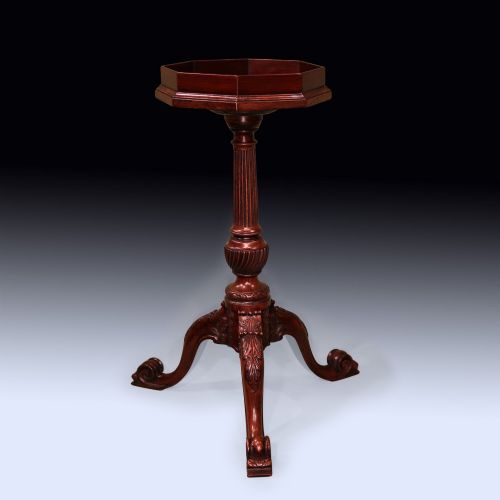
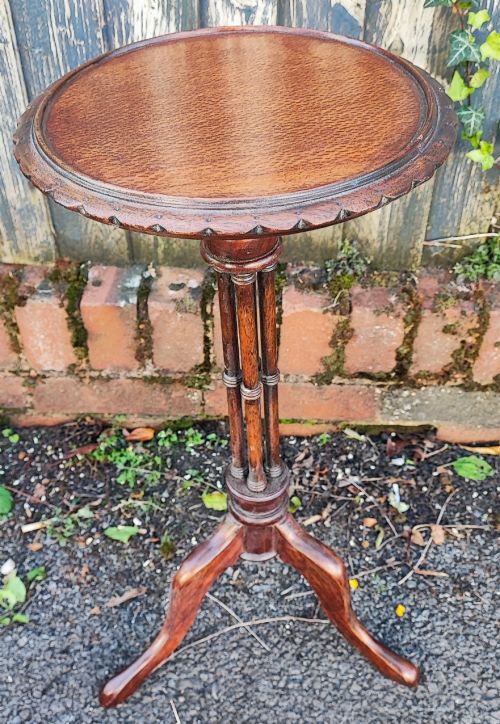
When you search for a carved column wine table, you find small occasional furniture designed for holding drinks, lights or decorative objects. Most examples here date from the nineteenth and eighteenth centuries, taking the form of tripod tables with turned or carved central stems supporting circular tops.
You meet Victorian and Georgian versions most frequently on this page, often constructed in mahogany, walnut or oak. These pieces range from simple tilt-top designs to elaborate specimens featuring inlaid veneers, marquetry or spiral fluted stems.
How they were made
Cabinet makers utilised solid hardwoods such as mahogany, oak and walnut for the structural frames and turned pillars, frequently employing dense timbers like rosewood or padouk for finer examples. Tops often display decorative veneers including burr walnut, burr birch, burr maple or intricate boxwood stringing and parquetry.
Traditional joinery methods governed the construction, connecting the circular top to the central column via tilt-top mechanisms or fixed blocks, anchored below by three splayed legs forming a tripod base.
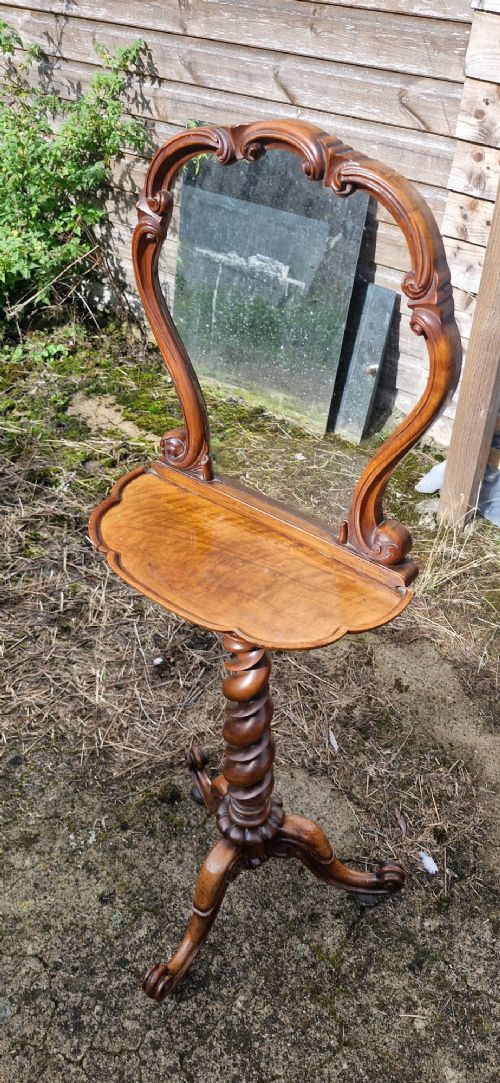
Several tables double as tea caddies or glass stands, proving that nineteenth-century hosts loved multitasking furniture just as much as we do.
What varies in quality
The refinement of the carving on the central column and the choice of timber figure set individual pieces apart. Superior examples display crisp hand-carved detail on the pillar and legs, alongside carefully selected veneers with rich grain patterns.
Proportion and stability also distinguish the range, as well-balanced tripod bases and precise joinery indicate the skill of the original workshop.
Gillow
The Carved Column Wine Table Glossary
- Tripod table
- A small freestanding table supported by a central pillar resting on three legs. This construction keeps the table stable on uneven floors.
- Tilt-top
- A hinged table top that folds vertically when not in use. This mechanism allowed the furniture to stand flat against a wall to save space.
- Marquetry
- Decorative patterns formed by fitting together small pieces of veneered wood. Craftsmen used contrasting timbers to create elaborate pictorial designs on the table surface.
- Candlestand
- A small eighteenth-century table originally intended to hold a candle or lamp. These precursors share the slender column and compact top characteristic of wine tables.
- Teapoy
- A small box or table used for storing and serving tea. Nineteenth-century examples often combine this function with a pedestal lamp table form.
Carved Column Wine Table: Frequently Asked Questions
What is a carved column wine table used for?
These pieces serve as versatile small surfaces suited for holding drinks, small lamps or decorative items beside a chair or in a corner.
Their compact footprint allows them to fit easily into smaller spaces where a full-sized table would prove impractical.
How do I tell Victorian from Georgian examples?
Georgian tables often display restrained classical proportions and fine timber selection, reflecting eighteenth-century design ideals.
Victorian pieces frequently introduce heavier turned pillars, elaborate carving, or decorative veneers such as burr walnut and marquetry inlay.
Where should I place one in a room?
A wine table fits naturally beside a sofa, armchair or reading seat to provide a convenient surface for a cup or glass.
They also work effectively in empty hallway corners or beside beds as compact lamp tables.