
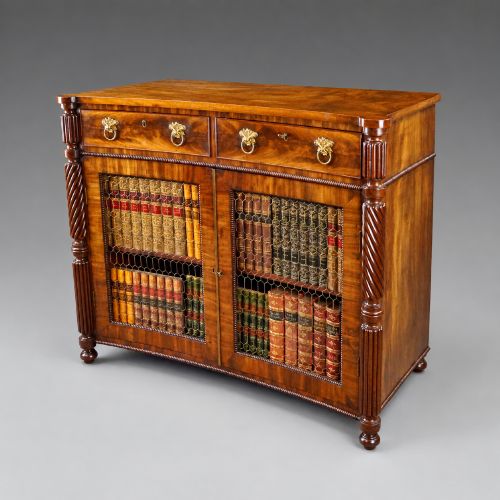
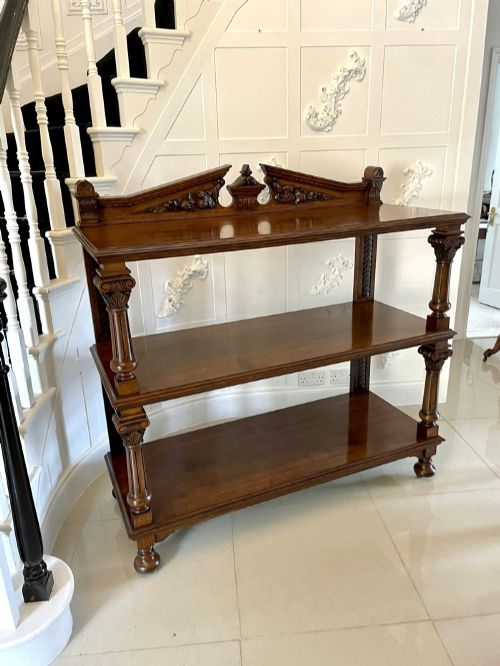
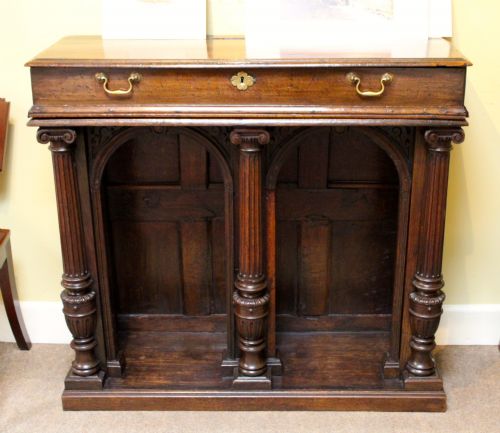


Carved Column Sideboard
These carved column sideboard pieces bring solid timber presence and architectural form to a room, offering sturdy storage for dining rooms and hallways.
Carved Column Sideboard
When you search for a carved column sideboard, you encounter an array of heavy timber items spanning several centuries and regional British and European workshops. The selection on this page ranges from Georgian and Regency serving tables to Victorian chiffoniers, side cabinets, and dumbwaiters.
Most items you meet here utilise rich hardwoods like mahogany, oak, and burr walnut, often featuring distinct architectural columns or pedestals. Forms vary from concave side cabinets and credenzas to two-tier console tables and two-part display cabinets.
While the label describes a sideboard, the listings show that makers produced many related serving and storage forms with similar architectural columns. You will find pieces dating from the eighteenth century through to the late nineteenth century.
Materials and construction
Cabinet makers built these pieces using solid timbers alongside decorative veneers such as flame mahogany, burr walnut, and amboyna. These woods provided durable surfaces that could support heavy carving and structural columns.
Joinery techniques combined traditional framing with applied architectural elements like brass details, glass doors, and fabric linings. Carved columns and pedestals were shaped directly from dense woods such as mahogany and oak.
Cabinet makers working across these centuries utilised solid mahogany, oak, cedar, and exotic veneers like amboyna.
Distinctions in quality
The standard of a piece rests in the crispness of the column carving and the choice of timber figure, such as flame mahogany or burr walnut veneers. Higher quality items demonstrate precise joinery in structural elements like pedestals and doors.
Makers who followed grand designs integrated finer secondary timbers and subtle brass or glass additions. The integration of solid mahogany or dense oak provides a structural weight absent in simpler utilitarian items.
Gillows
The Carved Column Sideboard Glossary
- Chiffonier
- A small sideboard or cabinet featuring shelves or cupboards, popular during the Regency and Victorian periods. These often include mirrored backs or brass details.
- Credenza
- A sideboard or buffet table, frequently associated with nineteenth-century pieces decorated in burr walnut and amboyna. They typically stand low to the floor.
- Dumbwaiter
- A tiered serving table used in dining rooms for holding dishes and silverware. The evidence shows examples built in carved oak during the late nineteenth century.
- Serving Table
- A long table designed for the preparation and presentation of food in formal dining rooms. Georgian and Regency makers produced these in solid and veneered mahogany.
- Flame Mahogany Veneer
- A thin slice of mahogany timber cut to reveal a characteristic flamed grain pattern. It was applied to the primary surfaces of superior cabinets and sideboards.
Carved Column Sideboard: Frequently Asked Questions
What is a carved column sideboard?
It is a heavy timber storage and serving piece defined by architectural column supports. The listings show forms ranging from serving tables to chiffoniers.
These items were historically placed in dining rooms and halls to store tableware and serve food.
How do I date these pieces?
Dating relies on timber choices, construction methods, and stylistic details spanning the eighteenth and nineteenth centuries. Georgian and Regency pieces show different proportions compared to Victorian revivals.
Examining the secondary woods and veneer types helps clarify the period of manufacture.
Where were these pieces used?
Original owners placed them in dining rooms, libraries, and grand hallways for storage and display. They held ceramics, glass, and silverware.
Today, they function well in similar domestic spaces as focal storage units.
What woods should I expect?
The evidence records mahogany, oak, walnut, and cedar as primary construction materials. Decorative surfaces frequently utilise flame mahogany veneer, burr walnut, and amboyna.
Brass and glass elements also appear across several items.