

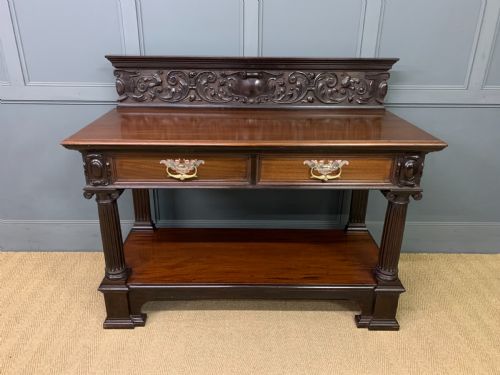
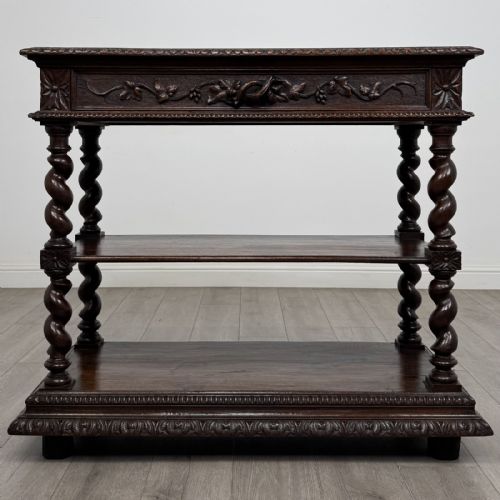
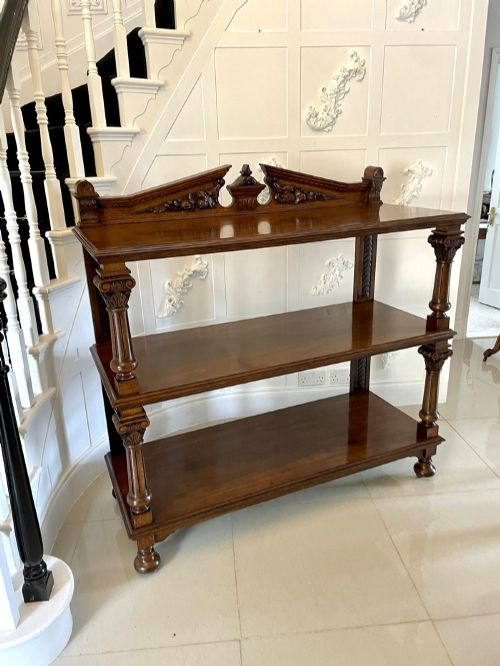
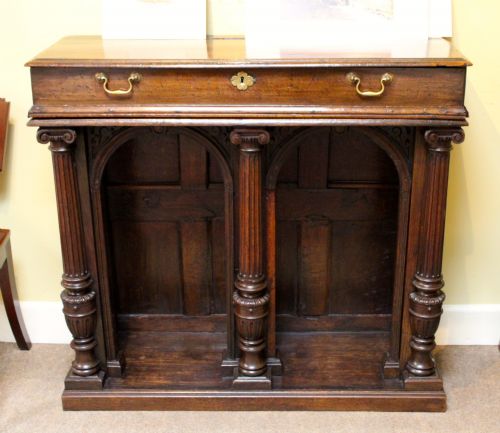


Carved Column Server Table
These carved column server table pieces bring solid oak, mahogany, and walnut construction into dining rooms and halls.
Carved Column Server Table
A carved column server table combines utility and display, taking forms such as serving tables, console tables, dumbwaiters, side tables, library tables, and buffets. Buyers searching for a carved column server table will frequently encounter nineteenth-century pieces alongside examples from the eighteenth and seventeenth centuries. The selection spans distinct design movements including Victorian, Georgian, William IV, Regency, French Renaissance, and French Country styles.
The primary forms on this page include serving tables and console tables, supported by multi-tiered dumbwaiters and robust sideboards. Oak and mahogany dominate the material record, often paired with brass fittings or ebonised wood details. Pieces range from straightforward utilitarian servers to exhibition quality library tables and important pairs.
How they were made
Cabinet makers utilised dense hardwoods such as oak, mahogany, walnut, and rosewood, frequently applying flame mahogany veneer to primary surfaces. Structural elements often incorporate ebonised wood and parcel gilt accents to highlight carved details.
Makers integrated brass hardware for functional and decorative components, while structural joints relied on traditional carpentry techniques appropriate to periods ranging from the seventeenth to the nineteenth century.
Carved Column Server Table Retail Price Guide 2026
Typical asking prices for carved column server table among the pieces listed under this phrase on Sellingantiques today, from the lower quarter to the upper quarter. They describe what is for sale here now, not the wider market.
Listings span four centuries of cabinet making, featuring oak, mahogany, walnut, and rosewood across Georgian, Victorian, and Regency periods.
What varies in quality
Quality rests in the depth and crispness of the carved column elements and the selection of timber, such as figured flame mahogany veneer. Superior examples display careful grain matching and integration of brass mounts.
The distinction between standard utility items and exhibition quality pieces lies in the ambition of the design and the precision of the joinery across periods from the seventeenth century onward.
The Carved Column Server Table Glossary
- Dumbwaiter
- A multi-tiered serving piece designed to hold dishes or books without the aid of servants. These items feature stacked circular or rectangular shelves supported by central turned columns.
- Console table
- A wall-mounted or freestanding table designed to stand against a flat surface, often featuring prominent front legs or columns. They serve decorative and display functions in hallways and reception rooms.
- Flame mahogany veneer
- A thin slice of mahogany timber cut from the point where a branch joins the main trunk, showing a distinctive flickering flame pattern. Cabinet makers applied this to prominent surfaces for visual impact.
Carved Column Server Table: Frequently Asked Questions
What is a carved column server table used for?
These tables provide sturdy surfaces for serving food, displaying silver, or holding books in dining rooms and libraries.
Multi-tiered versions like dumbwaiters offer tiered storage for multiple courses or collections.
How do I identify a Georgian serving table?
Georgian pieces typically utilise solid mahogany or oak with restrained classical carving and substantial proportions.
Look for architectural column supports and traditional joinery methods characteristic of the eighteenth century.
What is the difference between a console and a server?
Console tables are primarily designed to stand flush against a wall for display purposes in entrance halls.
Servers and buffets are engineered specifically for dining room utility, holding heavy tableware and serving dishes.
How should I care for an antique oak or mahogany table?
Keep wooden surfaces away from direct heat sources and strong sunlight to prevent the timber and veneer from splitting.
Apply traditional beeswax periodically to nourish the grain and maintain a natural protective sheen.