

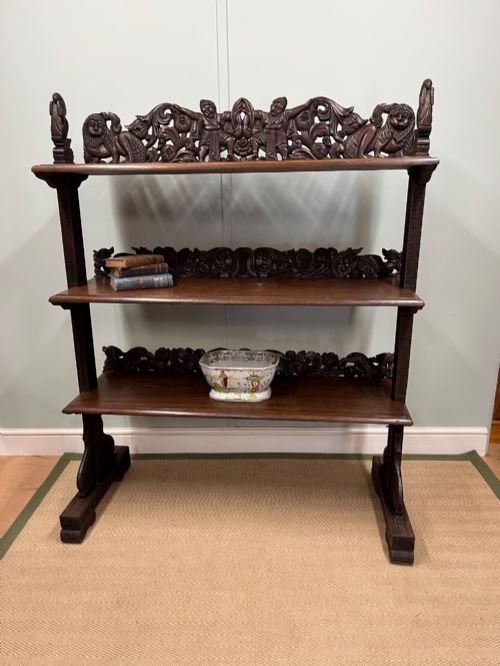


Antique Open Tier Sideboard
These antique open tier sideboard pieces offer generous display and serving surfaces, bringing robust timber construction and historical character to a dining room or hall.
Antique Open Tier Sideboard
An antique open tier sideboard combines serving surfaces with accessible storage across multiple levels, functioning as a practical focal point in period dining spaces. Buyers searching this phrase encounter tiered serving tables, dumbwaiters, and credenzas originating from the nineteenth century.
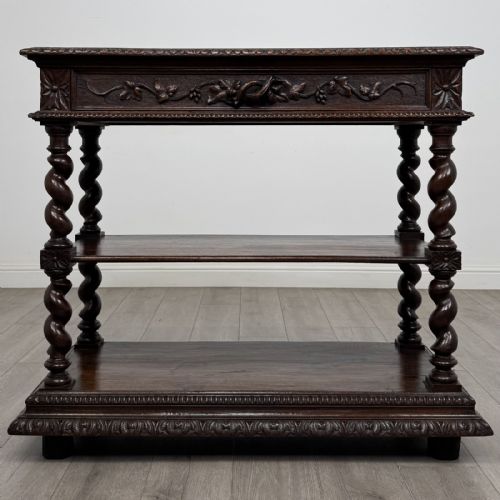
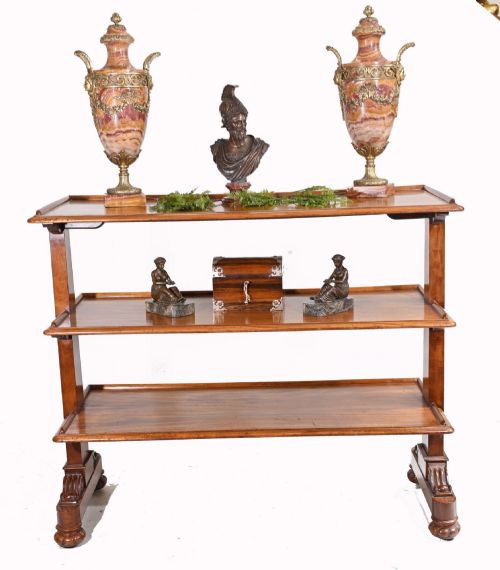
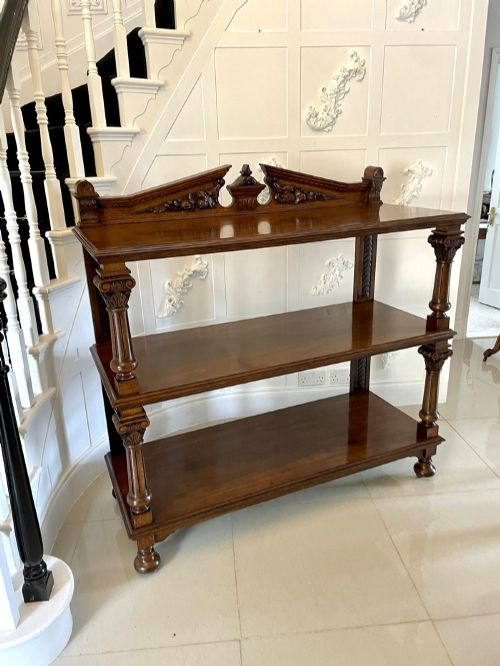
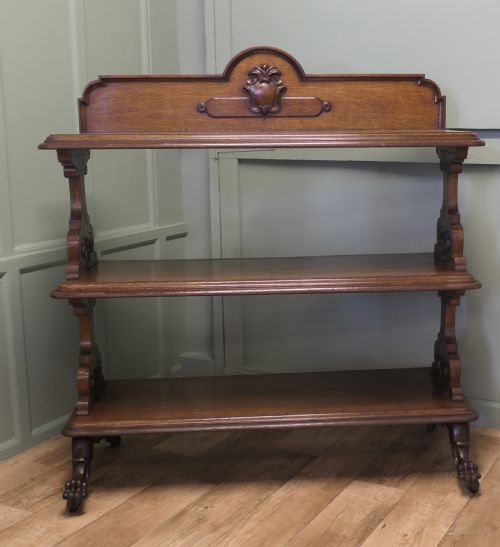
The pieces listed on this page span Victorian and earlier revival styles, predominantly featuring open shelves supported by turned columns or carved pillars. Oak, mahogany, walnut, and teak form the primary structure of these multi-tiered servers.
How they were made
Cabinetmakers constructed these sideboards using dense hardwoods such as oak, mahogany, and walnut, often accentuating drawer fronts and tiers with burr walnut veneers. Timber frames were jointed by hand, supporting tiered shelving systems above cupboards or serving surfaces.
Carving and turning shaped the structural supports, with decorative elements ranging from Gothic revival motifs to French Renaissance revival panels. Castors were frequently fitted beneath heavy timber bases to allow movement across large rooms.
Antique Open Tier Sideboard Retail Price Guide 2026
Typical asking prices for open tier sideboard among the pieces listed under this phrase on Sellingantiques today, from the lower quarter to the upper quarter. They describe what is for sale here now, not the wider market.
What varies in quality
Quality in these multi-tiered servers rests upon the depth of the timber carving and the crispness of the turned pillars supporting the open shelves. Dense burr walnut veneers and well-figured mahogany display superior selection by the original cabinetmaker.
The integrity of the structural joints and the presence of original brass castors distinguish finer examples from standard production pieces of the period. Heavier mouldings and balanced proportions across multiple tiers indicate a higher grade of craftsmanship.
The Antique Open Tier Sideboard Glossary
- Dumbwaiter
- A multi-tiered serving piece featuring graduated shelves for holding dishes and glassware during meals. These items typically stand on sturdy feet or castors.
- Credenza
- A low dining room cabinet used for serving food and displaying decorative objects, sometimes featuring glass doors or open shelving sections above. This form developed significantly during the Victorian era.
- Chiffonier
- A compact sideboard or cabinet equipped with shelving above the main surface for displaying small items. The term often describes Victorian variations with graduated tiers.
- Burr walnut
- A highly figured timber veneer prized for its swirling grain patterns, frequently applied to prominent surfaces of nineteenth-century cabinets. It requires skilled cutting and application.
- Gothic Revival
- An architectural and decorative style popular in the nineteenth century, characterised by pointed arches, heavy tracery, and carved oak or walnut timber.
Antique Open Tier Sideboard: Frequently Asked Questions
What is an open tier sideboard used for?
These pieces serve primarily as functional serving stations and display furniture within a dining room or hallway. The multiple tiers allow for the arrangement of silver, glassware, and serving dishes during meals.
Beyond dining use, the open shelves provide practical space for books and decorative objects in a drawing room. Their robust timber construction ensures they handle daily weight comfortably.
How do I date a Victorian sideboard?
Dating relies upon examining the timber species, construction methods, and stylistic revival influences present in the carving. Mid-nineteenth century pieces often utilise dense mahogany or burr walnut with hand-cut joinery.
Later Victorian examples may incorporate heavier Gothic or Renaissance revival ornamentation alongside factory-milled components. Hardware such as original brass castors also helps establish the era of production.
Are these pieces suitable for modern homes?
The generous surface area and open shelving make these items practical additions to contemporary dining spaces and large kitchens. They offer functional storage without dominating a room entirely.
Placing them against a sturdy wall provides secure placement for heavy ceramics and glassware collections. Their rich timber tones complement both traditional interiors and modern architectural settings.
What woods were used for these sideboards?
Cabinetmakers relied on durable hardwoods including oak, mahogany, walnut, and teak to construct the heavy framework and shelves. Burr walnut veneers were frequently selected to create decorative panels with distinct grain patterns.
Pine also appears in regional vernacular pieces intended for domestic utility rather than formal display. Each timber was chosen for its strength and ability to support multi-tiered weight.