

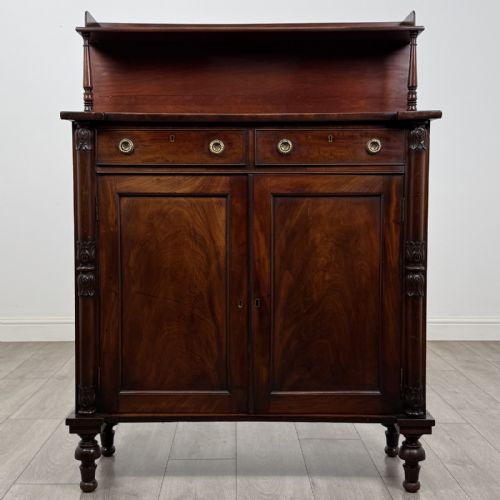
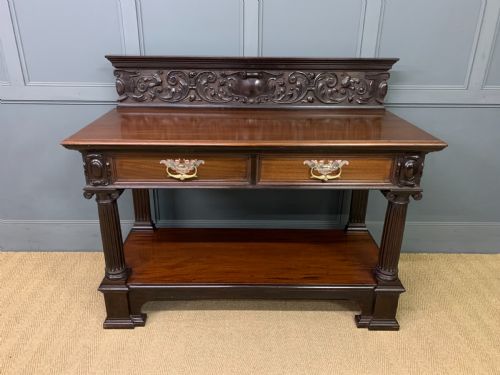
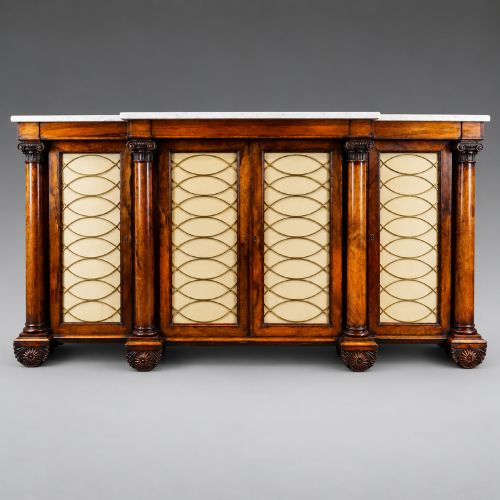
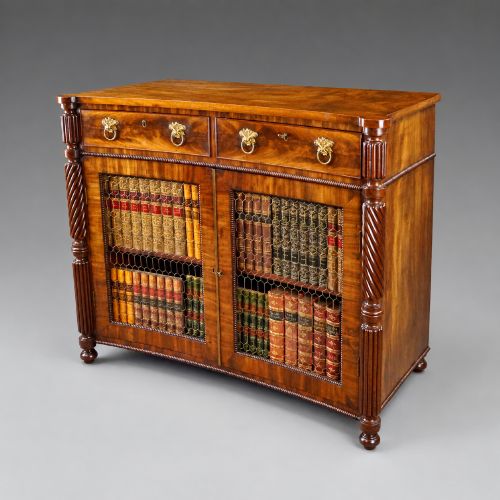
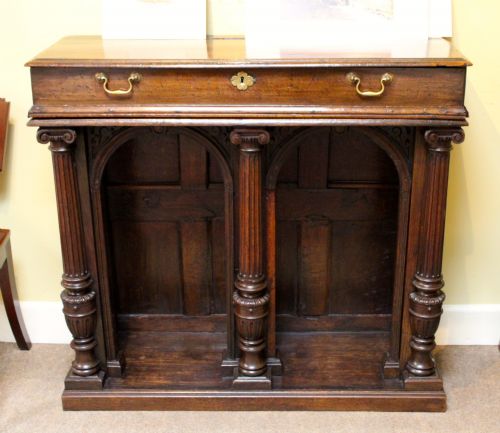


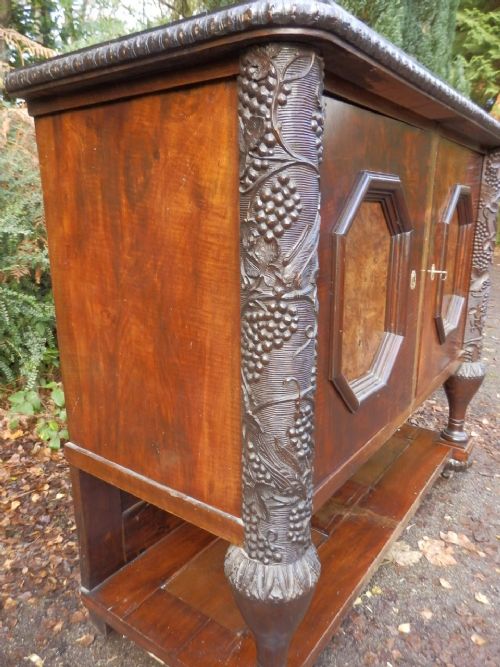


Carved Column Credenza
These carved column credenza selections offer substantial timber storage and display surfaces, drawing collectors seeking period presence and architectural detail.
Carved Column Credenza
When you search for a carved column credenza, you encounter a variety of substantial storage furniture shaped by centuries of cabinet-making. The selection spans the seventeenth, eighteenth, and nineteenth centuries, taking forms such as side cabinets, chiffoniers, serving tables, and bookcases.
The pieces originating from these periods reflect distinct regional tastes, incorporating styles from Regency and Victorian eras to French Renaissance and Italian craftsmanship. Mahogany, oak, walnut, burr walnut, and amboyna provide the primary structural and decorative timbers for these forms.
How they were made
Cabinet-makers relied on dense hardwoods like mahogany and oak to build the structural carcases of these cabinets and sideboards. Burr walnut and amboyna veneers frequently provided decorative surfaces across nineteenth-century examples.
Makers integrated brass hardware and glass panels to complement timber construction, while carved columns and architectural details required precise hand-chiselling by skilled artisans.
Carved Column Credenza Retail Price Guide 2026
Typical asking prices for carved column credenza among the pieces listed under this phrase on Sellingantiques today, from the lower quarter to the upper quarter. They describe what is for sale here now, not the wider market.
Current listings span the seventeenth, eighteenth, and nineteenth centuries, featuring materials such as mahogany, oak, burr walnut, amboyna, and brass.
What varies in quality
Quality rests upon the selection of timber veneers, such as figured burr walnut or amboyna, matched against solid mahogany or oak framing. Superior execution appears in crispness of carved columns and the integration of brass and glass elements.
The sophistication of regional design, whether French Renaissance, Regency, or Georgian, dictates the architectural ambition of the piece and separates standard utility cabinets from masterworks.
The Carved Column Credenza Glossary
- Credenza
- A side cabinet or sideboard used for serving or display. These pieces often feature timber doors enclosing shelving.
- Chiffonier
- A low sideboard or cabinet developed in the nineteenth century. They frequently include mirrored backs or glazed doors.
- Gonçalo-Alvez
- A dense tropical hardwood with striking dark striping. Cabinet-makers utilised this timber for Regency and nineteenth-century luxury furniture.
Carved Column Credenza: Frequently Asked Questions
What rooms suit a credenza?
These large timber cabinets function effectively in dining rooms or entrance halls as serving surfaces and storage units. Their architectural presence anchors a room while concealing household items behind wooden doors.
Selecting a piece depends on matching the timber, such as mahogany or burr walnut, with existing room dimensions and lighting.
How do I identify periods?
Distinguishing periods involves examining timber choices, structural forms, and decorative motifs like carved columns. Seventeenth-century French Renaissance serving tables differ markedly from Victorian burr walnut credenzas or Regency mahogany pieces.
Reference materials and listings help trace stylistic shifts from eighteenth-century Georgian proportions to nineteenth-century revival designs.
Are these pieces restored?
Condition varies across the selection, with some examples retaining unrestored surfaces and others showing nineteenth-century modifications. Descriptions indicate whether glass, brass, or timber elements remain entirely original to the period.
Reviewing specific details in each listing reveals the extent of past conservation work on the woodwork.
What woods were used?
Makers constructed these cabinets using structural timbers like oak, mahogany, and walnut. Decorative surfaces frequently incorporate burr walnut, amboyna, cedar, and exotic gonçalo-alvez veneers.
Brass fittings and glass panels appear alongside these primary woods across nineteenth-century and earlier examples.