
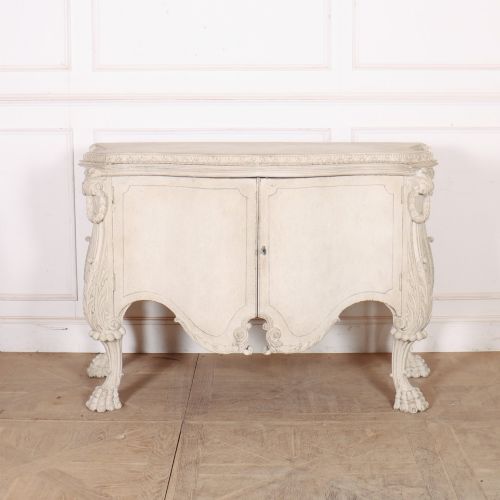
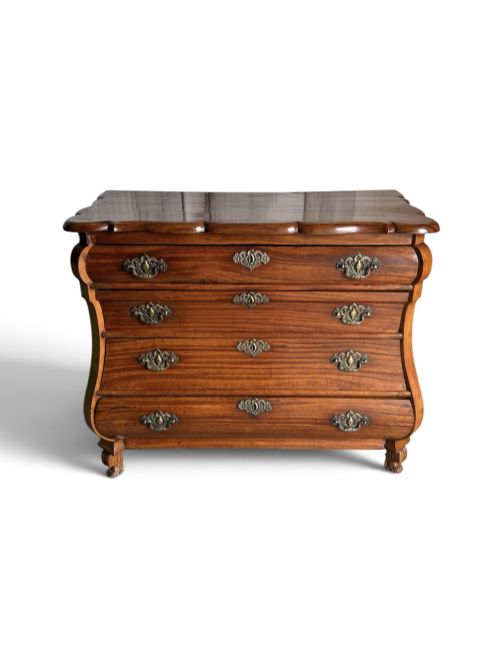
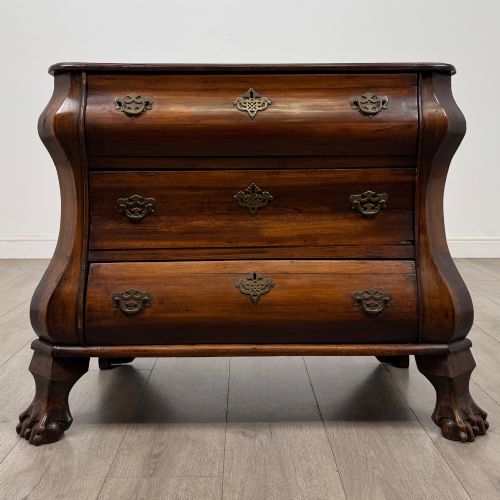


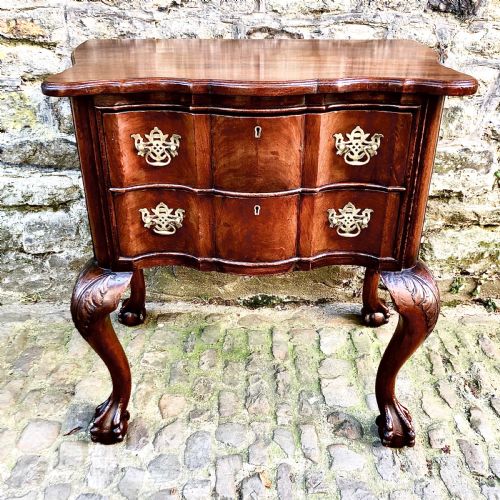

Carved Claw Commode
These carved claw commode items are substantial chests of drawers and cabinets shaped in rich hardwoods, offering both classic form and robust storage.
Carved Claw Commode
When you search for a carved claw commode, you encounter a selection of chests of drawers and side cabinets originating from various periods including the eighteenth century and the Edwardian era. These pieces frequently manifest styles such as Chippendale, Regency, and Dutch Baroque Revival, bringing distinct regional character to domestic interiors.
The objects listed on this page take the form of chests of drawers, side cabinets, and linen cupboards. Most examples utilise mahogany, satinwood, rosewood, or walnut, sometimes enhanced by painted wood or brass details.
The versions you are most likely to meet span the eighteenth and nineteenth centuries, often displaying serpentine or bombe profiles alongside prominent feet. They function primarily as storage furniture while serving as focal points in period rooms.
How they were made
Cabinet makers constructed these pieces using solid and veneered hardwoods such as mahogany, satinwood, rosewood, walnut, and stinkwood. Structural integrity relied on traditional joinery methods suited to the bombe and block front forms.
Metal components like brass hardware and fittings complemented the carved woodwork, particularly on drawers and doors. Surface finishes brought out the natural grain and deep colour of the timber.
Periods represented span from the eighteenth century through the Victorian era and up to the nineteen-twenties.
What varies in quality
The sophistication of the carving on the feet and structural mouldings dictates the distinction between standard items and superior examples. Artisans who executed intricate paw and claw details achieved a higher level of sculptural depth.
The choice of primary timber and veneer selection also influences the overall merit of the piece. Dense grain patterns in solid mahogany, satinwood, or rosewood elevate the visual impact.
The Carved Claw Commode Glossary
- Bombe
- A bulging, outward-curving chest or cabinet shape associated with Dutch and continental design. This swelling profile requires advanced woodworking skill.
- Serpentine
- A furniture front curved in a wave-like concave and convex pattern. It adds fluid movement to chests of drawers.
- Block front
- A cabinet front divided into three vertical sections, where the outer sections project forward and the central section is recessed. This technique creates strong architectural shadow lines.
- Chippendale
- A mid-eighteenth-century English style known for intricate carving and classical proportions. It frequently incorporates ornate foot details.
Carved Claw Commode: Frequently Asked Questions
Where were these pieces used?
These chests of drawers and side cabinets served primarily in bedrooms, parlours, and hallways for storing linens and personal possessions.
Their substantial storage capacity made them central fixtures in domestic spaces.
How do I date a chest?
Dating relies on identifying the prevailing style, such as Regency or Chippendale, combined with the choice of timber like satinwood or mahogany.
Construction methods and regional characteristics further help narrow down the period of manufacture.
How do I care for hardwoods?
Maintain these wooden surfaces by keeping them away from direct sunlight and sudden temperature fluctuations.
Regular dusting with a dry cloth preserves the finish of mahogany and walnut.