
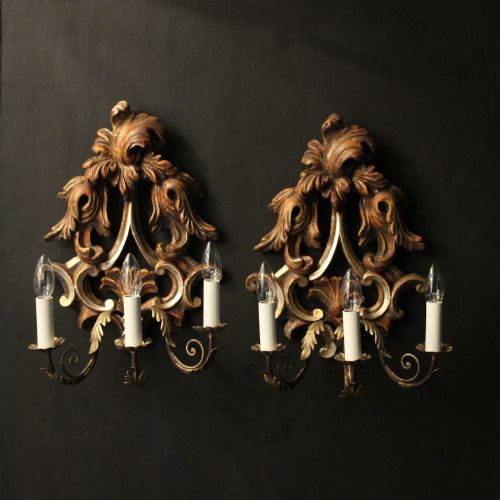


Carved Candle Bracket
These carved candle bracket pieces bring warmth to a room through traditional illumination, offering period charm for domestic interiors.
Carved Candle Bracket
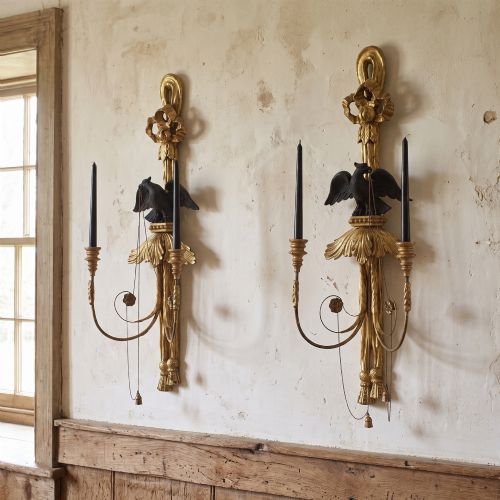
Examples on this page date from the seventeenth century through to the early twentieth century. Common forms encompass wall lights, sconces, and mirror-backed fixtures reflecting historical European designs.
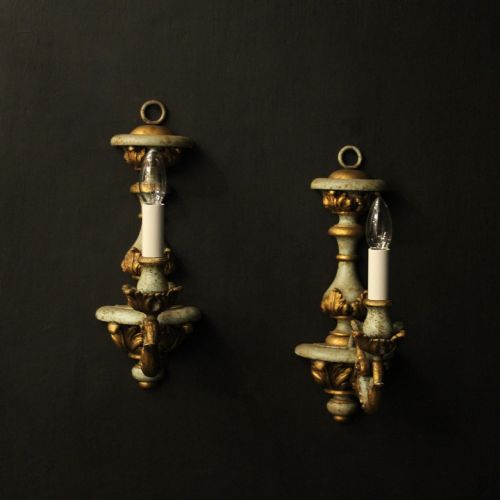
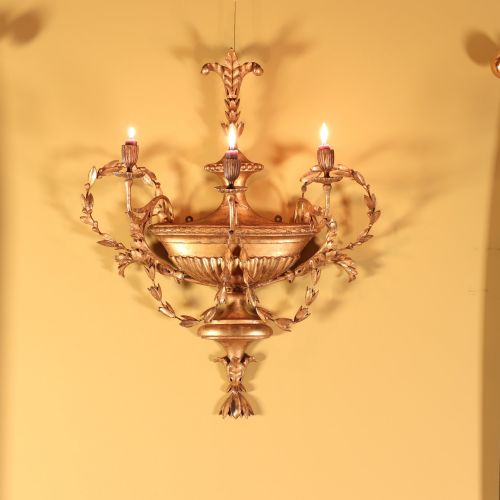
Regional origins span French and Italian workshops, alongside British interpretations. Pieces range from modest single-arm wooden brackets to large giltwood constructions featuring multiple branches.
How they were made
Wood serves as the primary substrate, shaped through detailed carving and finished with gesso. Giltwood and gold leaf applications provide a reflective surface that catches candle flame.
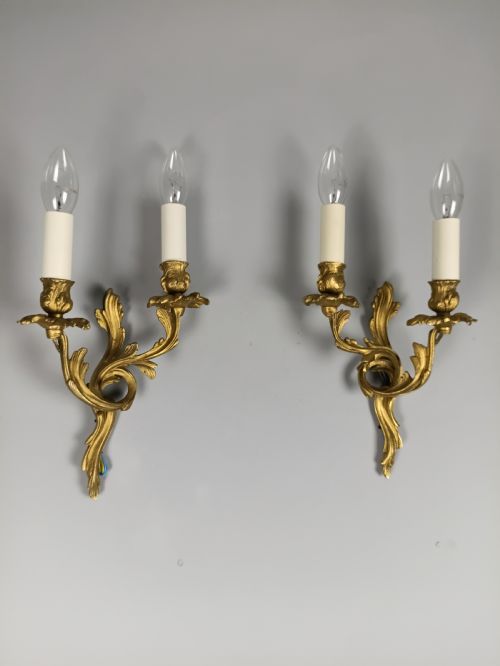
Metal components such as brass and gilt bronze appear frequently alongside carved wood elements. Polychrome painted finishes add colour to Italian and French specimens.
Construction techniques combine carpentry with surface gilding or polychrome decoration. Artisans shaped timber mounts to support protruding metal arms for candles.
Object classifications represented on this site comprise wall lights, wall sconces, wall lights and sconces, and wall mirrors.
What varies in quality
The crispness of the wood carving distinguishes different tiers of execution. Superior examples display deep relief work and refined detailing across acanthus leaves or figurative motifs.
Surface treatment dictates the visual impact of the bracket. Hand-applied gold leaf and well-preserved gesso layers demonstrate higher craftsmanship than simpler painted surfaces.
The Carved Candle Bracket Glossary
- Giltwood
- Wood that has been coated with gold leaf or a gold-coloured substance. This finish enhances the decorative presence of the bracket under candlelight.
- Gesso
- A plaster-like mixture applied to wood as a base for gilding or painting. It provides a smooth surface for intricate carved details.
- Sconce
- A wall-mounted lighting fixture designed to hold candles or lamps. Sconces project outward to distribute light across a room.
- Polychrome
- Decorated in several colours. This finish is frequently observed on Italian and French wooden wall lights.
- Pricket
- A sharp spike on a candleholder designed to secure a candle. This form appears on older wooden candle lights.
Carved Candle Bracket: Frequently Asked Questions
How do I hang a wall sconce securely?
Wall brackets require fixings matched to the weight of the timber and metal components. Heavier giltwood and gesso pieces need direct anchorage into wall studs or appropriate masonry anchors.
Positioning height depends on room proportions and furniture placement. Most wall lights sit at eye level to ensure balanced illumination and visual proportion.
Are these brackets wired for electricity?
Many historical wall lights retain their original configuration for candles or have been adapted for electric bulbs over time. Conversions vary between fixtures, so inspecting the internal fitting is necessary.
Professional rewiring allows older brackets to function safely with modern electrical circuits. Consultation with a qualified electrician ensures compliance with current standards.
How do I clean gilded wood?
Giltwood surfaces require gentle dusting with a soft brush to remove accumulated particles. Moisture and abrasive cleaning agents damage fragile gold leaf and underlying gesso.
Professional conservation methods preserve the original finish without stripping historical patination. Regular dry maintenance prevents the need for chemical intervention.
What styles are common in these brackets?
Design influences reflect historical European movements including French Rococo, Italian Baroque, and Louis XIV styles. These aesthetics emphasise elaborate curves, scrolling foliage, and symmetrical arrangements.
Later pieces often adopt Gothic Revival or Neoclassical motifs. Regional variations distinguish French gilt bronze examples from Florentine giltwood work.