
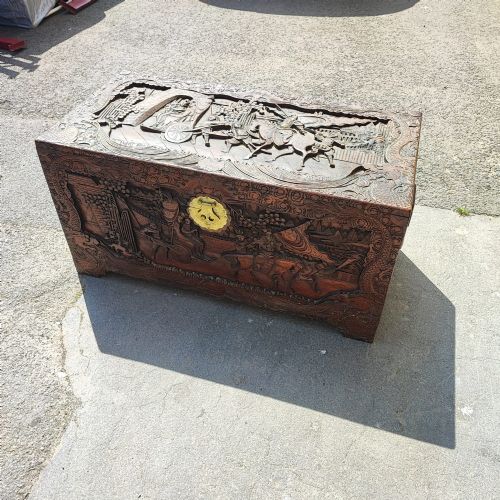


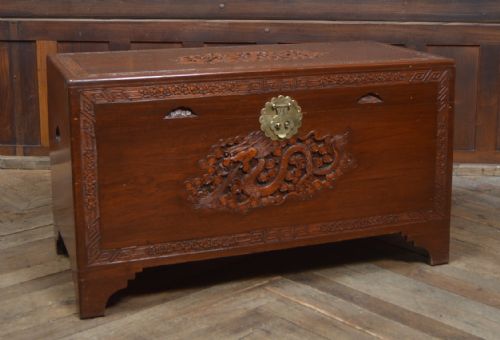
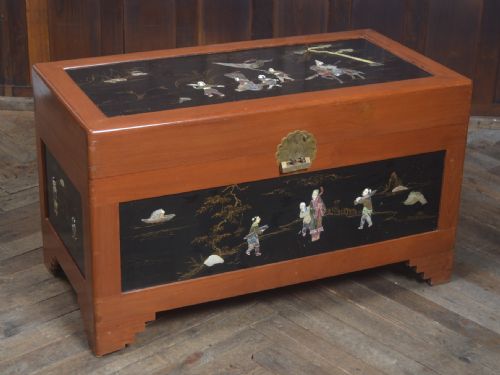
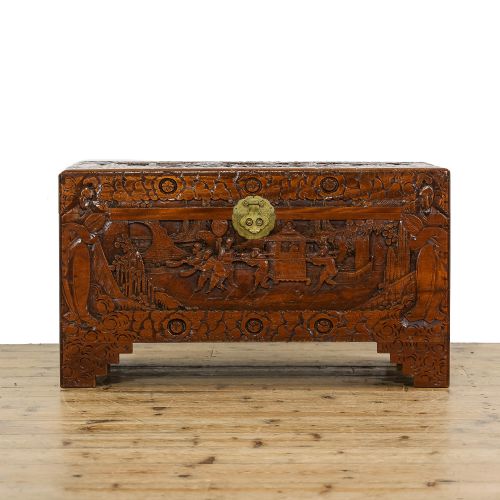

Carved Camphor Storage Chest
These heavy timber boxes solve household storage while filling a room with their distinct aromatic scent.
Carved Camphor Storage Chest
A carved camphor storage chest is a sturdy receptacle designed to protect linens, garments, and personal effects from insects and dampness through the natural properties of the wood. The forms seen here include blanket boxes, storage trunks, coffers, and occasional luggage chests intended for travel.
Most examples originate from the nineteenth century and the early twentieth century, reflecting trade and colonial links. You will frequently encounter Chinese export pieces alongside traditional Chinese and Anglo-Indian colonial variants.
These items function equally well at the foot of a bed or as a low coffee table in a modern living space. Their robust construction allows them to endure daily domestic use while maintaining a distinct visual presence.
Materials and construction
The primary material is camphor wood, selected for its natural insect-repellent oils and distinctive grain pattern. Artisans frequently paired this fragrant timber with contrasting details in ebony, oak, or lacquer.
Hardware plays a structural and decorative role, featuring brass fittings, bound edges, and recessed handles designed for transport. Relief carving covers the exterior surfaces with traditional motifs, executed with hand chisels and gouges.
Listings feature camphor wood alongside brass, ebony, oak, and mother of pearl across the nineteenth and early twentieth centuries.
Distinctions in quality
Quality rests in the depth and crispness of the exterior carving, where finer pieces display intricate, undercut relief rather than shallow surface incisions. The thickness of the timber planks and the tightness of the joinery determine the longevity of the trunk.
Hardware selection also separates standard utility boxes from superior commissions. Heavy brass strapping, substantial lock plates, and flush-fitting lids indicate a higher grade of production intended for export markets.
The Carved Camphor Storage Chest Glossary
- Camphor wood
- A durable, aromatic timber native to Asia, prized for its pale golden hue and natural insect-repellent properties. The distinct scent remains active for generations.
- Chinese export
- Goods manufactured in China specifically for Western markets during the eighteenth and nineteenth centuries, often combining local materials with European forms.
- Coffer
- A chest or box used for holding valuables, distinguished by a heavy lid and robust construction. These often double as low tables in contemporary interiors.
- Brass-bound
- A method of reinforcing box corners and edges with brass strips and corner pieces to withstand the rigours of maritime travel.
Carved Camphor Storage Chest: Frequently Asked Questions
How do I remove the camphor scent?
The natural aroma is inherent to the timber and protects stored textiles from moths and silverfish. Airing the interior outdoors in shade for a few days usually softens the intensity without eliminating the protective benefit.
Placing absorbent materials inside can also draw out residual odours if you prefer a neutral interior for modern clothing.
Can I use a chest as a coffee table?
Many people repurpose these trunks in living rooms because their flat lids and sturdy construction suit casual surface use. Placing books or a tray on top protects the timber finish from direct heat or moisture.
Ensure the height matches your seating before committing the piece to daily table duty in a busy room.
How do I date a camphor trunk?
Dating relies on examining the construction marks, brass hardware style, and the depth of the carving. Nineteenth-century examples often feature hand-cut dovetails and heavier brass bindings compared to later twentieth-century iterations.
The specific mix of secondary woods, such as oak or ebony, also provides clues to the regional workshop origin.
Are these chests heavy to move?
Solid camphor wood is dense and substantial, meaning larger trunks require two people to lift safely. Side carrying handles, when fitted, help with positioning but are primarily designed for maritime transit rather than daily rearranging.
Adding felt pads beneath the base protects wooden floors when sliding the box into place.