

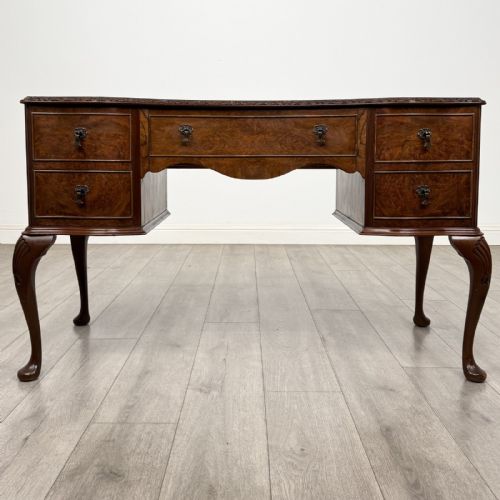
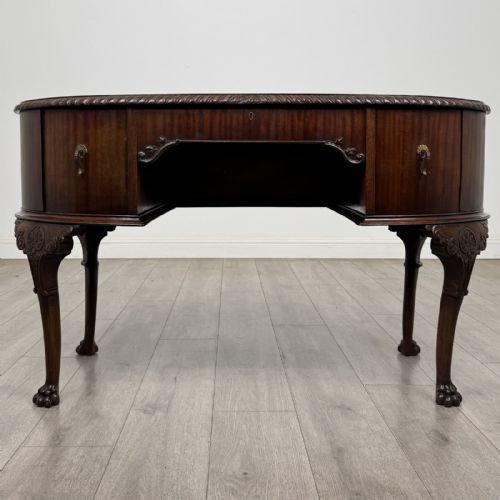
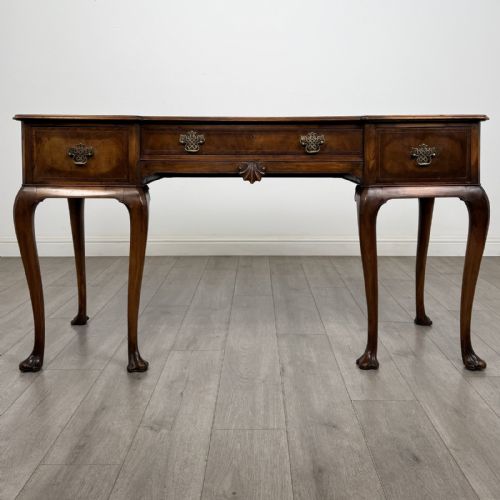
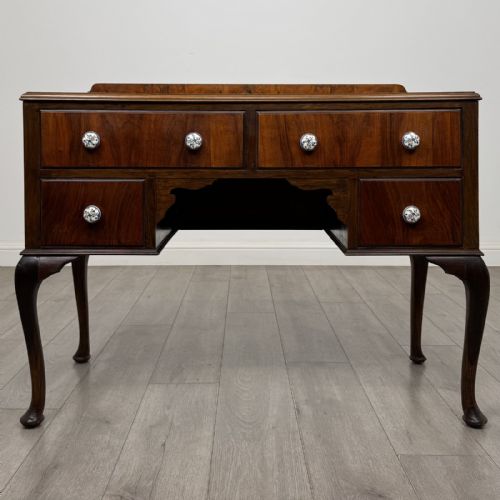
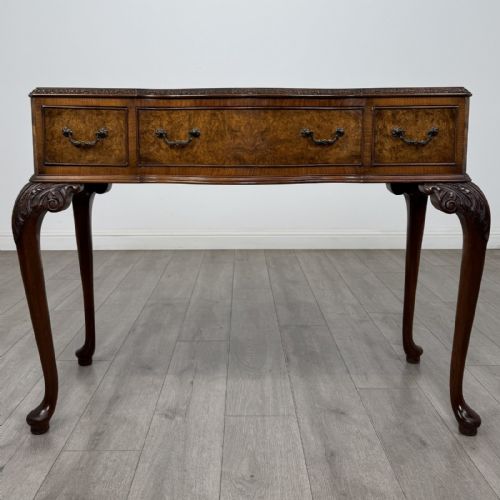
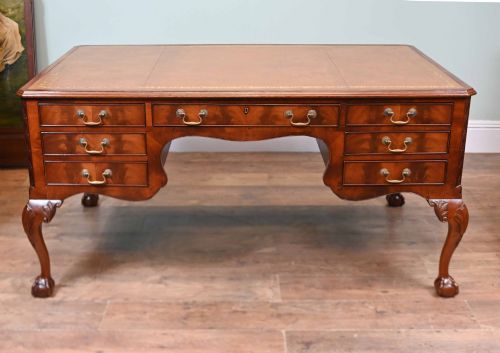
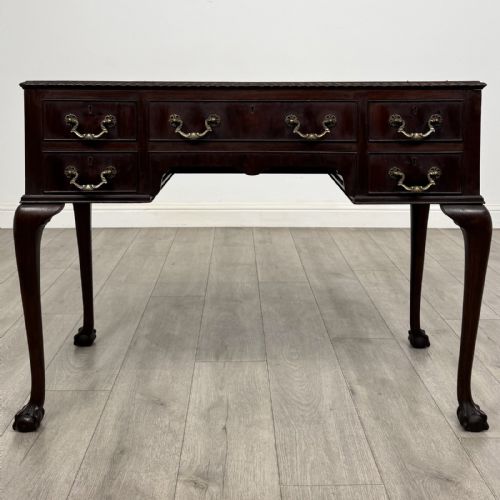
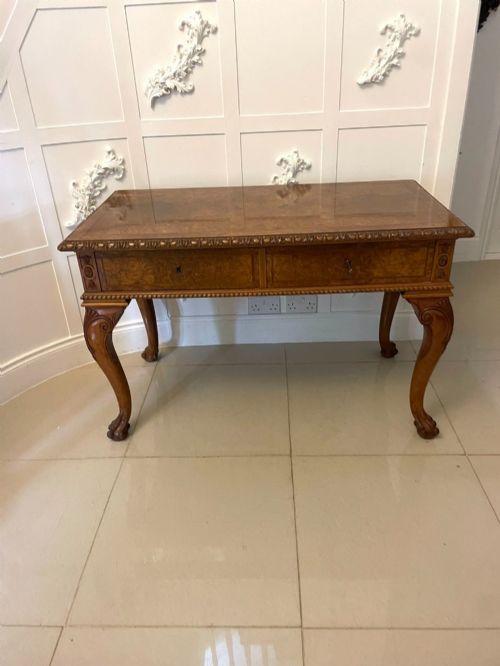
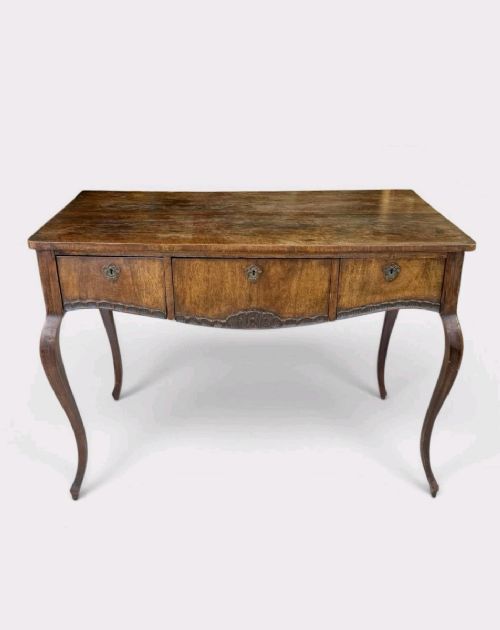
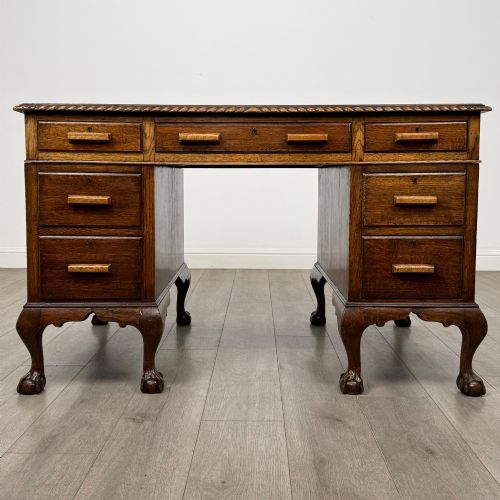
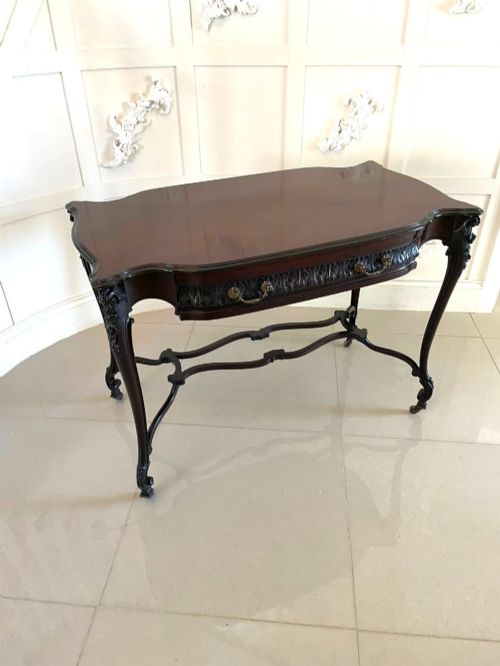

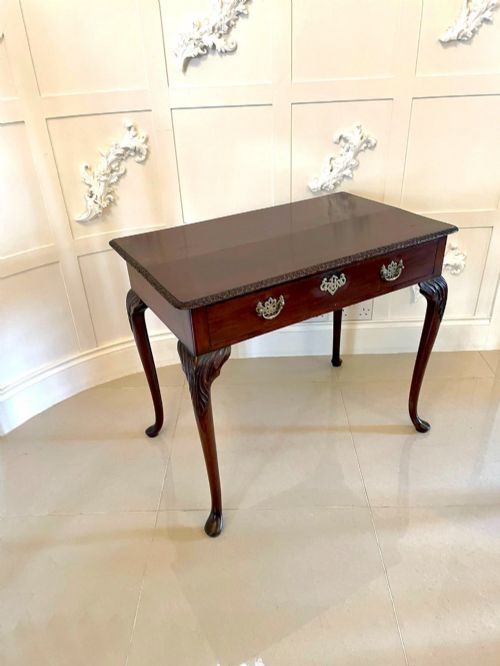
Carved Cabriole Writing Table
A carved cabriole writing table brings elegance and period craft to a room, offering a surface designed for correspondence.
Carved Cabriole Writing Table
A carved cabriole writing table combines the distinctive curved leg form with a practical surface for daily writing and storage.
Examples on this page span from the eighteenth century through to the early twentieth century, encompassing revival styles like Queen Anne and Chippendale alongside Victorian and Edwardian periods.
Materials and construction
Cabinet makers utilised dense hardwoods such as mahogany and oak, often applying figured burr walnut veneers to create rich surface patterns.
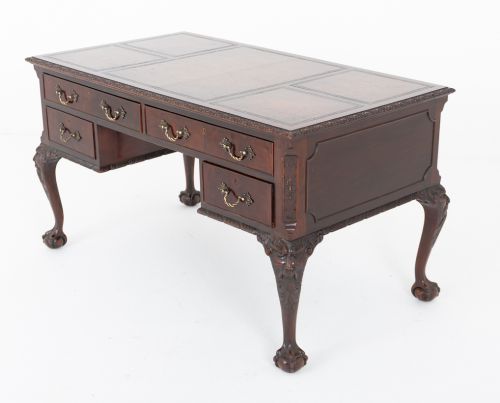
Writing surfaces frequently incorporate inset leather panels, sometimes tooled in gold, providing a durable and traditional writing medium.
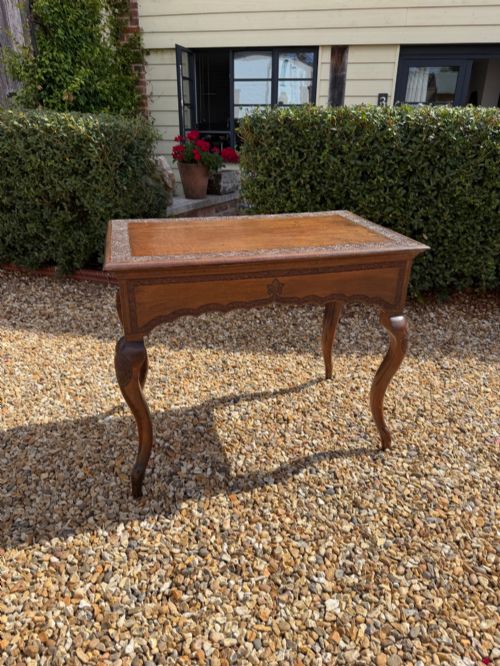
Carved details on the cabriole legs and aprons require skilled hand work, shaping the wood into the characteristic double curve.
Carved Cabriole Writing Table Retail Price Guide 2026
Typical asking prices for carved cabriole writing table among the pieces listed under this phrase on Sellingantiques today, from the lower quarter to the upper quarter. They describe what is for sale here now, not the wider market.
Object types include console tables, kneehole desks, partners desks, drop flap tables, and ladies writing desks.
Distinctions in quality
The choice of timber grain, particularly the depth and symmetry of burr walnut or flame mahogany veneers, dictates the visual impact of the piece.
Attention to detail in the carving of the cabriole legs and the crispness of the mouldings separate standard production from superior workshop output.
Internal construction, including dovetail joints in the drawers and the condition of original brass hardware, indicates the standard of original craftsmanship.
Wylie & Lochhead Glasgow·Gill & Reigate·Gillows
The Carved Cabriole Writing Table Glossary
- Cabriole leg
- A furniture leg that bends outward in a convex curve and tapers inward in a concave curve, ending in a pad, claw, or scroll foot. This form derives from animal limbs and gained popularity during the early eighteenth century.
- Burr walnut
- Timber sliced from the abnormal growth of a walnut tree, yielding a swirling, highly figured grain pattern. Cabinet makers used it on prominent surfaces for decorative effect.
- Lowboy
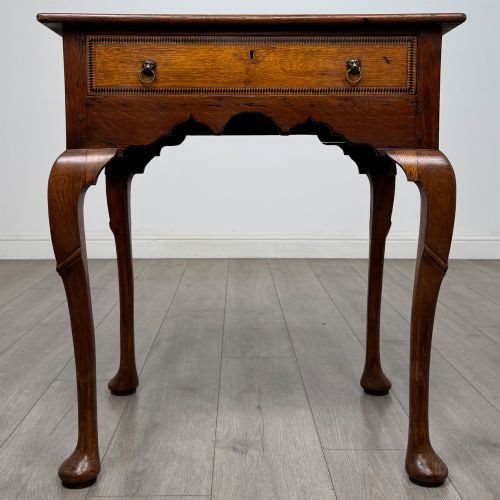
- A small oak or walnut table with drawers, standing on four legs, typically dating from the eighteenth century. It served various domestic purposes including writing and dressing.
- Kneehole desk
- A desk featuring a central recess for the user's legs, flanked by pedestals of small drawers. This form allows for efficient storage while sitting comfortably.
- Partners desk
- A large desk designed to be used from both sides simultaneously, featuring matching sets of drawers or cupboards opposite one another.
Carved Cabriole Writing Table: Frequently Asked Questions
What periods do these writing tables come from?
The pieces span multiple eras, ranging from eighteenth-century oak lowboys to Victorian and Edwardian revivals made around nineteen hundred.
Later interpretations often draw heavily on earlier Queen Anne and Chippendale aesthetics, combining antique styles with twentieth-century construction.
How do I care for a leather writing surface?
Leather surfaces benefit from gentle cleaning with a slightly damp cloth and occasional treatment with appropriate leather balms to prevent drying.
Avoid placing excessive moisture or unprotected hot items directly on the leather to preserve the finish.
Where should I place a freestanding writing table?
Freestanding models are finished on all sides, allowing them to sit centrally in a room rather than pushed directly against a wall.
This placement showcases the detailed carving and polished timber from every angle.
What is the difference between a lowboy and a writing desk?
A lowboy is typically a compact table with one or more rows of drawers beneath the top, often originating in the eighteenth century.
Writing desks are generally built specifically for seated work, sometimes incorporating pigeonholes, leather inserts, or pedestals.