

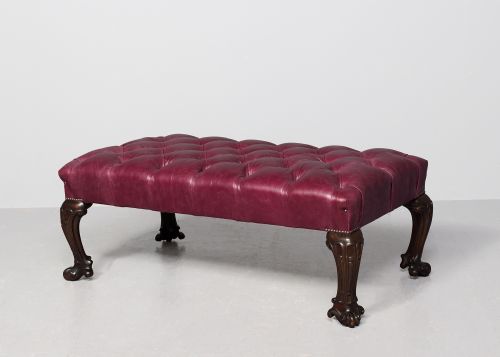
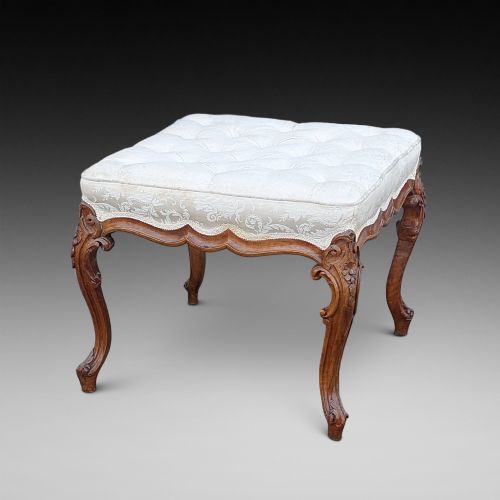
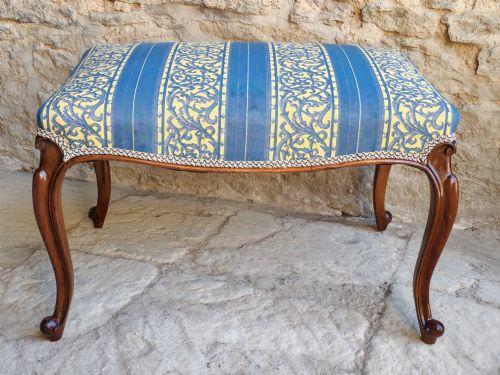
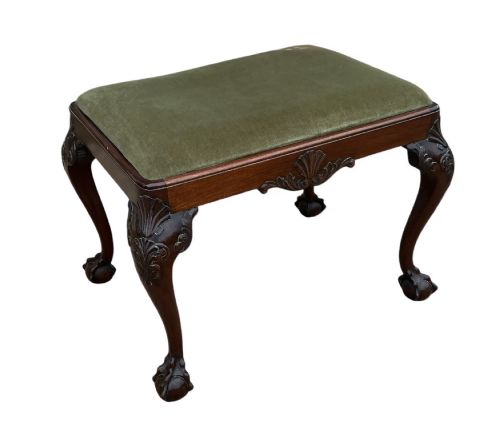
Carved Cabriole Leg Bench
These carved cabriole leg bench pieces combine sturdy timber frames with curved supports, offering practical seating shaped by historic revival styles.
Carved Cabriole Leg Bench
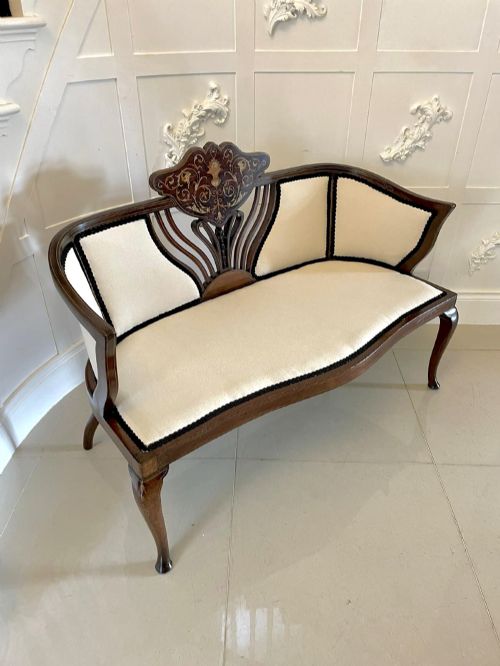
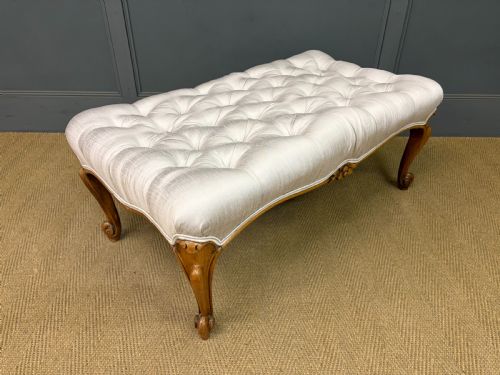
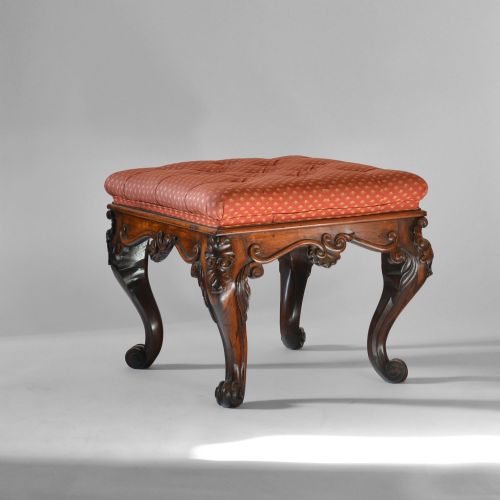
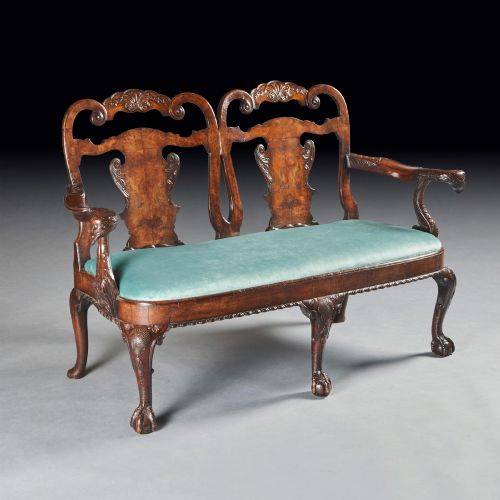
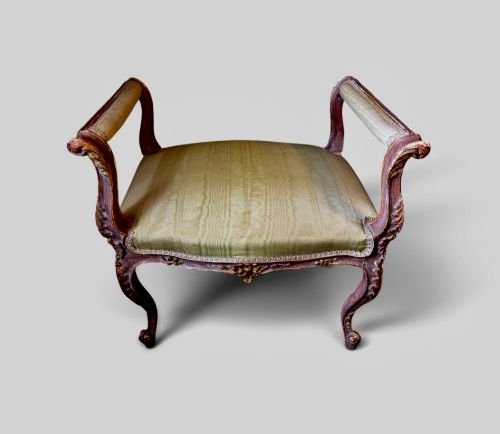
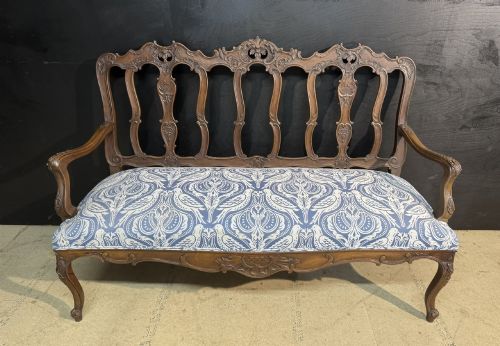
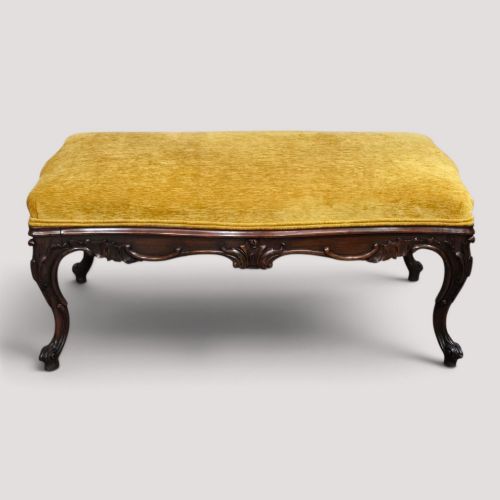
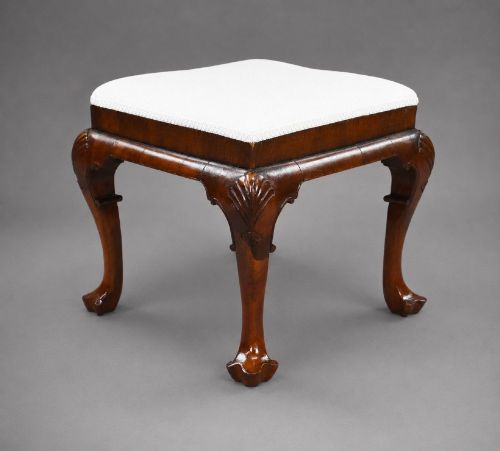
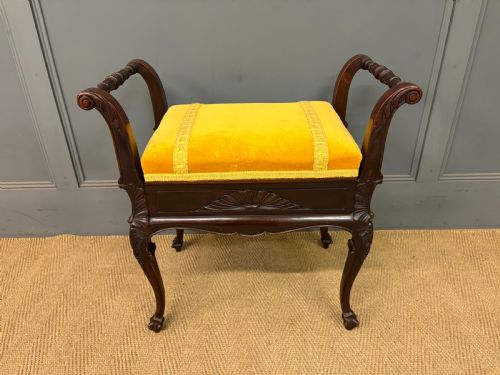
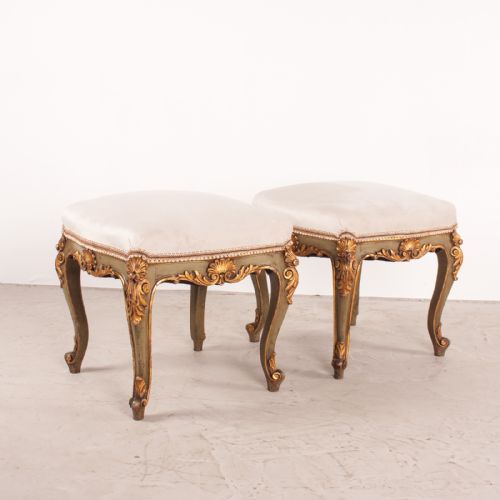
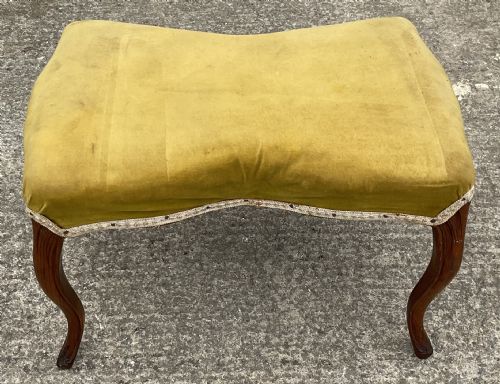
A carved cabriole leg bench on this page typically appears as a stool, footstool, window seat, or settee originating from the eighteenth to early twentieth centuries. The selection leans heavily towards Victorian and Edwardian interpretations of earlier Georgian, Queen Anne, and Rococo aesthetics.
Makers working across the nineteenth century produced these forms in walnut and mahogany, frequently pairing exposed carved timber frames with textile, velvet, or fabric upholstery. Buyers will encounter both single stools and larger multi-seater settees sharing the signature double-curved leg form.
Materials and construction methods
Frames rely on dense hardwoods such as mahogany and walnut, selected for their ability to hold intricate carving along the knee and foot of the cabriole design. Some examples incorporate rosewood, giltwood, or painted finishes to achieve specific decorative effects.
Upholstered elements utilise traditional fillings secured beneath fabrics, wool, or buttoned red hide. Structural integrity depends on stable timber joinery hidden within the seat rails and the carved junctions of the legs.
Listings feature walnut and mahogany predominantly, spanning the eighteenth to early twentieth centuries through various revival movements.
Assessing quality and craftsmanship
Quality rests in the crispness and depth of the timber carving, particularly along the contours of the cabriole leg and any foliage or scroll motifs on the frame. Superior pieces display fluid, hand-carved lines rather than shallow, mechanical shaping.
The choice of primary timber and the structural rigidity of the frame dictate the longevity of the piece. Examples retaining original upholstery techniques or high-grade secondary woods stand apart from later revival reproductions with softer detailing.
Giles Grendey·Butlers of Dublin
The Carved Cabriole Leg Bench Glossary
- Cabriole leg
- A furniture leg that curves outward at the knee and tapers inward toward the foot, mimicking animal limbs. It forms the defining structural feature of these pieces.
- Giltwood
- Timber treated with a thin layer of gold leaf or gilt finish. This material appears on decorative window seats and formal revival frames.
- Settee
- A small upholstered sofa designed for two or more occupants. These share the carved timber framing and leg styles found on smaller stools.
- Rococo Revival
- A nineteenth-century design movement mimicking the asymmetrical, scroll-heavy ornamentation of the mid-eighteenth century. Pieces in this style utilise heavy carving and curved structural lines.
Carved Cabriole Leg Bench: Frequently Asked Questions
How do I date a carved cabriole leg bench?
Dating relies on examining the timber species, tool marks, and stylistic revival cues visible on the frame. Nineteenth-century interpretations often mix Victorian proportions with eighteenth-century motifs.
Secondary woods and construction methods inside the seat rail provide further clues to the manufacturing decade. Comparing the carving depth against documented period examples helps confirm the age.
Are these benches sturdy enough for daily use?
Most solid walnut and mahogany frames offer robust structural support suitable for regular seating. Checking the joints where the cabriole legs meet the frame ensures stability.
Pieces requiring reupholstering may need internal webbing or padding attention before heavy domestic placement. Proper maintenance of the wood preserves the original joinery over time.
What is the difference between a stool and a settee?
Stools provide single-person seating or foot support without backs or armrests. Settees extend this design into multi-person seating with integrated backs and sometimes arms.
Both forms utilise identical cabriole leg geometry and carved timber rails across various revival periods. Settees require larger floor footprints while maintaining matching aesthetic details.
How should I care for the wood and fabric?
Protect the timber frames from direct sunlight and fluctuating humidity to prevent splitting in the dense hardwoods. Gentle dusting preserves polished walnut and mahogany surfaces without stripping historic patination.
Upholstery care depends on the textile type, requiring professional cleaning for delicate velvet or needlepoint inserts. Avoiding harsh chemical polishes maintains the integrity of the original finish.