
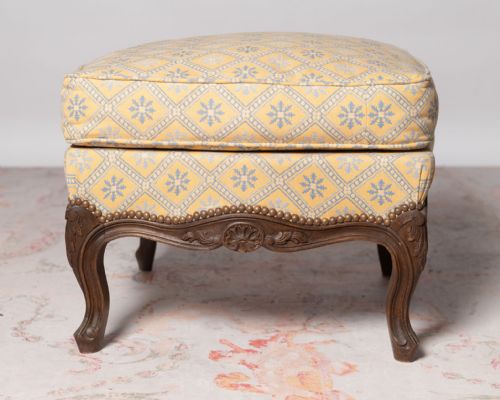
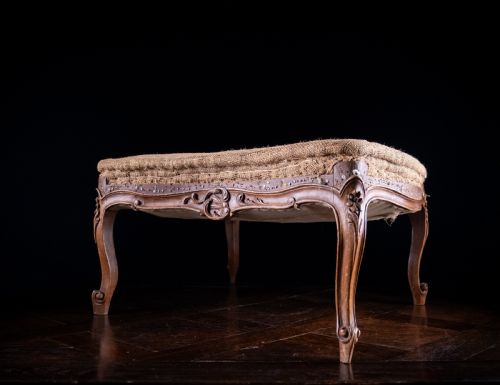


Carved Cabriole Footrest
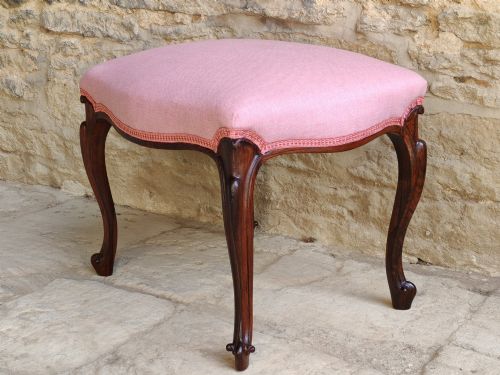
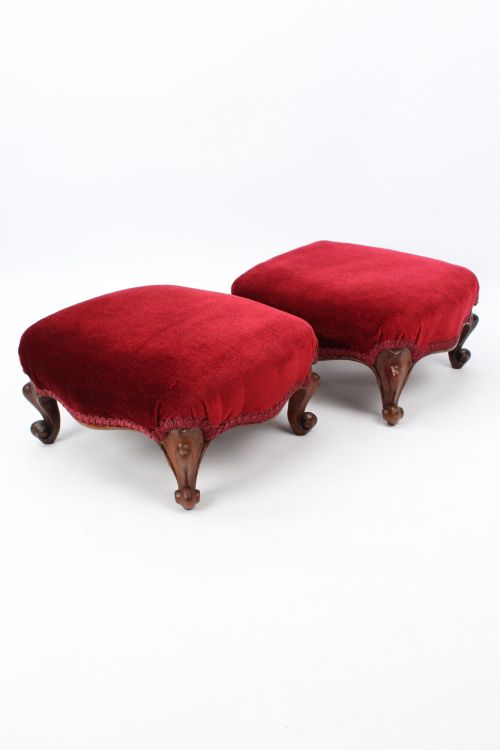
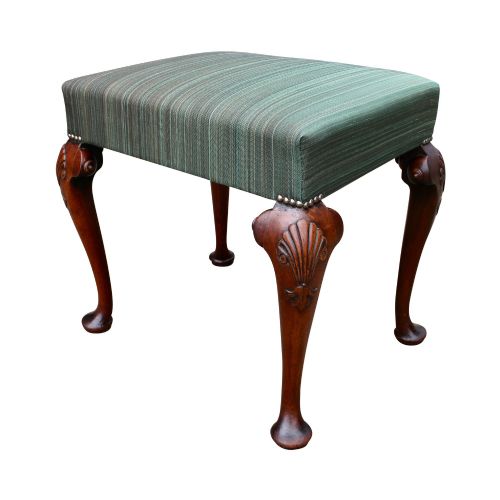
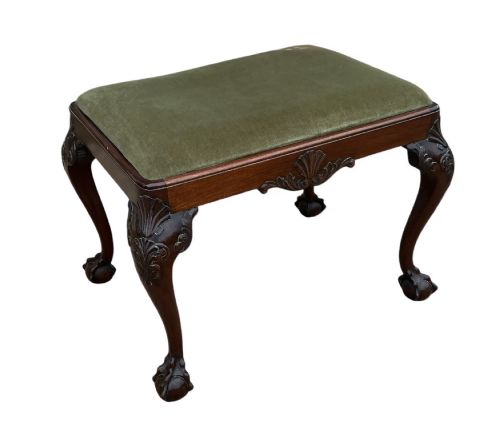
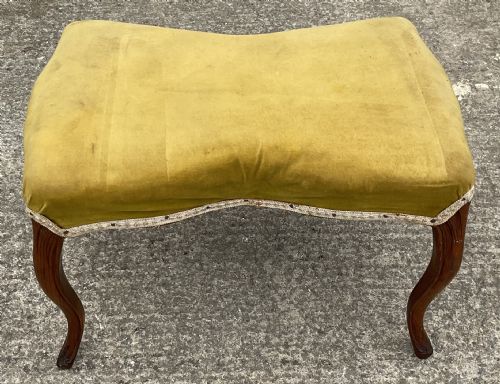
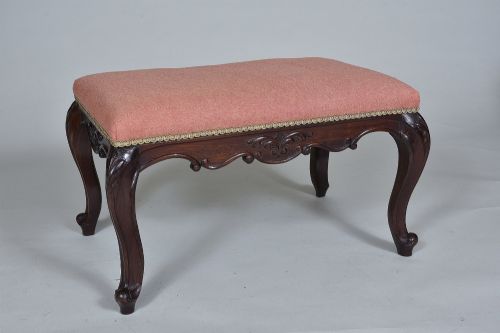
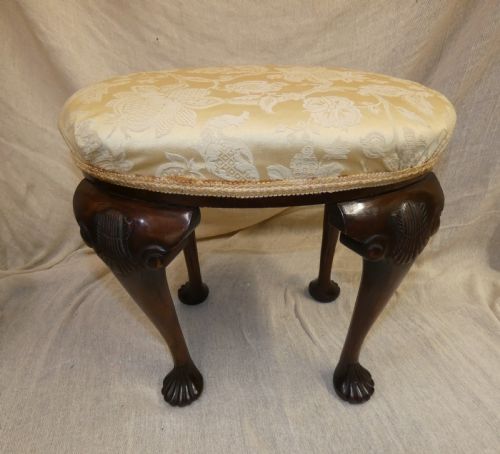
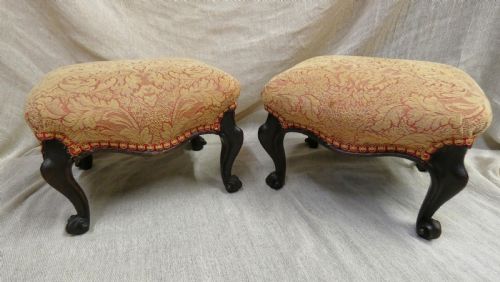
A carved cabriole footrest brings grounded elegance to a room, offering low seating or a place to rest tired feet.
Carved Cabriole Footrest
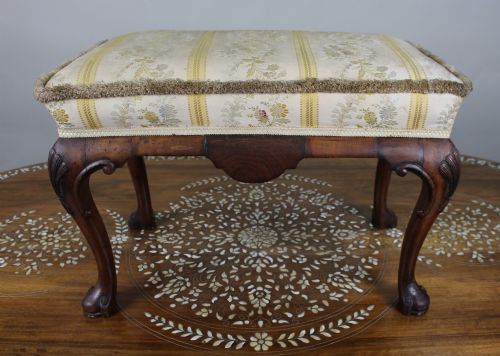
The form functions primarily as a fireside stool, dressing stool, or occasional centre seat within the home. Makers historically drew inspiration from earlier Queen Anne, Chippendale, and Louis XV styles to shape these versatile furnishings.
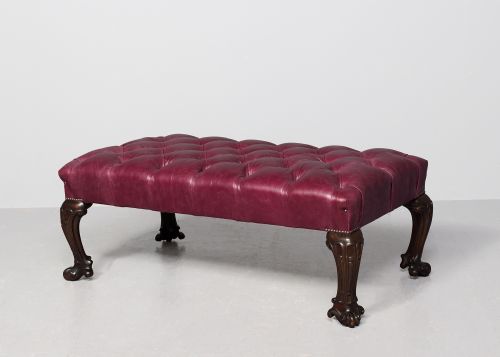
Surviving pieces range from compact single footstools to larger padded ottomans designed for domestic comfort. The persistence of revival designs shows how deeply later makers valued these classic silhouettes.
Materials and construction
Frames rely on dense hardwoods such as walnut, mahogany, rosewood, and beech, chosen for their strength under carved detail. Cabinet makers shaped the characteristic double-curved legs directly from the timber before applying hand-carved ornamentation.
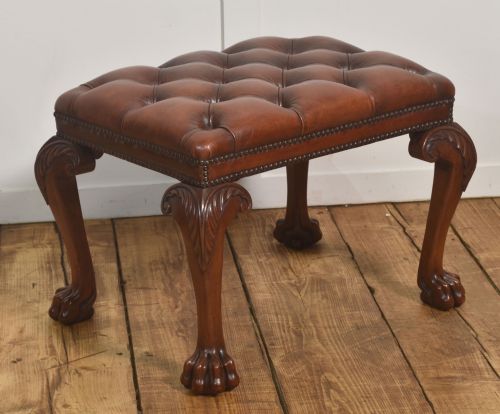
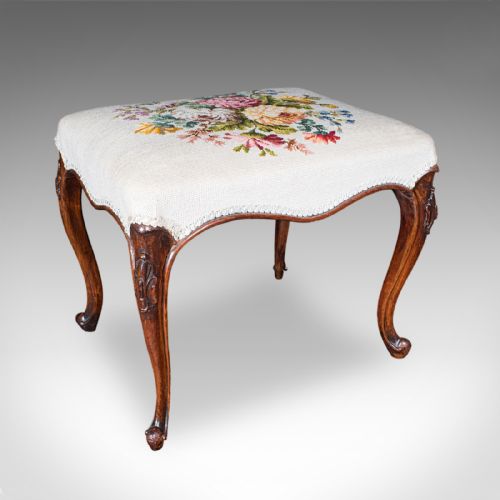
Upholstery materials include wool needlepoint, tapestry, velvet, leather, and fabric secured over traditional padding. Brass tacks and buttoning frequently finish the edges, anchoring the textile firmly to the wooden frame.
Current listings feature walnut and mahogany most frequently, accompanied by textiles such as needlepoint, velvet, and leather.
Assessing craftsmanship
Quality rests heavily on the depth and crispness of the carved detail upon the knees and feet, where inferior pieces show softened contours. The weight and selection of the timber frame also dictate durability, distinguishing solid hardwood construction from lesser builds.
Upholstery finish and internal webbing reveal the standard of original or restored workmanship. Pieces retaining hand-stitched needlework or fine textiles demonstrate a higher tier of period production.
LOIDRAULT FRERES PARIS
The Carved Cabriole Footrest Glossary
- Cabriole leg
- A furniture leg featuring a double curve, bulging outward at the knee and tapering inward toward the ankle. This classic shape originates from ancient designs and became prominent during the eighteenth century.
- Needlepoint
- A type of canvas work embroidery executed with yarn using a tent stitch. It frequently covers the top of traditional fireside stools.
- Giltwood
- Timber coated with a thin layer of gold leaf or gold paint. This finish appears on decorative French style frames.
- Buttoned
- An upholstery technique where depressions are formed in the padding by stitching through to the base, securing buttons in a geometric pattern. Red hide and velvet often receive this treatment.
- Tapestry
- A heavy textile woven with decorative pictorial designs. It provides a durable and ornate covering for antique seat furniture.
Carved Cabriole Footrest: Frequently Asked Questions
What is a cabriole leg?
A cabriole leg is a stylistic furniture support shaped with an outward curve at the knee and an inward taper below. It often finishes in a pad, claw and ball, or scroll foot.
This graceful line defines many antique stools and chairs from revival periods as well as earlier centuries.
How were these stools used?
These low seats served beside fireplaces to keep feet away from cold draughty floors, or stood near dressing tables for daily routines. Larger versions also functioned as centre stools in principal rooms.
Their sturdy timber frames made them practical for everyday household use.
How do I clean needlepoint upholstery?
Needlepoint tops require gentle surface cleaning with a soft brush to remove dust settled within the wool fibres. Avoid heavy moisture or harsh detergents that might weaken aged threads.
Professional textile conservation is recommended for fragile antique fabrics.
Can I reupholster a vintage stool?
Many frames are constructed to allow straightforward reupholstering when existing textiles wear thin. Traditional webbing and stuffing can be replaced to restore firm support.
Retaining the original foundation materials is preferred if the textile remains in strong condition.