




Carved Burr Walnut Shelf
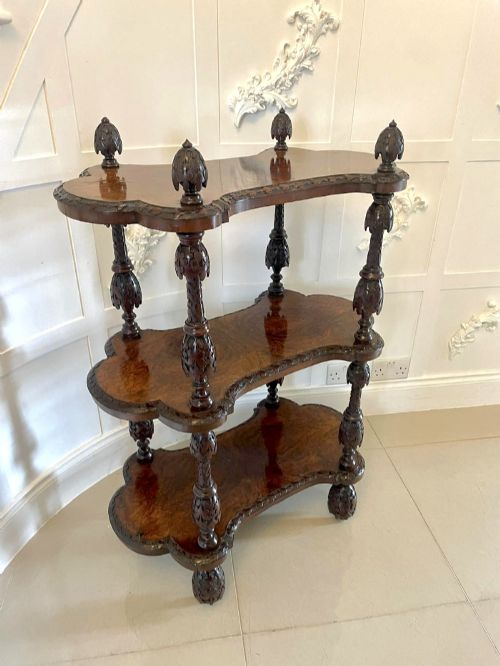
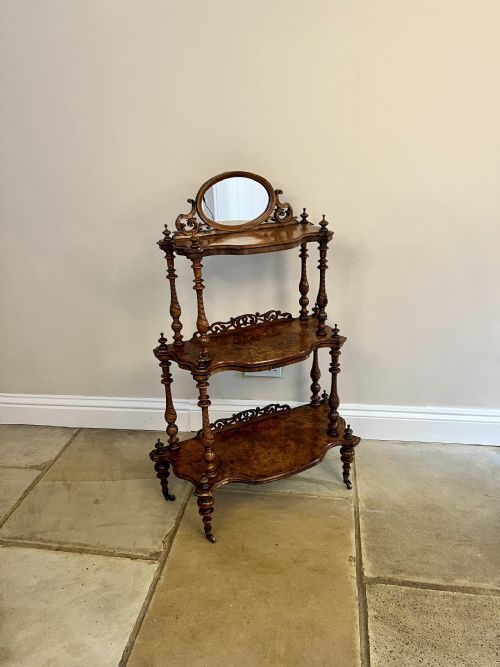
These carved burr walnut shelf pieces are multi-tiered display stands and cabinets prized for their rich grain, meeting you most often as Victorian whatnots.
Carved Burr Walnut Shelf
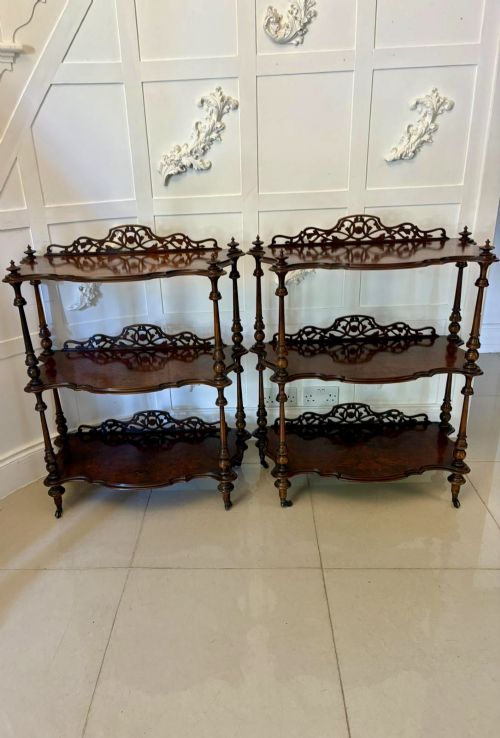
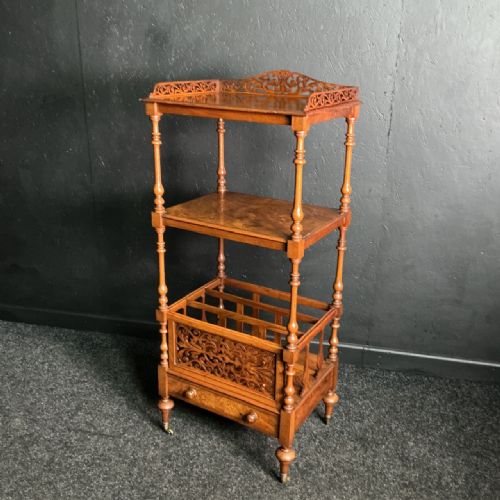
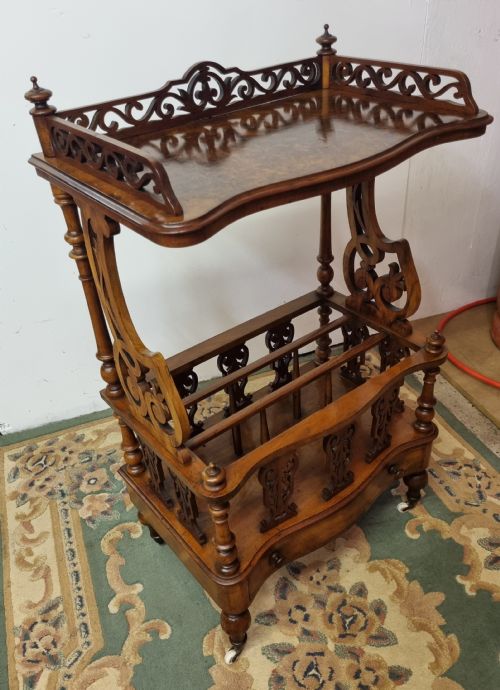
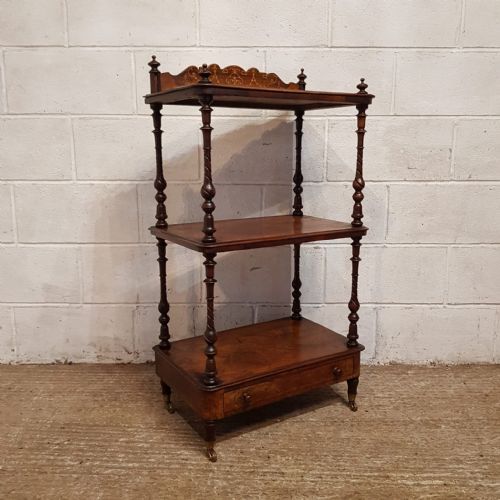
A carved burr walnut shelf typically appears as a multi-tiered whatnot, etagere, or bookcase originating from the nineteenth century, particularly the Victorian period. These pieces serve to display decorative objects or house volumes within domestic interiors.
The form relies on stacked platforms supported by turned or carved uprights, sometimes incorporating mirrors, cupboards, or serpentine shapes. Buyers seeking this phrase encounter varied tier counts and corner formats designed to utilise vertical space.
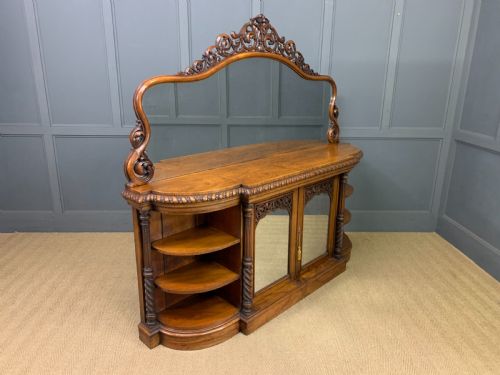
While the search specifies a shelf, the inventory shows these surfaces integrated into complex furniture types such as display cabinets, chiffoniers, and sideboards rather than simple wall boards.
Materials and construction
Makers utilised burr walnut veneers applied to sound timber carcases, capitalising on the swirling, knotty grain patterns characteristic of the growth burls. Solid walnut frames and ebonised wood details often complement the figured surfaces.
Construction frequently incorporates turned columns, delicate fretwork, and brass or glass elements alongside mirror glass backs. Marquetry inlay appears on select examples to accent the rich brown tones of the walnut.
Carved Burr Walnut Shelf Retail Price Guide 2026
Typical asking prices for carved burr walnut shelf among the pieces listed under this phrase on Sellingantiques today, from the lower quarter to the upper quarter. They describe what is for sale here now, not the wider market.
Listings span periods from the mid-nineteenth century through the 1920s, predominantly featuring Victorian burr walnut, ebonised wood, and brass.
Markers of quality
Quality rests in the intensity and symmetry of the burr walnut figuring across the primary display surfaces, alongside the crispness of any carved woodwork or inlaid marquetry. Finer examples maintain structural rigidity through robust tier supports and substantial timber thickness.
Exhibition pieces demonstrate superior joinery, integration of mirrors without silver degradation, and sophisticated proportions such as serpentine outlines or multiple tiered corners.
Lenzkirch·Liberty's of London
The Carved Burr Walnut Shelf Glossary
- Burr walnut
- A timber veneer sliced from walnut tree burls, known for intricate, swirling grain patterns. It provides a decorative surface on high-end Victorian furniture.
- Whatnot
- An open multi-tiered piece of furniture designed for displaying ornaments or books. It emerged in the nineteenth century with three or more shelves.
- Etagere
- A piece of furniture consisting of a series of open shelves for displaying small objects. The term is often used interchangeably with a whatnot.
- Chiffonier
- A low sideboard or cabinet featuring shelves or a mirror back. It combines enclosed storage with display space.
- Marquetry
- Decorative veneer work arranged in pictorial or geometric patterns. Craftsmen apply contrasting wood types to create ornamental surfaces.
Carved Burr Walnut Shelf: Frequently Asked Questions
What is a whatnot shelf?
A whatnot is a multi-tiered shelving unit designed to hold ornaments, books, or small display items in nineteenth-century interiors. The stacked design maximises vertical space while keeping objects visible from multiple angles.
These pieces range from simple three-tier stands to elaborate corner units with mirror backs and carved supports. They function primarily as decorative furniture rather than heavy storage.
How do I date a burr walnut shelf?
Dating relies on stylistic clues such as the presence of Victorian proportions, turned uprights, and specific design revivals like Queen Anne style elements. Most examples date from the mid to late nineteenth century.
Examine the construction methods, secondary timbers, and hardware integration. Burr walnut veneer work became particularly widespread during the Victorian era for exhibition-quality pieces.
Where should I place a walnut etagere?
An etagere or whatnot suits corners or open wall spaces where its stacked shelves can display ceramics, glass, or small collections. Corner variants utilise unused angles in principal rooms.
Keep walnut furniture away from direct sunlight and rapid temperature fluctuations to protect the delicate burr veneer and polished finish from drying out.
How do I clean burr walnut?
Dust the tiered surfaces regularly with a soft, dry cloth to prevent particulate accumulation in the intricate carved details and grain recesses. Avoid silicone-based sprays that can damage antique polishes.
Apply a quality beeswax periodically to nourish the walnut wood and maintain the natural lustre of the figured veneer without building up heavy residues.