



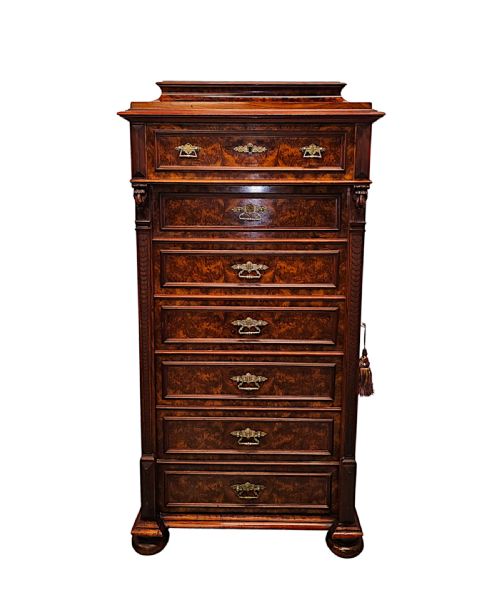
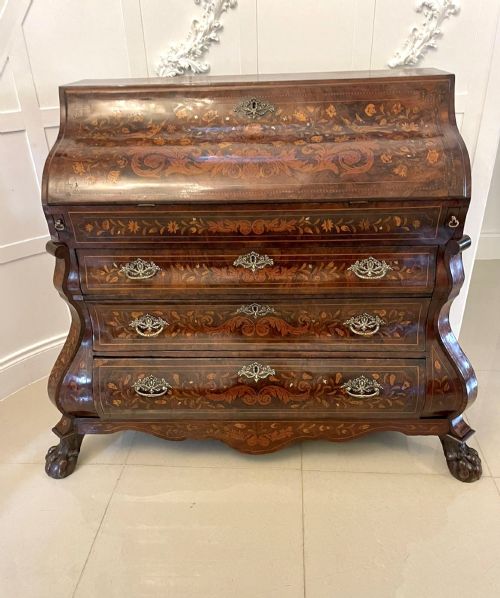
Carved Burr Walnut Drawers
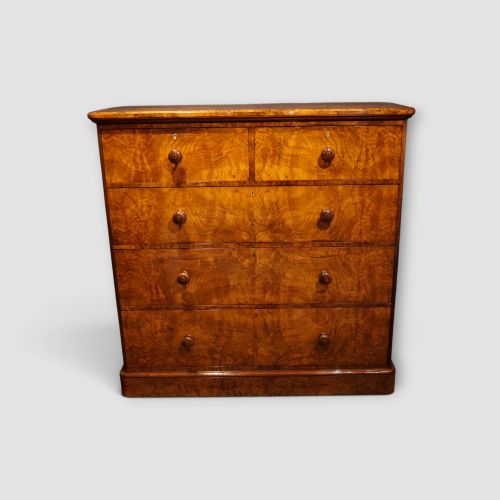
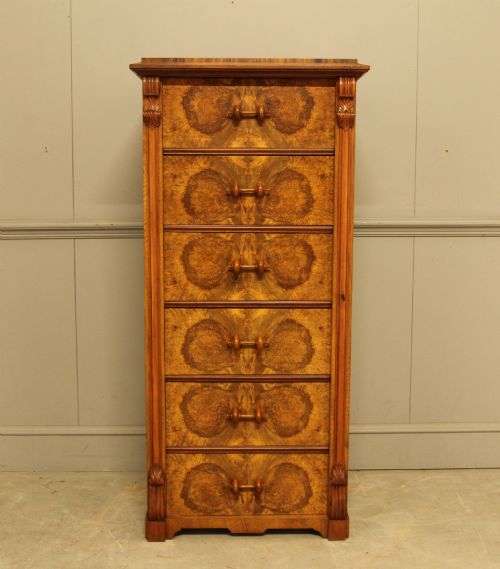
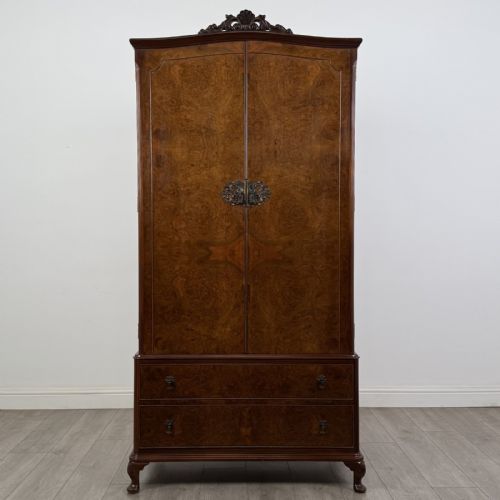
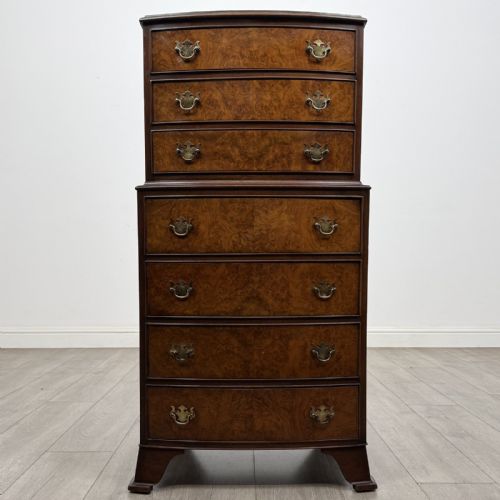
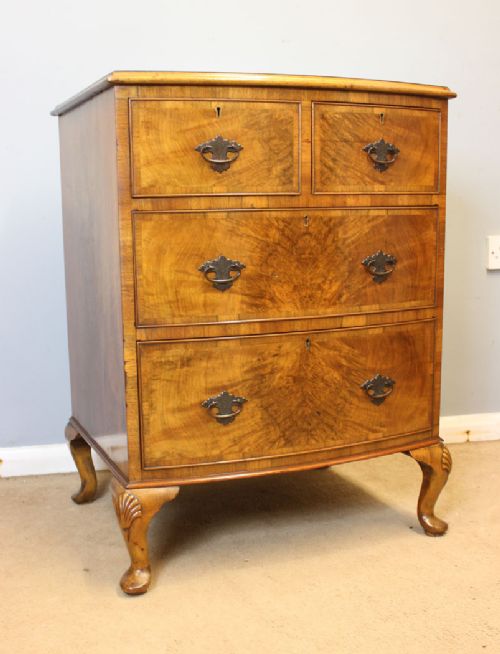
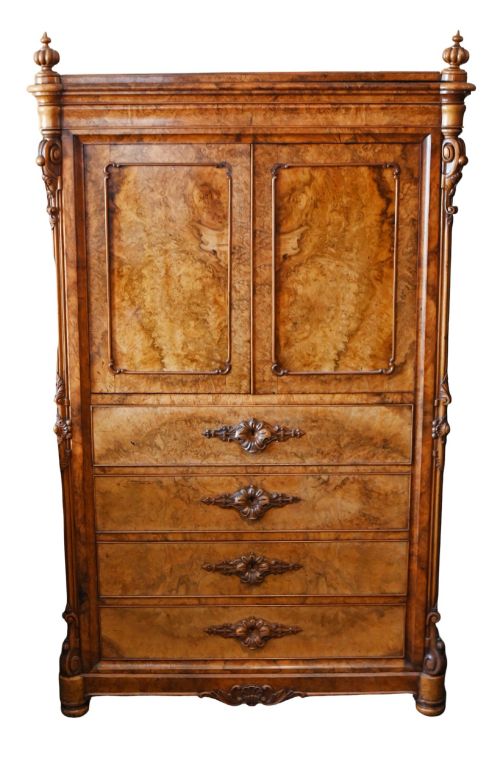
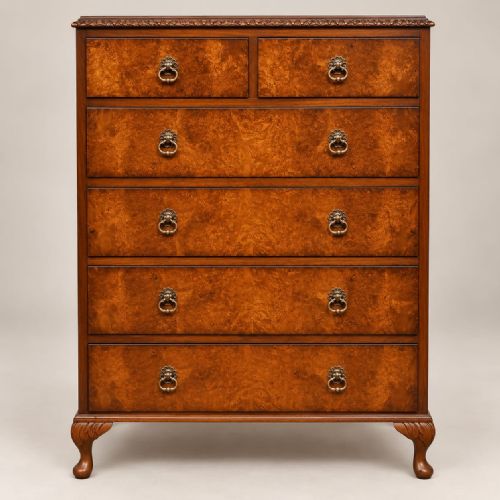
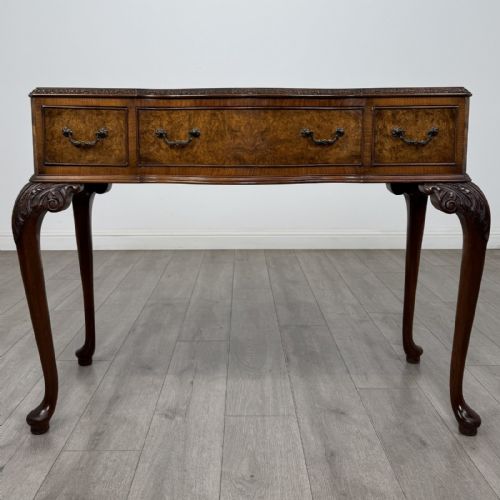
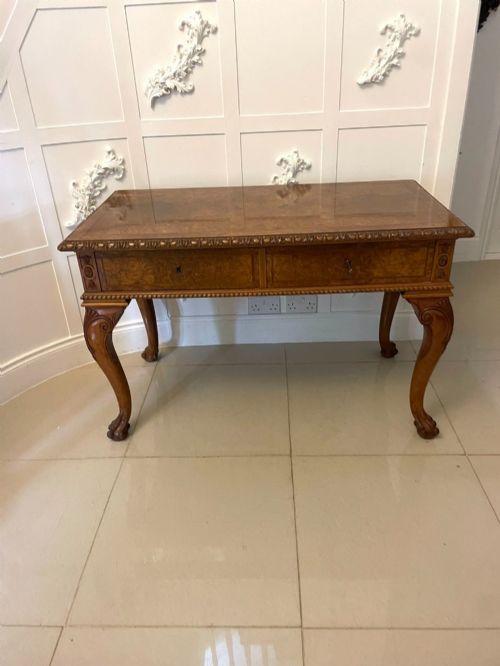
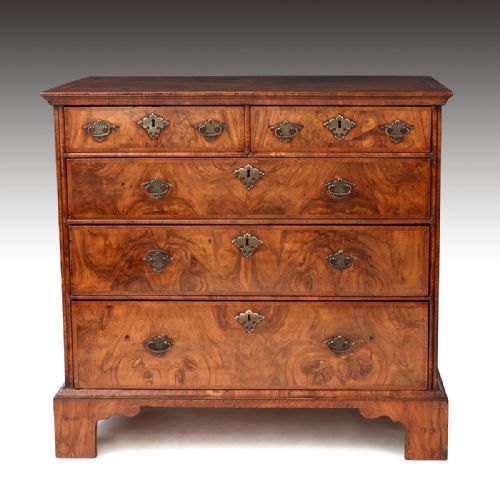
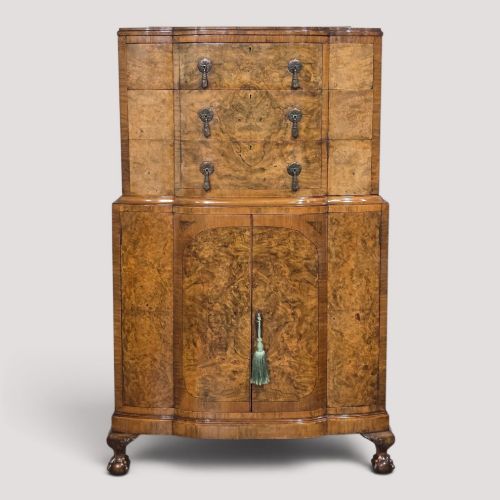
These carved burr walnut drawers bring rich figure and warm tone into a room, offering both practical storage and striking timber grain.
Carved Burr Walnut Drawers
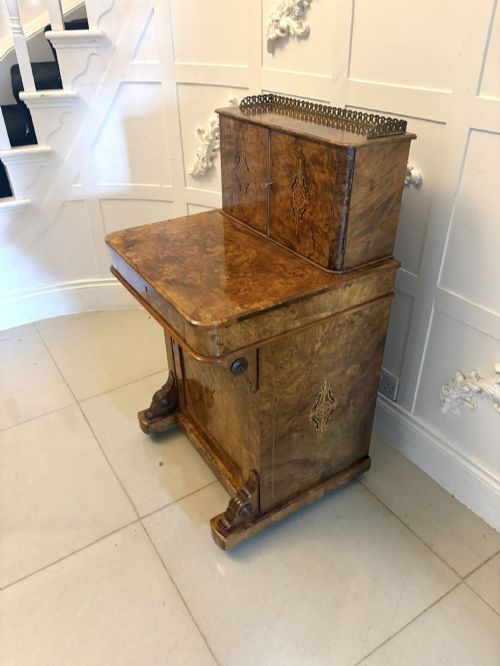
When you search for carved burr walnut drawers, you encounter pieces built from figured timber across several centuries. The selection ranges from compact bedside chests to grand serpentine commodes and pedestal desks.
Victorian and Edwardian examples appear frequently alongside pieces from the eighteenth century. Chests of drawers and writing desks form the core of what you will meet on this page.
Cabinet makers utilised the swirling patterns of burr growth on carcases of oak or solid walnut. The resulting grain creates a decorative surface that defines the character of each piece.
How they were made
Craftsmen applied thin veneers of burr walnut to primary carcases, often framing the wild grain with crossbanding in straight-grained walnut. Boxwood inlay and brass hardware frequently accent the darker timber.
Drawer linings are typically constructed from secondary woods like oak, whilst surfaces sometimes incorporate leather inserts on writing desks or mirror glass in associated dressing pieces.
Carved Burr Walnut Drawers Retail Price Guide 2026
Typical asking prices for carved burr walnut drawers among the pieces listed under this phrase on Sellingantiques today, from the lower quarter to the upper quarter. They describe what is for sale here now, not the wider market.
Listings span the eighteenth, nineteenth, and early twentieth centuries, featuring oak, brass, and leather alongside burr walnut veneer.
What varies in quality
The visual strength of the burr figure and the crispness of any carving set the best examples apart from simpler items. Symmetry in veneer matching across drawer fronts indicates greater skill in the workshop.
Original brass handles, stable drawer construction, and intact crossbanding preserve the integrity of the piece. Subtle details like secret compartments or well-executed marquetry elevate certain items above standard production.
The Carved Burr Walnut Drawers Glossary
- Burr Walnut
- A timber harvested from the wart-like growths on walnut trees, yielding highly figured and swirling grain patterns.
- Crossbanding
- A narrow strip of veneer laid perpendicular to the surrounding grain, often framing drawer fronts or tabletops.
- Marquetry
- Decorative patterns formed by fitting contrasting veneers into a prepared background on furniture surfaces.
- Commode
- A low chest of drawers or cabinet, often sharing stylistic traits with French furniture of the eighteenth century.
- Wellington Chest
- A tall, narrow chest of drawers secured by a locking wooden flap down one side.
Carved Burr Walnut Drawers: Frequently Asked Questions
How do I date a burr walnut chest?
Examine the construction methods of the drawer linings and the timber used inside the carcase. Secondary woods like oak often point to eighteenth-century origins, whilst later pieces show nineteenth-century industrial techniques.
Hardware and handle fixings also offer clues to the period. Dovetails cut by hand differ visibly from later machine-cut joints found in Edwardian work.
Are these drawers suitable for daily use?
These pieces function well in modern interiors when treated with reasonable care. Chests and writing desks provide practical storage and functional surfaces for everyday life.
Keeping timber away from direct heat sources and maintaining stable room humidity protects the delicate walnut veneers from drying out or splitting.
What is a secretaire chest?
A secretaire chest combines a standard chest of drawers with a fitted writing drawer that pulls down. The drop-front reveals small internal drawers and pigeonholes for correspondence.
This form allowed owners to write letters without requiring a separate standalone desk in the room.
How do I care for walnut veneer?
Dust surfaces regularly with a soft, dry cloth to prevent grit accumulation. Avoid silicone-based polishes and excessive moisture, which can damage old finishes.
Applying a traditional beeswax occasionally helps nourish the wood and maintain a gentle sheen on the burr figure.