
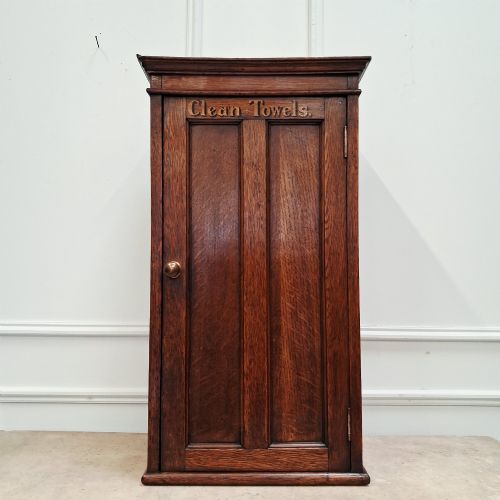
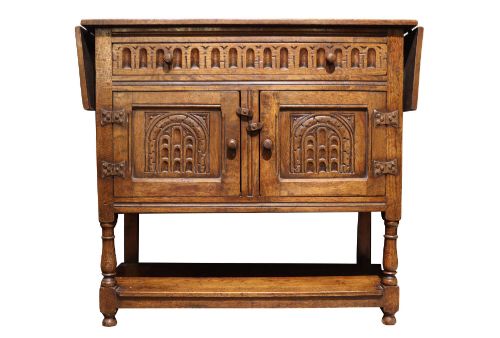
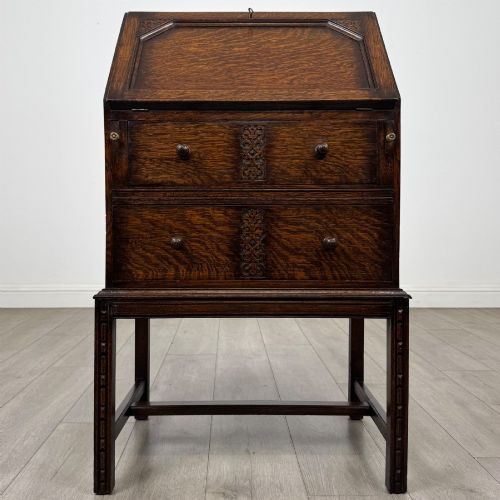
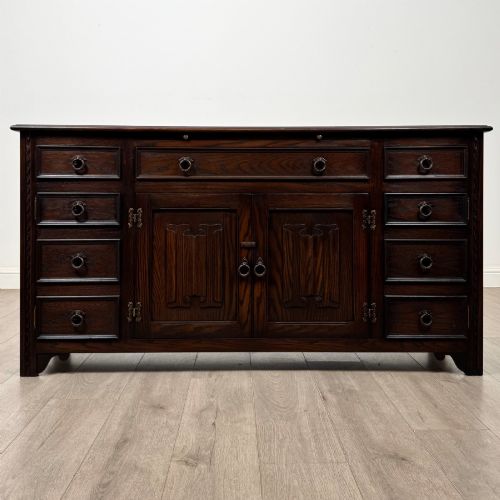
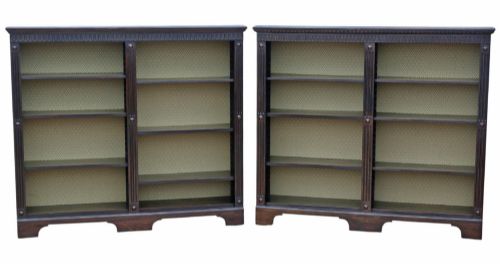
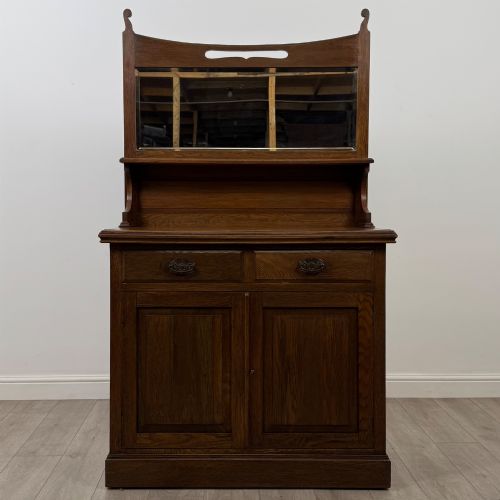
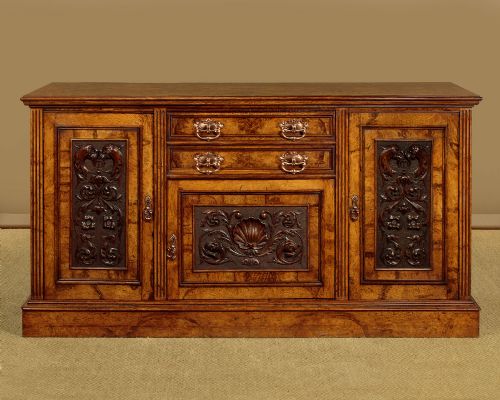
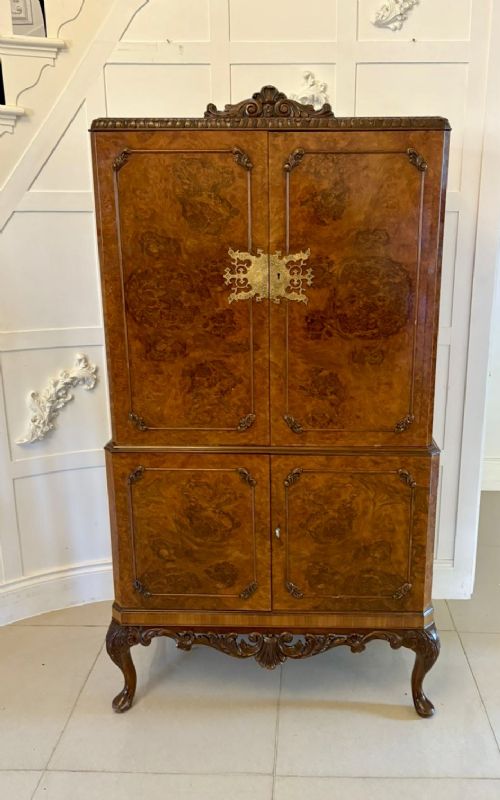
Carved Brown Cabinet
Carved brown cabinets bring rich timber grain and texture into a room, spanning periods from the eighteenth century to the twentieth.
Carved Brown Cabinet
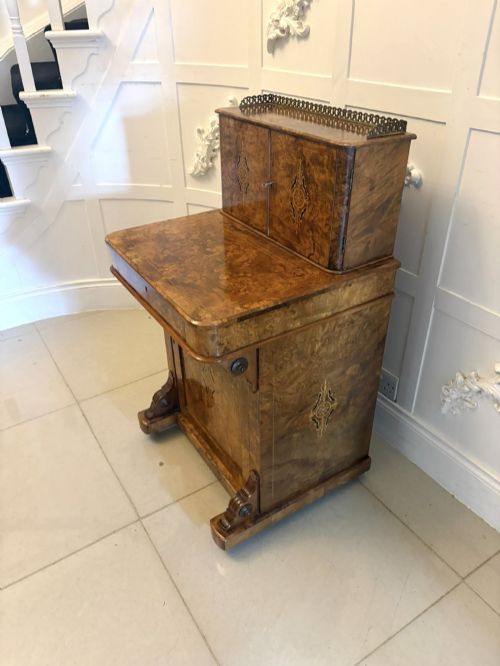
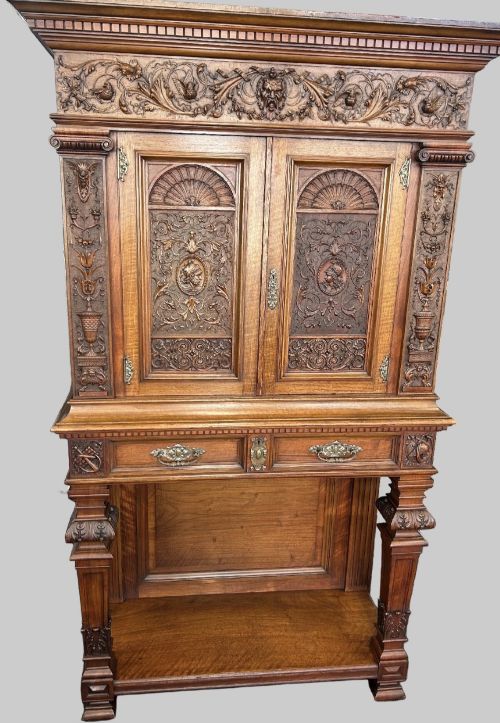
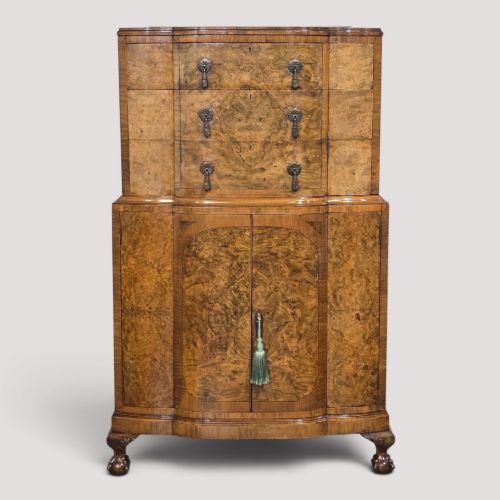
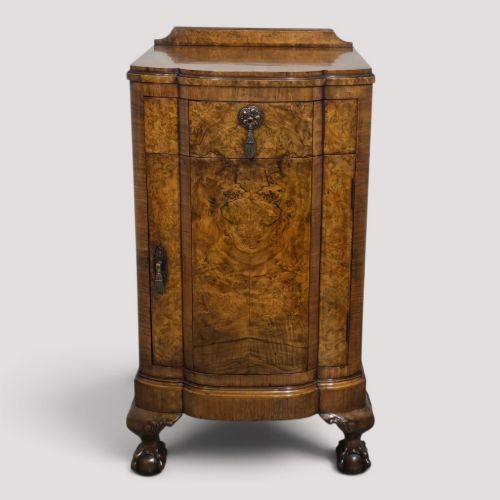
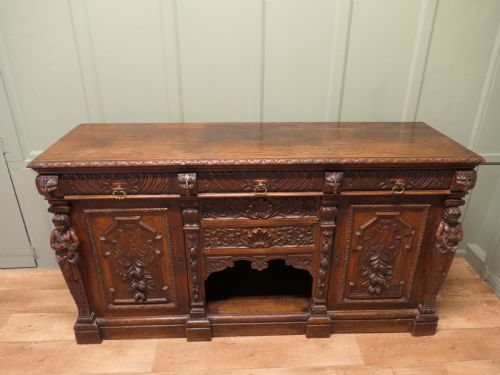
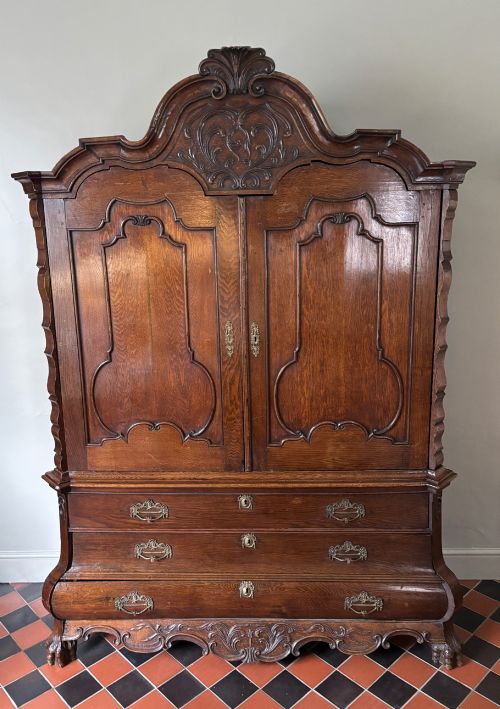
A carved brown cabinet encompasses an array of storage forms finished in dark timbers, appearing as sideboards, bookcases, wardrobes, and bedside tables. These pieces emerge from periods spanning the seventeenth century through to the Edwardian era and the nineteen-twenties.
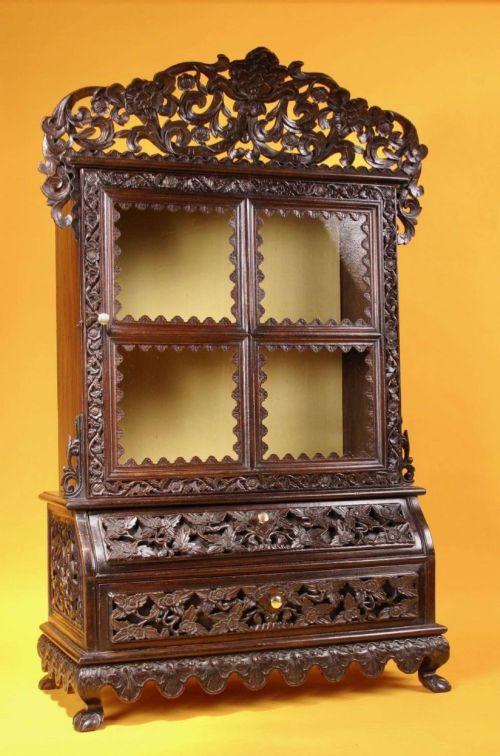
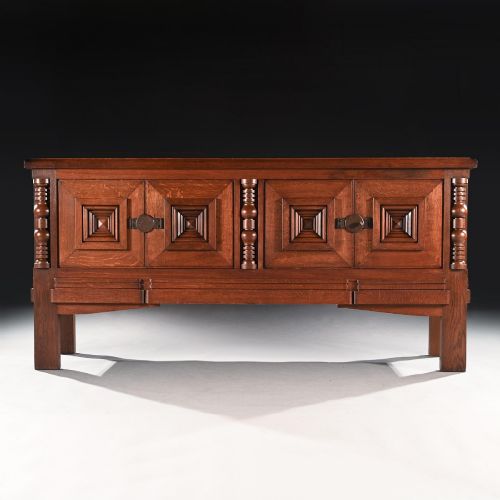
Oak and walnut dominate the offerings on this page, often enriched by carving, marquetry, or panel work. Buyers encounter large dining room sideboards alongside compact wall-hanging cupboards, music cabinets, and display cases.
Regional variations span British regional workshops and continental European makers, bringing French Provincial, Gothic Revival, and Arts and Crafts influences to the brown timber palette.
How they were made
Cabinet makers utilised dense hardwoods such as oak, mahogany, walnut, and padouk, selecting figured veneers like burr walnut for decorative impact. Timber selection dictated whether the piece relied on robust structural joinery or intricate surface marquetry.
Hand carving brought relief decoration to drawer fronts, cupboard doors, and pediments, whilst brass hardware provided functional contrast to the dark timber surfaces. Glass panels found use in bookcases and display cabinets, and marble appeared on select continental surfaces.
Secret drawers hidden within secretaire bookcases ensured that nineteenth-century owners had a private spot for their love letters and ledger keys.
What varies in quality
The degree of hand carving distinguishes standard utility storage from ambitious statement furniture, separating simple moulded edges from deep relief work. Artisanal skill appears in the crispness of floral marquetry, the matching of burr walnut veneers, and the integration of specialised fittings.
Timber choice and preparation dictate the longevity and visual depth of the brown finish, with figured grains and dense hardwoods holding detail better over centuries. Internal construction, such as dovetailed drawer boxes and solid timber backs, marks the difference between workshop standards.
Shoolbred & Co.
The Carved Brown Cabinet Glossary
- Bombe
- A bulging, convex shape characteristic of continental case furniture. This profile requires advanced cabinet-making techniques to curve timber or veneer smoothly.
- Marquetry
- The art of applying decorative pieces of veneer to a structure to form intricate patterns. Floral motifs appear frequently on eighteenth-century examples.
- Chiffonier
- A low sideboard or cabinet featuring shelves or a small tier above the main surface. This form gained popularity during the nineteenth century for dining and drawing rooms.
- Wellington chest
- A tall, narrow chest of drawers secured by a locking hinged stile on one side. The design originated in the nineteenth century to protect personal papers and valuables.
- Linenfold
- A carved wooden panel motif resembling folded cloth. This style is frequently found on oak cupboards and wardrobes from revival periods.
Carved Brown Cabinet: Frequently Asked Questions
How do I date a carved brown cabinet?
Dating relies on combining timber types, construction methods, and stylistic revival cues visible in the carved details. Oak points towards earlier centuries or Arts and Crafts revivals, whilst burr walnut often aligns with Edwardian and later twentieth-century pieces.
Examining internal drawer construction and hardware provides further chronological markers. Hand-cut dovetails and original brass fixtures help anchor a piece to a specific period.
Where were these cabinets used?
These brown cabinets served domestic roles across the home, from dining room sideboards storing cutlery to hallway wardrobes and library bookcases. Smaller items functioned as bedside tables or music cabinets in private chambers.
Their placement depended on scale, ranging from imposing architectural sideboards in reception rooms to compact wall-hanging cupboards in tighter spaces.
How do I maintain a wooden cabinet?
Maintenance involves keeping timber away from direct heat sources and sudden humidity shifts to prevent splitting or veneer lifting. Regular dusting with a soft cloth preserves the polished finish.
Applying appropriate wax feeds the wood without building up heavy residues. This protects the dark grain and maintains the natural lustre of walnut and oak.
What is the difference between oak and walnut?
Oak provides a coarse grain and structural strength that suits sturdy revival pieces, Gothic forms, and Arts and Crafts designs. Walnut offers a finer texture and is frequently utilised for figured veneers and decorative marquetry.
Walnut cabinets often present a warmer, more reflective brown tone compared to the characteristic amber and grey hues of aged oak.