
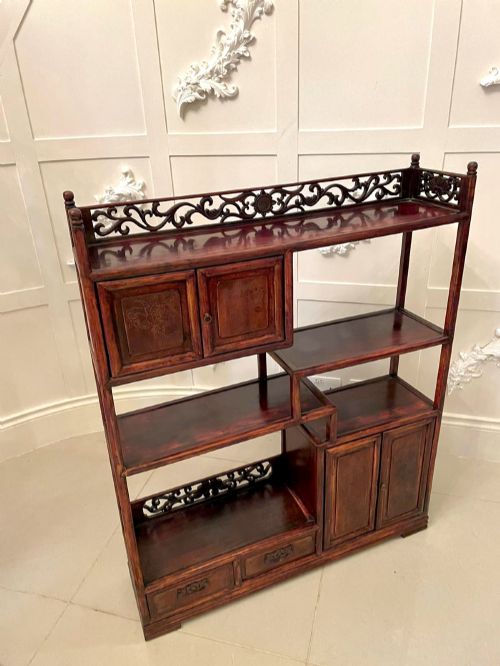
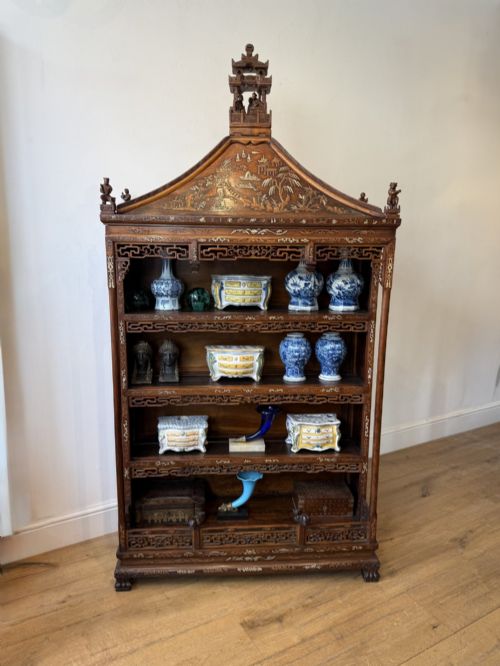


Chinese Hardwood Shelf
A chinese hardwood shelf brings sculptural timber and intricate carving into a room, offering a functional stage for displaying treasured objects.
Chinese Hardwood Shelf
A chinese hardwood shelf encompasses display cabinets, open cabinets, display stands, and whatnot styles originating from the nineteenth and early twentieth centuries. These pieces emerge predominantly in Qing Dynasty, Chinese Export, and Chinoiserie traditions, reflecting meticulous woodworking and distinct regional aesthetics. Buyers frequently encounter tall display cabinets, dwarf side cabinets, and architectural pagoda forms designed to showcase porcelain and curiosities.
The material palette spans dense timbers such as hongmu and rosewood, often complemented by intricate bone inlay, mother of pearl detailing, and brass fittings. Workshops of the late nineteenth and early twentieth centuries produced these items for domestic use and export markets, establishing a rich variety of forms. Selecting a suitable piece involves recognising whether a structure serves as an open display shelf or an enclosed cabinet.
Materials and construction methods
Craftsmen utilised heavy, dense hardwoods including hongmu and rosewood, which allowed for deep, sharp carving without splintering. These timbers possess natural durability and rich grain patterns that were polished to a smooth finish, highlighting the natural colour of the wood. Joinery relied on traditional mortise and tenon techniques, ensuring stability across complex multi-tiered shelf configurations.
Decoration frequently incorporated contrasting materials such as mother of pearl and bone inlay set directly into the wooden panels. Brass hardware, including hinges and decorative lock plates, provided functional strength while enhancing the visual rhythm of the cabinet facades. Glass panels appeared on later export pieces to protect delicate contents from dust while maintaining maximum visibility.
Pagoda display cabinets bring miniature architectural rooflines indoors, letting tiny treasures live beneath their own wooden tiled eaves.
Distinguishing quality in construction and ornament
The refinement of the carving dictates much of the distinction between standard and superior examples, with finer pieces exhibiting crisp undercutting and balanced composition. Timber selection also plays a primary role, as heavier, more uniformly grained hongmu or rosewood commands greater appreciation than mixed or softer secondary woods. Furthermore, the precision of inlaid mother of pearl or bone work reveals the artisan's skill, where flush placement and secure setting prevent loss over time.
Structural integrity remains paramount, particularly in tall display stands and multi-tiered cabinets where joint tightness determines long-term stability. Original brass hardware and intact glass panes contribute to the overall authenticity and preservation of the piece. Subtle details, such as finished backs and refined interior shelving, separate mass-produced export wares from bespoke workshop commissions.
The Chinese Hardwood Shelf Glossary
- Hongmu
- A translation meaning red wood, referring to a category of dense, dark tropical hardwoods used in traditional Chinese furniture making. It is prized for its weight, deep colour, and ability to take a high polish.
- Mother of pearl
- An iridescent inner layer of mollusc shell utilised for decorative inlay work on furniture surfaces. Artisans cut thin pieces to form floral or geometric motifs set flush into the hardwood.
- Demi Lune
- A half-moon shape applied to console tables and furniture designed to sit flat against a wall. This profile saves floor space while providing a decorative surface for display.
- Pagoda
- An architectural form featuring tiered roofs, which influenced the silhouette of specific display cabinets. Cabinet makers incorporated these stacked pavilion roofs to create striking visual heights.
Chinese Hardwood Shelf: Frequently Asked Questions
What is a chinese hardwood shelf used for?
These pieces were traditionally built to organise and display scholars' objects, ceramics, and valued ornaments within the home. Their multi-tiered design allows for balanced arrangements of varied decorative items.
In contemporary interiors, they continue to serve as functional display units that bring structural timber and historical character into living spaces.
How do I date a chinese hardwood shelf?
Dating relies on examining the stylistic markers, timber types, and construction methods associated with specific periods such as the late Qing Dynasty or early twentieth century. Details like the presence of glass panels or specific export styles often point towards the later end of the timeline.
Comparing joinery techniques and inlay materials against documented examples from the same era helps narrow down the decade of production.
Are these shelves structurally stable?
Traditional mortise and tenon joinery provides significant inherent strength, allowing these pieces to support heavy porcelain and collections of objects safely. The density of hardwoods like hongmu and rosewood further contributes to a solid framework.
Regular environmental conditions with stable humidity prevent the timber from shifting, ensuring the joints remain secure over decades of use.
How do I care for a chinese hardwood shelf?
Maintenance involves dusting with a soft, dry cloth and avoiding placement near direct heat sources or strong sunlight that might dry out the timber. Applying appropriate natural waxes occasionally helps nourish the dense grain without building up a heavy film.
Careful handling of inlaid elements such as bone or mother of pearl prevents accidental displacement from the wooden channels.