


Qing Dynasty Shelf
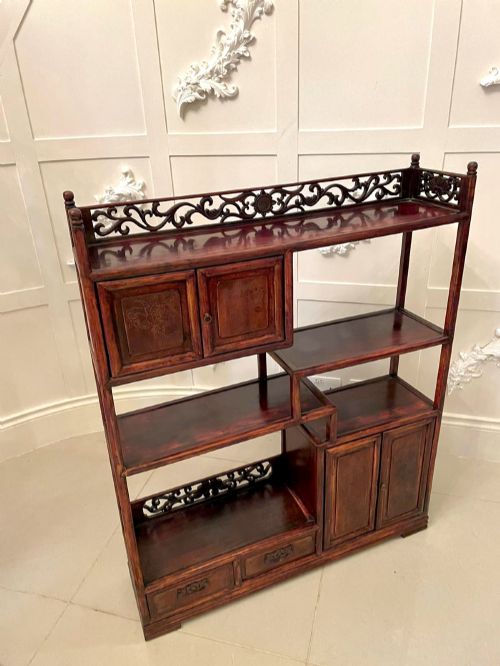
A qing dynasty shelf brings architectural timberwork and intricate display space into a room.
Qing Dynasty Shelf
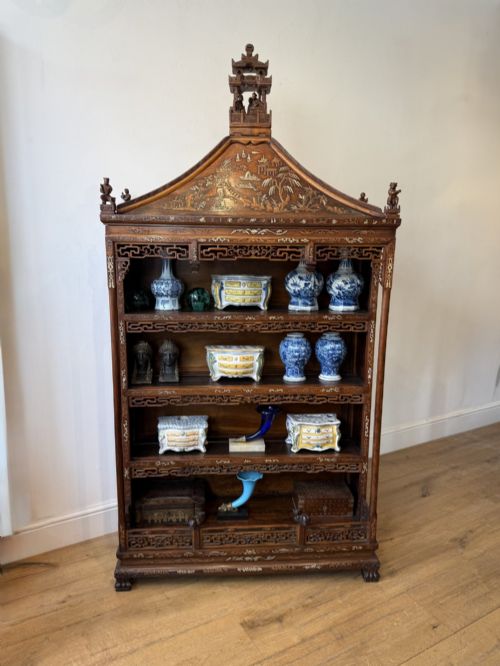
When searching for a qing dynasty shelf, buyers encounter a variety of hardwood display cabinets, open cabinets, and side-cabinets dating from the nineteenth century. These forms reflect the decorative arts of the period, ranging from pagoda display cabinets to carved dwarf side-cabinets.
The pieces appearing on this page span the late nineteenth century, including specific dates such as 1870, 1880, 1900, and 1910. Styles described in the listings encompass Chinese Export, Chinese Qing Style, Chinoiserie, and Late Qing Dynasty, showing the breadth of regional and export production.
Beyond standard shelves, related forms like console tables and floor clocks share the material vocabulary of the period. Buyers most frequently meet dark timber display cabinets designed to showcase objects of vertu.
How they were made
Carpenters utilised dense Asian hardwoods, specifically rosewood and hongmu, alongside elm for structural support and visible surfaces. These timbers provided the strength required for complex joinery and tiered display compartments without excessive bulk.
Surface ornamentation involved contrasting materials set directly into the wood. Mother of pearl, bone inlay, and red lacquer added colour and reflective detail, while brass components served structural and decorative functions.
Carving was executed in profuse relief across panels and frames, creating depth and shadow that defined the late Qing aesthetic. Glass panels were incorporated into doors to protect contents while maintaining visibility.
The site's listings for this phrase span the nineteenth and early twentieth centuries, specifically recording dates from 1870 to 1910.
What varies in quality
The distinction between standard and superior pieces rests upon the depth and crispness of the timber carving. Profusely carved surfaces with sharp, undercut details demonstrate a higher level of artisan skill than shallow, mechanised scoring.
The selection of materials dictates the standing of a piece, particularly the density and grain figure of rosewood and hongmu relative to secondary woods like elm. Intricate inlay work using mother of pearl and bone requires precise fitting that separates fine examples from simpler production.
Integrity of surface finishes, whether clear polished hardwood or red lacquer, influences the overall character. The survival of original brass mounts and fitted glass elements preserves the intended appearance of the cabinet.
The Qing Dynasty Shelf Glossary
- Hongmu
- A dense, dark tropical hardwood used in fine Chinese furniture, often translated as red wood. It takes a high polish and supports intricate carving.
- Mother of pearl
- The iridescent inner layer of mollusc shells, utilised for thin inlaid plaques that create shimmering floral or geometric motifs against dark timber.
- Demi lune
- A half-moon shape applied to furniture forms such as console tables, designed to sit flush against a wall.
- Chinoiserie
- European decorative style reflecting Chinese artistic motifs and forms, distinct from authentic Qing Dynasty pieces produced in Asia.
- Pagoda
- A tiered tower form with multiple eaves, inspiring the architectural silhouette of certain display cabinets.
Qing Dynasty Shelf: Frequently Asked Questions
How were these cabinets used?
These cabinets served primarily to display treasured possessions in scholar studios and reception rooms. The open shelves and enclosed compartments accommodated varied objects of vertu.
Glass doors on certain models protected delicate items from dust while permitting full visibility. Console tables and side-cabinets provided additional surface space within domestic interiors.
What materials should I expect?
Listings show a primary reliance on hardwoods, rosewood, hongmu, and elm. These timbers provided the structural rigidity needed for slender uprights and multiple tiers.
Decoration frequently includes mother of pearl inlay, bone inlay, red lacquer, and brass fixtures. Glass panels appear on cabinet doors to enclose the display space.
How do I identify the period?
Pieces date from the nineteenth century, with specific recorded dates spanning from 1870 to 1910. Stylistic markers include Chinese Qing Dynasty carving techniques and traditional joinery.
Descriptions often note specific stylistic categories such as Chinese Export or Late Qing Dynasty. The presence of traditional hardwood construction helps distinguish these items from later reproductions.