




Hardwood Open Cabinet
These hardwood open cabinet pieces bring refined display and intricate carving into a room, offering versatile shelving for treasured objects.
Hardwood Open Cabinet
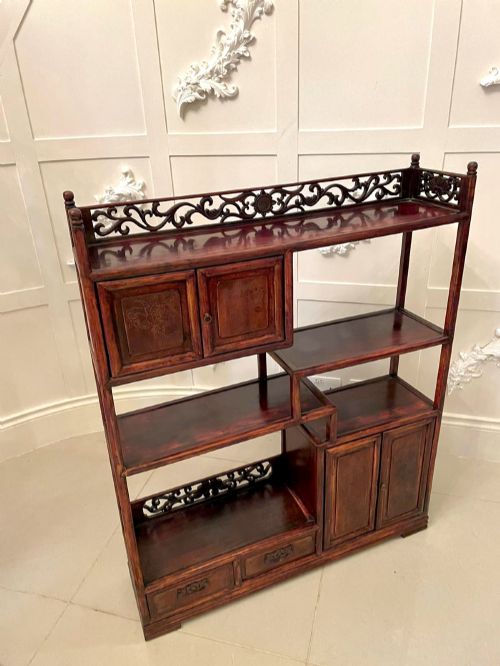
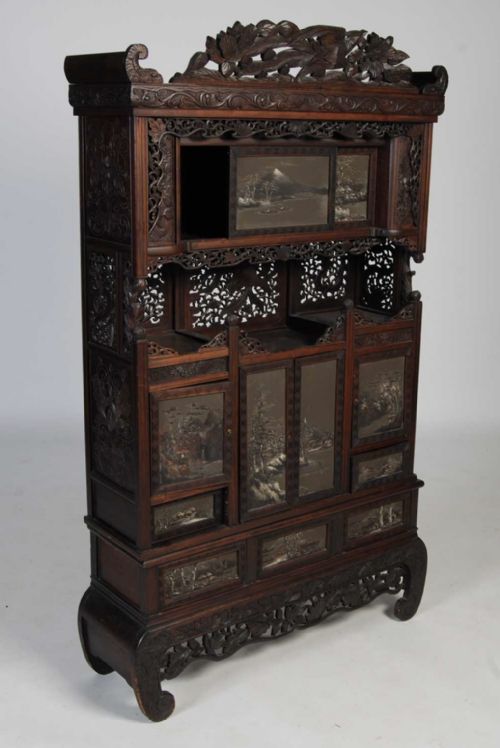
A hardwood open cabinet functions primarily as a display cabinet, display shelf, or whatnot, designed to showcase decorative objects. When you search for this phrase, you encounter pieces that span the nineteenth and early twentieth centuries.
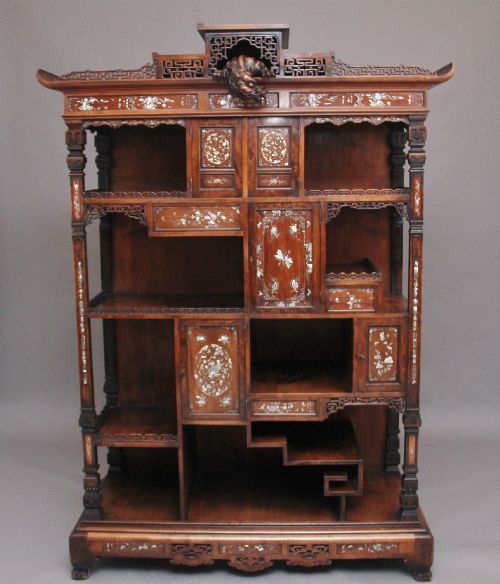
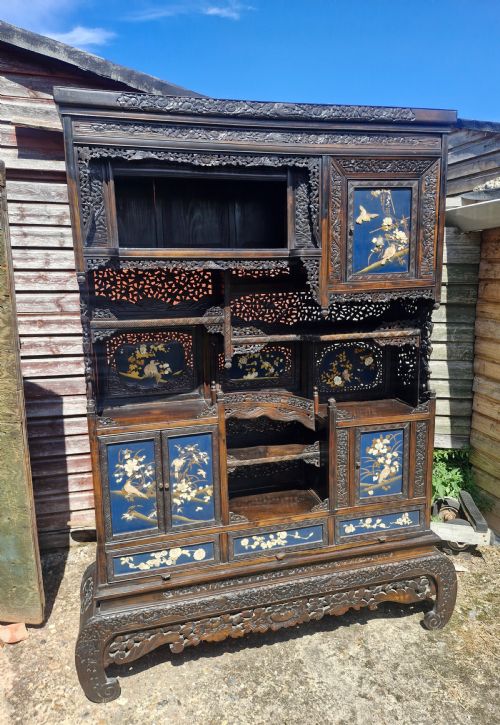
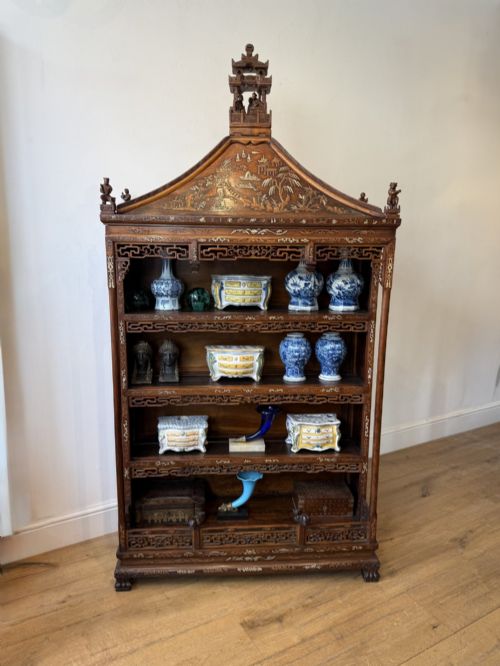
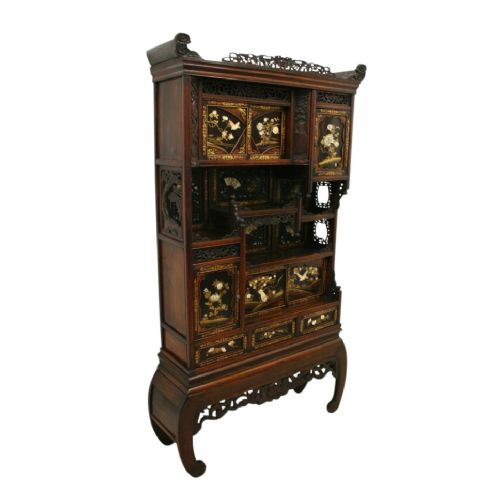
The selections on this page originate predominantly from Chinese export and Japanese Meiji period workshops. Forms range from large freestanding shodana cabinets to dwarf side-cabinets and pagoda display cabinets.
How they were made
Maker workshops utilised dense timbers such as rosewood and general hardwood, often enhanced through profuse carving. Surface decoration frequently incorporates lacquer, brass fittings, bone inlay, and mother-of-pearl details.
Construction techniques combined traditional joinery with applied decorative elements like bone and mother-of-pearl. These methods produced sturdy display pieces capable of supporting intricate shelving arrangements and carved panels.
Several cabinets double as miniature pagodas, proving that nineteenth-century artisans took housing for your tiny ornaments very seriously.
What varies in quality
Quality separates through the depth and precision of the carving across the hardwood structure. Pieces displaying crisp, deeply undercut foliage or figures represent the upper end of the range.
The integration of secondary materials such as mother-of-pearl, bone inlay, and brass hardware influences overall refinement. Greater care in matching these decorative elements elevates a piece above simpler domestic examples.
The Hardwood Open Cabinet Glossary
- Shodana
- A Japanese tiered display cabinet featuring asymmetrical shelving and cupboards. These pieces were traditionally used for displaying scholarly objects and ornaments.
- Hongmu
- A category of dense, heavy Asian hardwoods highly prized for fine furniture making. The wood possesses a natural dark colour and polishes to a smooth finish.
- Whatnot
- An open set of standing shelves designed for displaying ornaments or books. This form gained popularity during the nineteenth century for domestic display.
- Chinoiserie
- European decorative style reflecting Chinese artistic influences. It appears in furniture decoration and lacquerwork.
- Qing Dynasty
- The final imperial dynasty of China, lasting from sixteen forty-four to nineteen twelve. Furniture from this era often exhibits elaborate carving.
Hardwood Open Cabinet: Frequently Asked Questions
What is a hardwood open cabinet used for?
These cabinets serve primarily as display shelving for ornaments, ceramics, and scholarly objects. Their open structure allows items to be viewed from multiple angles within a room.
Historically, they occupied main reception rooms or studies in both Asian and Western homes. Today, collectors continue to use them for displaying small collections and decorative items.
How do I tell Chinese and Japanese cabinets apart?
Chinese pieces often feature symmetrical architectural elements, pagoda motifs, or dense Qing style carvings. Rosewood and hongmu are commonly utilised in these constructions.
Japanese shodana cabinets typically display asymmetrical tier arrangements with sliding doors and specific Meiji period motifs. They frequently incorporate mixed materials like lacquer, bone, and mother-of-pearl.
What periods do these cabinets date from?
The pieces available generally date from the nineteenth century through the early twentieth century. This span includes the Japanese Meiji period and the later Qing Dynasty.
Design characteristics shift slightly across these decades, moving from highly elaborate nineteenth-century carving to cleaner early twentieth-century forms.
How should I care for a hardwood cabinet?
Keep the wood away from direct heat sources and strong sunlight to prevent timber shrinkage. Dust regularly with a soft, dry cloth without applying modern liquid polishes.
Handle inlaid sections with care during cleaning to protect delicate bone and mother-of-pearl elements.