




Carved Brown Bear
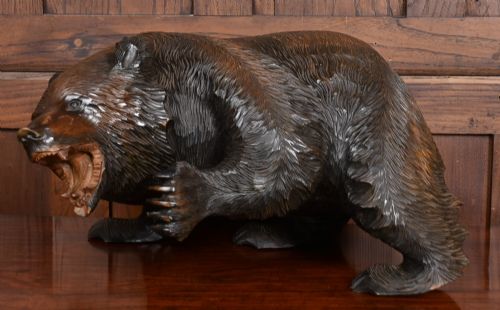
These carved brown bear sculptures are tactile wooden objects of utility and folk art, sought after for their character and regional European and Asian craftsmanship.
Carved Brown Bear
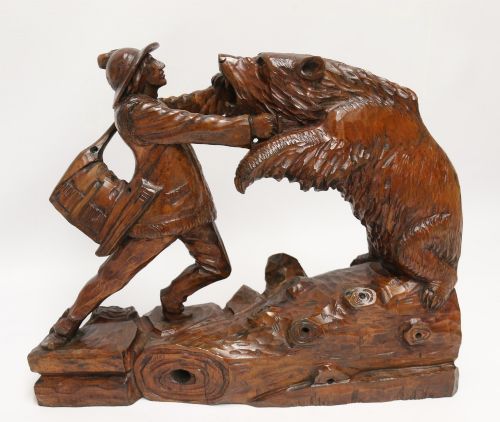
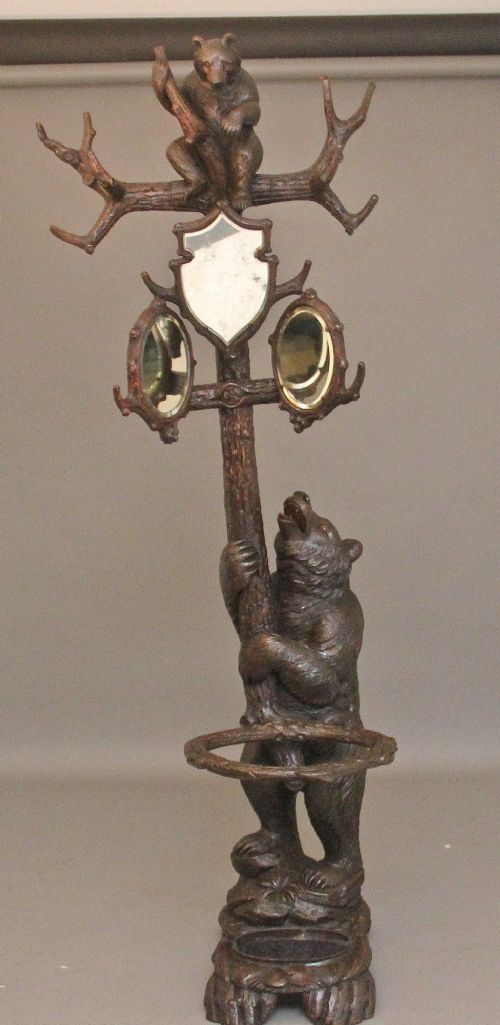
A carved brown bear takes many functional and decorative forms, ranging from substantial furniture such as hall stands and umbrella stands to smaller tabletop items like tobacco jars, bookends, lamps and inkstands.
The pieces on this page originate predominantly from the nineteenth century and the early twentieth century, spanning Victorian, Edwardian and Georgian periods.
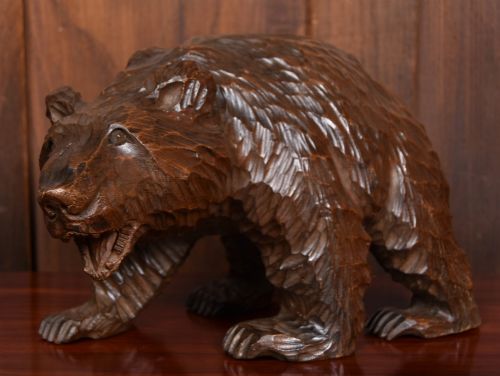
Regional traditions strongly define these carvings, with Swiss and German Black Forest workshops and Japanese folk art traditions providing the most common origins.
How they were made
Carvers utilised local timber, most frequently linden wood and walnut, alongside occasional hard woods and coconut shells to shape each animal.
Details such as facial expressions and fur texture were rendered through hand chiselling, whilst glass or metal stud eyes were often added to complete the animal's likeness.
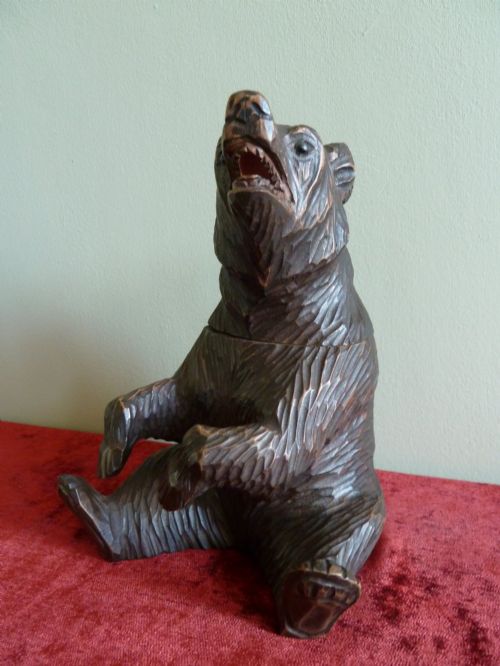
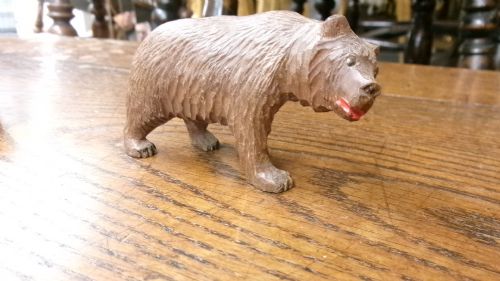
One tiny carved bear wears literal stud eyes and sits ready to guard your desk.
What varies in quality
Scale and ambition separate standard decorative items from exhibition quality works, particularly when carvers tackled complex furniture forms like multi-tiered hall stands and umbrella holders.
The Carved Brown Bear Glossary
- Black Forest
- A style of wood carving originating from the Brienz region of Switzerland and southwestern Germany, famous for realistically rendered animals and foliage. Carvers in this tradition produced the majority of the bears seen here.
- Linden wood
- A pale, fine-grained timber favoured by European carvers for its even texture and suitability for intricate detail. It allowed artisans to achieve deep undercut fur and realistic facial expressions.
- Kibori Kuma
- A traditional style of Japanese wood-carved bear originating from Hokkaido. These pieces represent a distinct folk art tradition separate from European production.
- Humidor
- A specialised box or jar designed to keep tobacco moist, often carved in the shape of a seated bear holding a log or honey pot. They frequently incorporate lined interiors for practical use.
- Hall stand
- A large piece of hallway furniture combining coat hooks, umbrella wells and sometimes a seat, often integrated with carved bear figures. They served both utilitarian and decorative purposes in grand nineteenth-century interiors.
Carved Brown Bear: Frequently Asked Questions
How do I date a carved wooden bear?
Dating relies on examining the timber species, tool marks left by the carver, and the object type. Nineteenth-century pieces often display deeper hand chiselling and distinct regional styling compared to later twentieth-century examples.
Accessory elements such as glass eyes, metal hinges on tobacco boxes, or accompanying furniture styles help narrow the period. Maker labels, where present, provide the most precise chronological indicator.
Are these bears European or Japanese?
The pieces span both European alpine traditions and Japanese folk art. Black Forest carvings from Switzerland and Germany make up the majority, characterised by linden wood construction and realistic animal postures.
Japanese examples, known as Kibori Kuma from Hokkaido, reflect an entirely separate nineteenth-century carving tradition. Comparing the treatment of the fur and facial anatomy distinguishes the two regional styles.
How should I care for antique carved wood?
Keep wooden sculptures away from direct sunlight and away from sudden temperature fluctuations that cause timber to dry and split. Gentle dusting with a dry, soft cloth preserves the original surface finish without stripping patination.
Avoid using liquid polishes or modern cleaning sprays on antique carved surfaces. Regular, careful maintenance protects the fine details of the fur and the integrity of the wood.