





Carved Bone Handle
These pieces with a carved bone handle bring tactile utility and regional artistry from the nineteenth and twentieth centuries straight to your hands.
Carved Bone Handle
When you search for a carved bone handle, you encounter a variety of utilitarian and decorative objects spanning the nineteenth and twentieth centuries. These items range from walking stick handles and parasol grips to cutlery, table bells, and edged weapons.
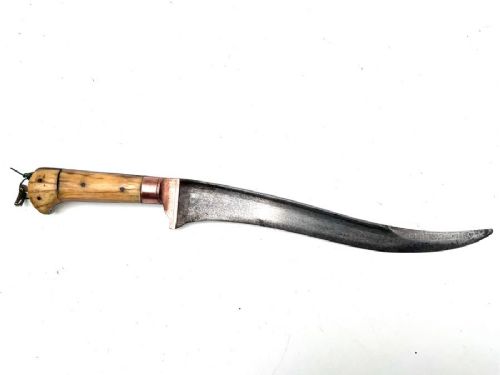
You are most likely to meet Victorian and nineteenth-century examples on this page, often appearing alongside related materials like stag horn and deer antler. Objects such as folding knives, fish servers, and walking canes frequently feature these worked handles.
Geographic origins vary widely across the inventory, encompassing Chinese regional sets, Japanese Meiji period pieces, and Ottoman folk art. Each region applies distinct carving motifs to the bone or horn base, resulting in entirely different visual characters.
What varies in quality
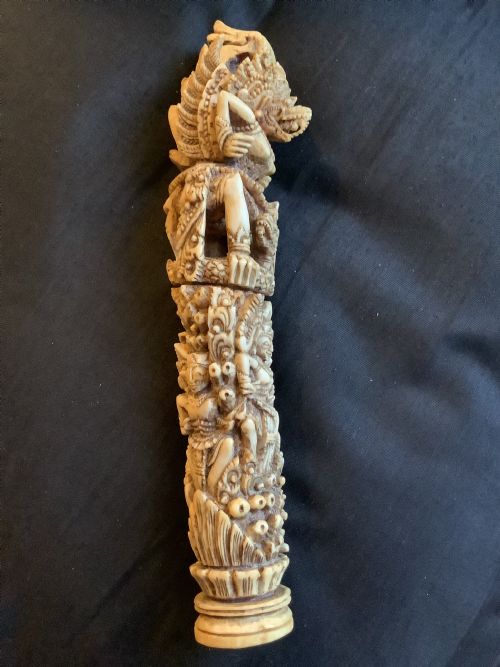
The standard of a carved bone handle rests primarily on the depth and definition of the carving work. Pieces displaying crisp relief work and intentional subject matter sit clearly above simpler, plain-turned grips.
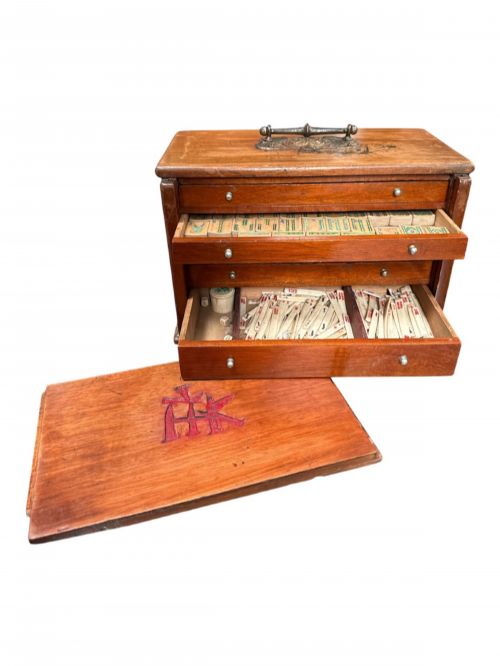
Material selection also dictates the hierarchy, with dense whale tooth or well-figured stag horn commanding greater visual interest than standard plain bone. Furthermore, the integration with secondary elements like silver mounts or fitted wooden cabinets elevates the overall execution.
Some nineteenth-century Japanese parasol handles are carved entirely with tiny, watchful frogs.
The Carved Bone Handle Glossary
- Bone
- A hard, rigid organic material derived from animal skeletal structures used widely for handles and decorative inlays. It accepts fine carving lines and acquires a warm patina over time.
- Stag Horn
- The shed antler of a stag, characterised by a dense outer layer and a porous, textured interior core. Carvers often utilise the rough exterior texture to create tactile walking stick grips.
- Meiji Period
- A historical era in Japan lasting from eighteen sixty-eight to nineteen twelve, known for exceptional decorative arts. Items from this period often display highly intricate figural carvings.
- Sterling Silver
- An alloy consisting of ninety-two point five percent silver by mass, frequently used for collars and mounts. It provides a bright metallic contrast against aged bone.
- Quillons
- The crossguard elements situated between the hilt and blade of a sword or dagger. They protect the hand and add structural balance to Edged Weapons.
Carved Bone Handle: Frequently Asked Questions
What objects have a carved bone handle?
These handles appear on a wide assortment of everyday and ceremonial objects. You find them on walking sticks, parasols, cutlery, table bells, and various edged weapons.
They also serve as grips for specialised items like corkscrews and riding crops, combining functional utility with decorative carving.
How do I care for old bone?
Organic materials require stable environmental conditions away from direct heat sources and extreme moisture fluctuations. Gentle cleaning with a dry or barely damp cloth preserves the surface.
Avoid harsh chemical cleaners or soaking, as these actions dry out the material and damage the natural patina built up over decades.
Are these handles always carved?
While the search specifies carved examples, the inventory includes varying degrees of ornamentation. Some pieces feature simple linear incising, while others exhibit complex figural scenes with animals or human figures.
The complexity of the carving usually depends on the specific cultural origin and the intended function of the object.
What is the difference between bone and horn?
Bone possesses a solid, uniform structure that carves smoothly into intricate shapes. Horn and antler often display a more fibrous or textured exterior with a porous core.
Stag horn and deer antler retain their rough outer bark, providing a natural grip for walking sticks and daggers.