
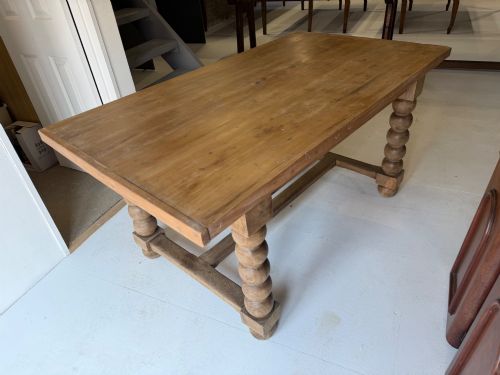
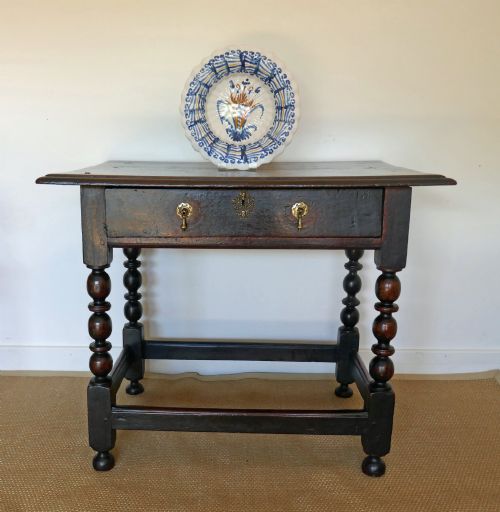
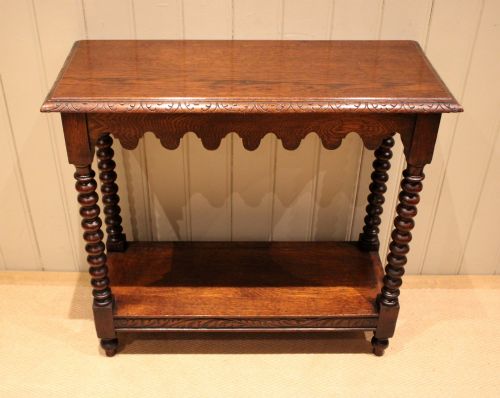
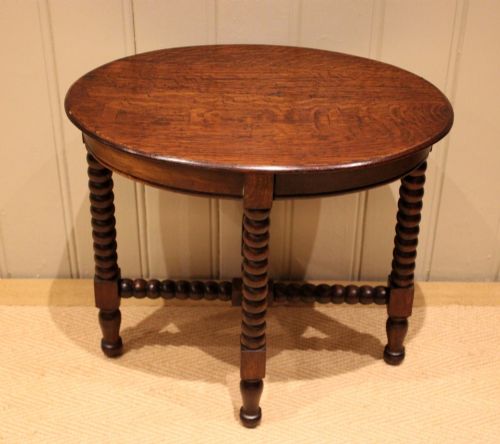


Carved Bobbin Leg Table
A carved bobbin leg table brings tactile turned profile and timber grain to a room, offering practical surface space with centuries of vernacular character.
Carved Bobbin Leg Table
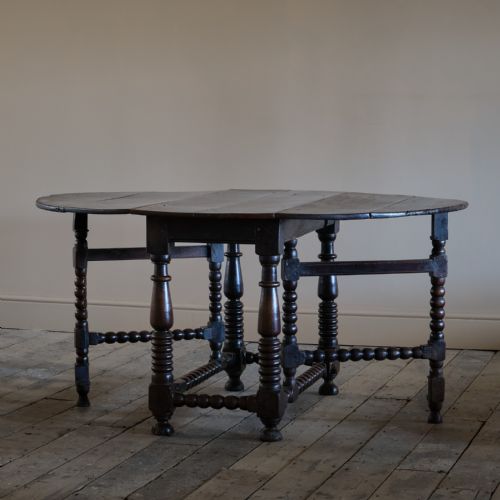
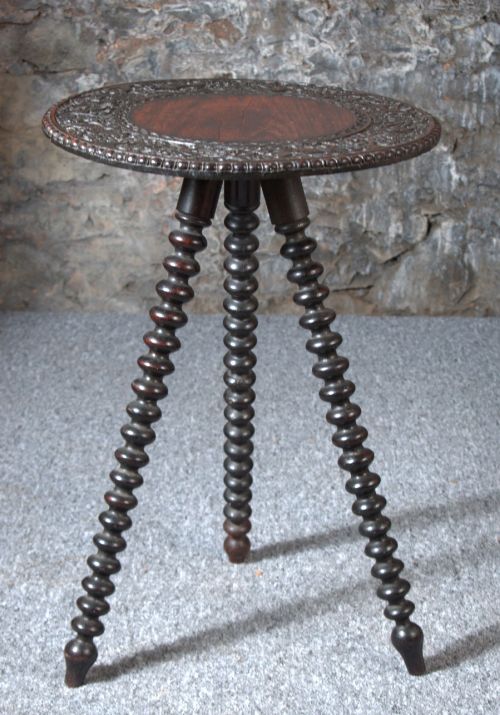
A carved bobbin leg table unites useful surface forms such as side tables, gatelegs, and occasional tables with distinctive spindle-turned supports. These pieces emerge in formats ranging from small lamp tables to large dining and console furniture.
The version you are most likely to meet on this page is the oak side table or gateleg table from the seventeenth century or the Victorian revival periods. Such examples draw upon Jacobean and Charles II traditions, bringing robust timber construction and rhythmic turned underframes into domestic spaces.
Origins stretch across English, French, Dutch, and Anglo-Indian workshops, encompassing diverse timber choices beyond native oak. From Portuguese rosewood to Burmese padouk and French yew tree, these regional variants adapt the turned spindle vocabulary to local woods.
How they were made
Construction relies heavily on solid hardwoods like oak, walnut, mahogany, and beech, shaped through traditional joinery and lathe work. Cabinetmakers turned the characteristic spool or bobbin shapes on manual lathes, ensuring uniform repetition along the vertical supports.
Carving complements the turned legs on many surfaces, utilising hand chisels to detail apron rails and tabletops with foliate or geometric motifs. Pegged mortise and tenon joints secure the framework, allowing timber to move naturally over centuries without failing.
Some nineteenth-century makers drew direct inspiration from seventeenth-century trade tools, inadvertently naming a table style after the humble wooden bobbin.
What varies in quality
Quality rests in the crispness of the lathe turning and the selection of timber figure, distinguishing master craft from provincial output. Bold proportions and substantial oak scantlings elevate a piece, whereas thin stock or softened turnings indicate lesser execution.
The integrity of the structural frame dictates longevity, particularly in gateleg mechanisms and joint attachments where daily stress occurs. Original patination on walnut, mahogany, or oak surfaces preserves historical depth that replacement finishes obscure.
The Carved Bobbin Leg Table Glossary
- Bobbin turning
- A form of spindle turning on a lathe that produces a series of rounded, spool-like shapes resembling bobbins of thread. This technique defines the primary leg structure of seventeenth-century and revival tables.
- Gateleg table
- A drop-leaf table with hinged flaps supported by swing legs that move outward like a gate. This form maximises surface area while allowing compact storage against walls.
- Side table
- A small functional table designed to stand against a wall or beside seating. These objects provide convenient display space in halls, drawing rooms, and chambers.
- Occasional table
- A light, versatile table intended for intermittent use rather than a fixed dining purpose. Victorian iterations often include lamp, cricket, or gypsy forms.
- Patina
- The surface sheen and colour developed by timber over long periods through oxidation, handling, and wax polishing. This quality marks genuine age across antique hardwoods.
Carved Bobbin Leg Table: Frequently Asked Questions
What is a bobbin leg?
A bobbin leg is a turned wooden support shaped on a lathe into a sequence of rounded, repeating spheres or spools. This decorative profile draws inspiration from seventeenth-century furniture design.
Cabinetmakers utilised this spindle method to add texture and rhythm to table legs and underframe stretchers. The resulting shape remains sturdy while introducing intricate visual detail.
How do I date an antique table?
Dating relies on observing timber species, construction methods, tool marks, and overall stylistic characteristics of the period. Seventeenth-century examples typically employ heavy oak with pegged joints, whereas nineteenth-century revival pieces display machine-sawn components.
Examining the wear patterns and surface patina also helps establish chronological age. Comparing proportions and hardware to documented examples refines the attribution.
Where should I place a side table?
A side table fits well in entryways, beside living room seating, or against a hallway wall as a console surface. Its compact footprint provides a convenient spot for lamps, books, or decorative objects.
Choosing a location with stable humidity protects antique hardwoods from excessive drying or moisture. Placing the piece away from direct heat sources preserves the timber and finish.
Are gateleg tables practical today?
Gateleg tables offer exceptional versatility because their hinged leaves fold down to save floor space or extend for dining. This adaptability suits modern rooms where multi-functional furniture is desirable.
Operating the swing leg gently ensures the historic hinges and joints remain secure during use. These tables combine historical craftsmanship with everyday utility.