


Carved Base Centre Table
A carved base centre table anchors a room with sculptural timberwork and practical round or rectangular tops from the nineteenth century.
Carved Base Centre Table
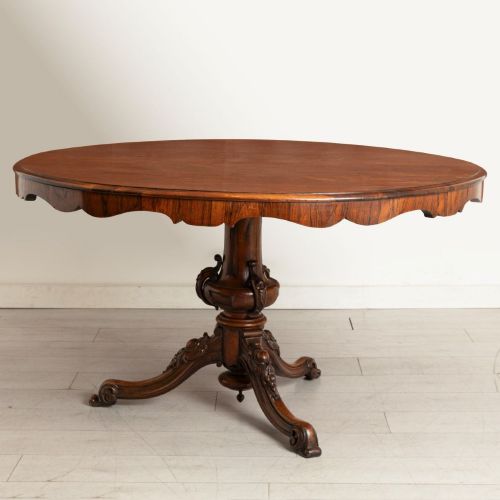
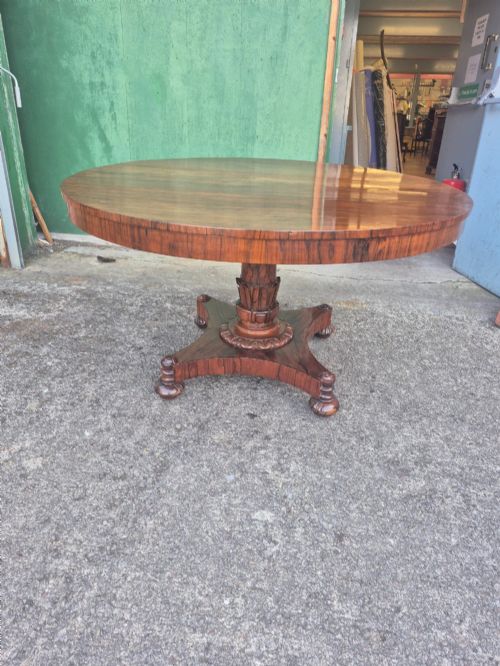
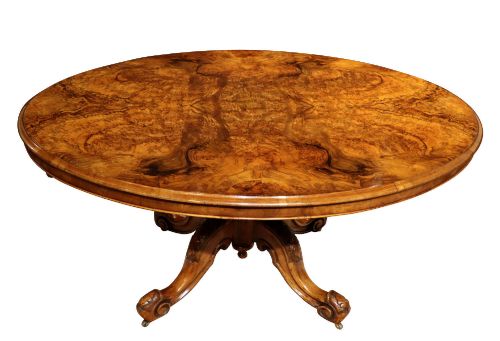
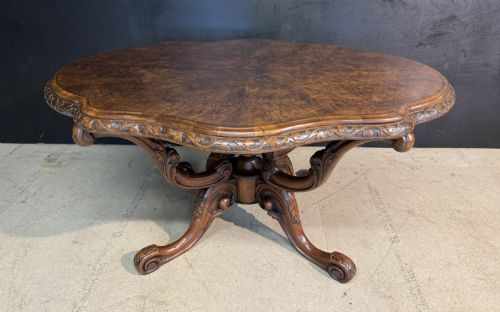
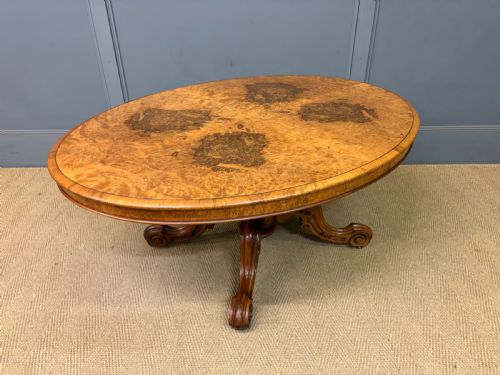
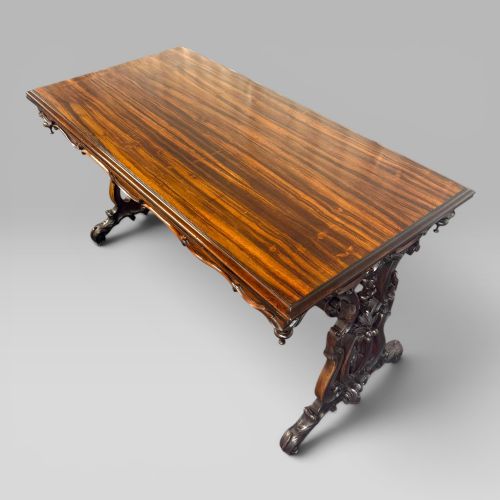
A carved base centre table serves as a focal point in a reception room, designed to stand free in the middle of a space rather than against a wall. The pieces you encounter most frequently on this page date from the nineteenth century, encompassing the Regency, William IV, and Victorian periods.
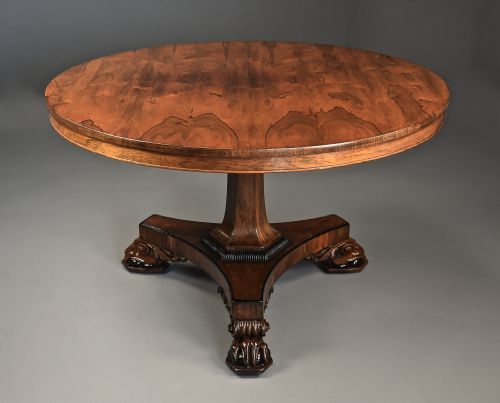
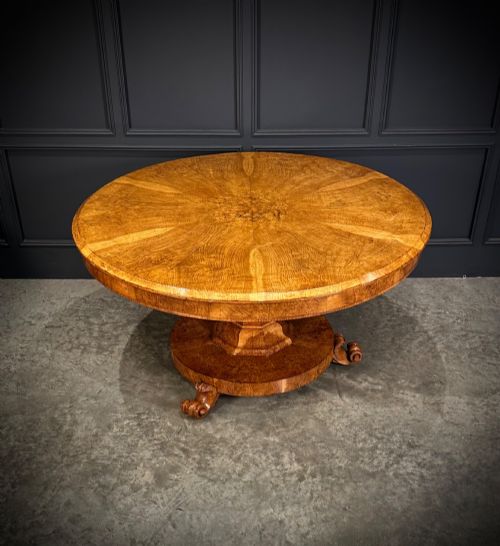
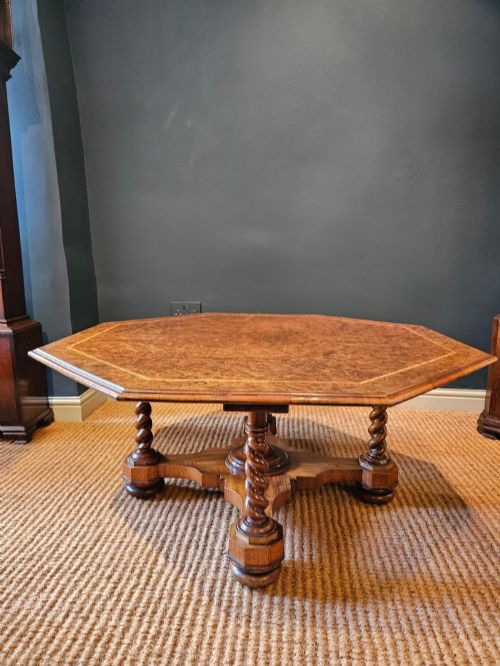
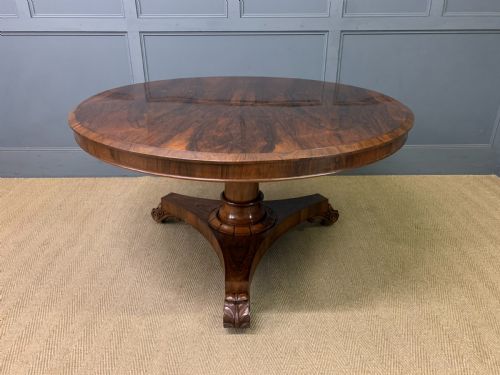
The form covers several variations including breakfast tables, tilt-top tables, loo tables, and occasional coffee tables. These examples often feature circular, oval, or octagonal tops supported by robust pedestals, triform or quadrapod bases, and elaborate carved supports.
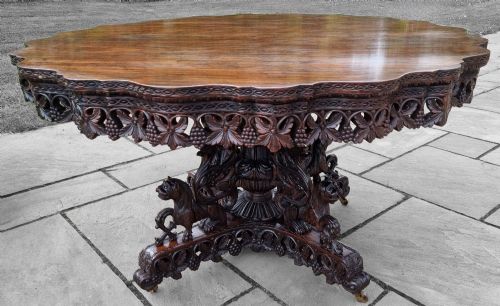
Origins span English workshops, Scottish makers, French ateliers producing gueridons, and Anglo-Indian production using exotic timbers like padauk. The unifying element across all these variations remains the substantial carved base that grounds the piece.
Materials and construction
Cabinet makers utilised dense hardwoods such as rosewood, mahogany, walnut, and burr walnut, often laid as fine veneers over solid secondary timbers to display rich grain patterns. Specialised pieces also incorporate exotic woods like padauk and zebrawood, alongside contrasting marquetry inlay.
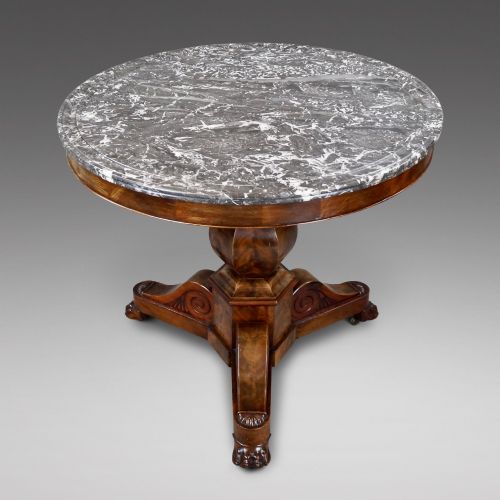
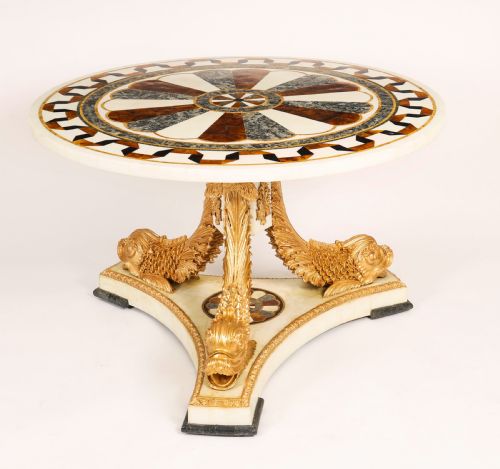
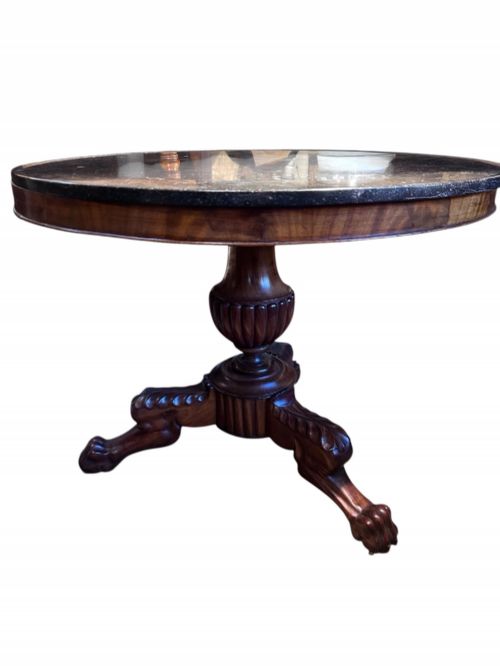
Table tops frequently pair with heavy central pillars carved into foliage, scrolls, or animal motifs, terminating in robust tripod or quadruple platform bases equipped with castors for mobility. French gueridons and specific English examples often feature inset marble slabs or giltwood accents.
Tilt-top and snap-top mechanisms allowed large dining and breakfast tables to be stowed against walls when not in use, requiring precise joinery and pivoting iron or brass catches to secure the heavy timber tops.
Several heavy tables arrive with hidden castors beneath carved paws, ready to glide across the carpet at a moment's notice.
Distinctions in craftsmanship
The depth and crispness of the hand-carving on the central pedestal and base separate standard production from exceptional examples. Superior pieces display deeply undercut foliage, sharp details, and harmonious proportions between the heavy top and the supporting legs.
Selection of timber veneer dictates visual hierarchy, with quarter-veneered burr walnut or figured flame mahogany commanding higher regard for their symmetrical grain arrangement. The integration of specialised materials like specimen marbles or parcel gilding further elevates the status of the piece.
Gillows
The Carved Base Centre Table Glossary
- Gueridon
- A small French table, often circular with a central pillar, designed for displaying decorative objects or serving drinks. These pieces frequently feature marble tops and giltwood or mahogany frames.
- Tilt-top table
- A table with a hinged top that rotates to a vertical position when not in use. This mechanism allowed large dining and breakfast surfaces to save floor space.
- Triform base
- A three-sided pedestal support resting on three feet or castors. It provides stable foundation for circular centre and breakfast tables.
- Padauk
- A heavy, durable tropical hardwood with a reddish-brown colouration used in Anglo-Indian and nineteenth-century furniture. It accepts intricate hand-carving exceptionally well.
- Marquetry
- The art of applying decorative pieces of veneer to a structure to form intricate patterns and pictures. Victorian examples often incorporate floral motifs across the table top.
Carved Base Centre Table: Frequently Asked Questions
How were centre tables used?
These tables stood in the middle of large nineteenth-century rooms to hold lamps, books, or decorative objects. Breakfast and loo tables also functioned for dining, card games, and morning gatherings.
Larger versions with tilt mechanisms could be folded down and pushed to the edge of the room to clear floor space for dancing or entertaining.
How do I tell Regency from Victorian tables?
Regency pieces tend to show cleaner classical lines, restraint in ornament, and influences from French Empire or Thomas Hope designs. Rosewood and mahogany dominate this earlier phase.
Victorian tables generally present heavier proportions, exuberant naturalistic carving, and a preference for burr walnut, marquetry inlay, and complex pedestal shapes like quadrapod bases.
Can I use a breakfast table for daily dining?
Most nineteenth-century breakfast and centre tables offer sturdy construction suitable for regular use. Their solid timber bases and thick tops handle daily activities comfortably.
Round formats encourage conversation during meals, though you should protect polished wood surfaces from heat and moisture using appropriate mats.
What is a tilt-top mechanism?
A tilt-top or snap-top mechanism uses a hinged block beneath the table surface that allows the top to lock flat for use or pivot upright. A brass or iron catch secures the heavy top in position.
This clever engineering allowed massive mahogany and rosewood tables to be stored flat against a wall when the room needed to be cleared.