


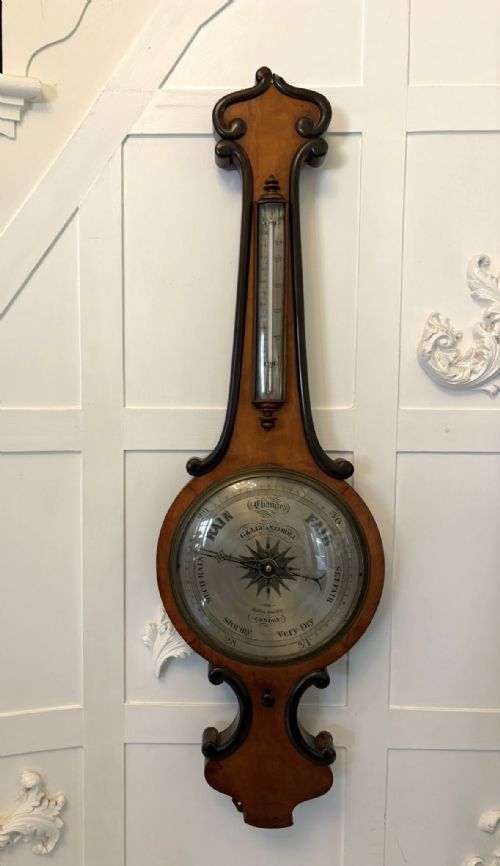
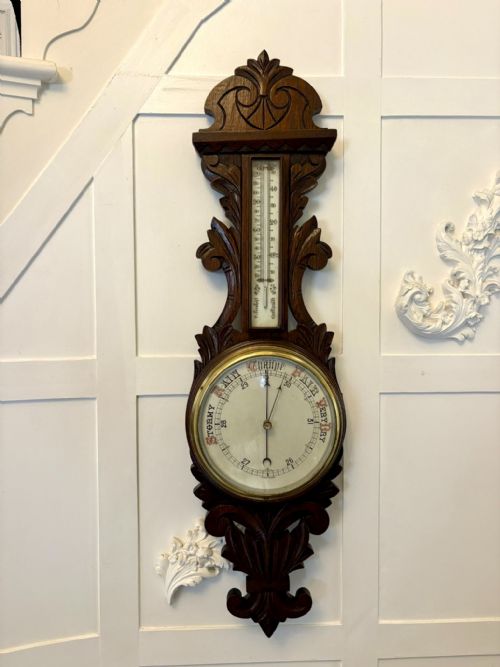


Carved Barometer Thermometer
A carved barometer thermometer is a domestic instrument that measures air pressure and temperature while adding carved woodwork to a wall.
Carved Barometer Thermometer
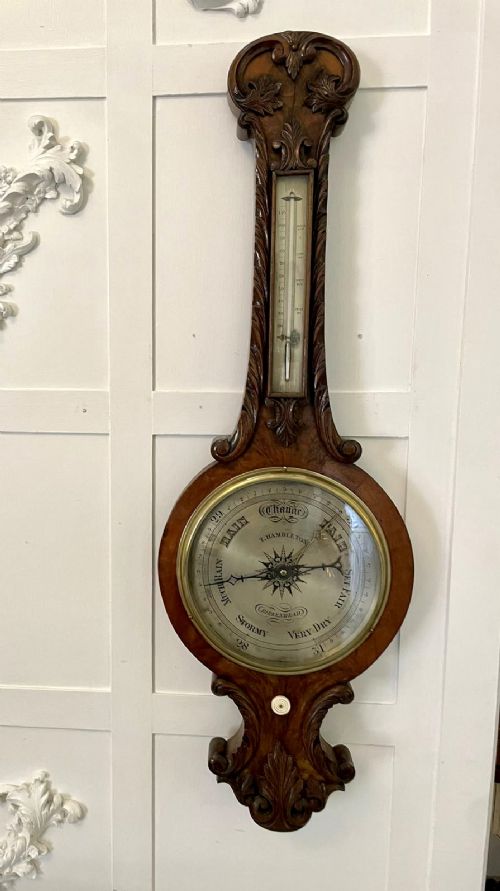
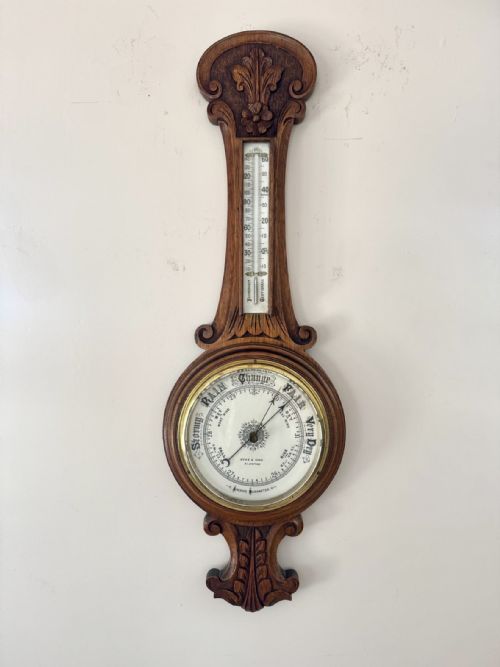
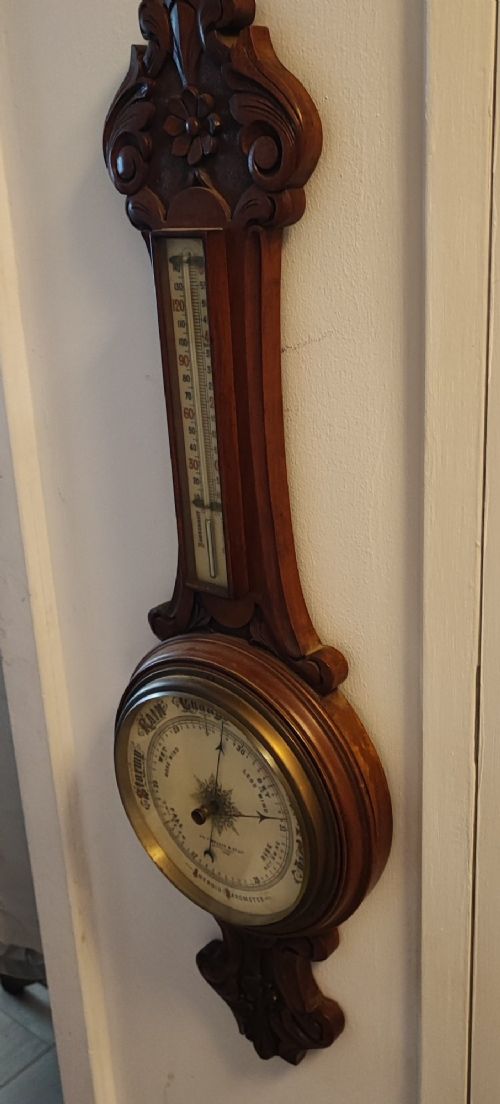
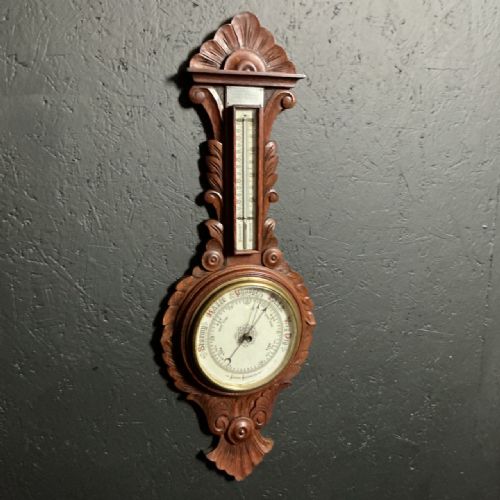
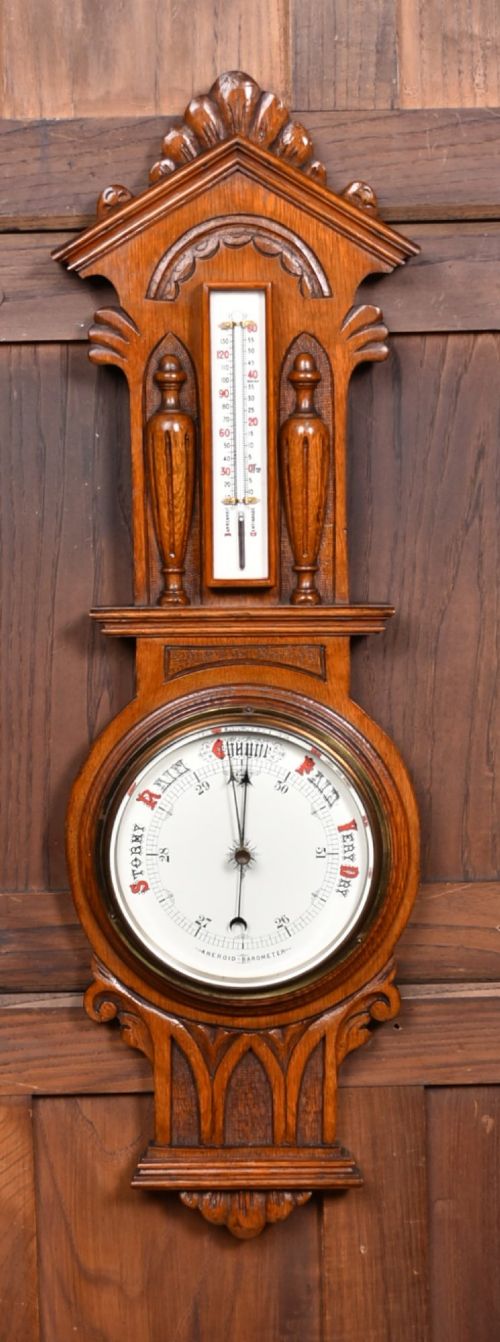
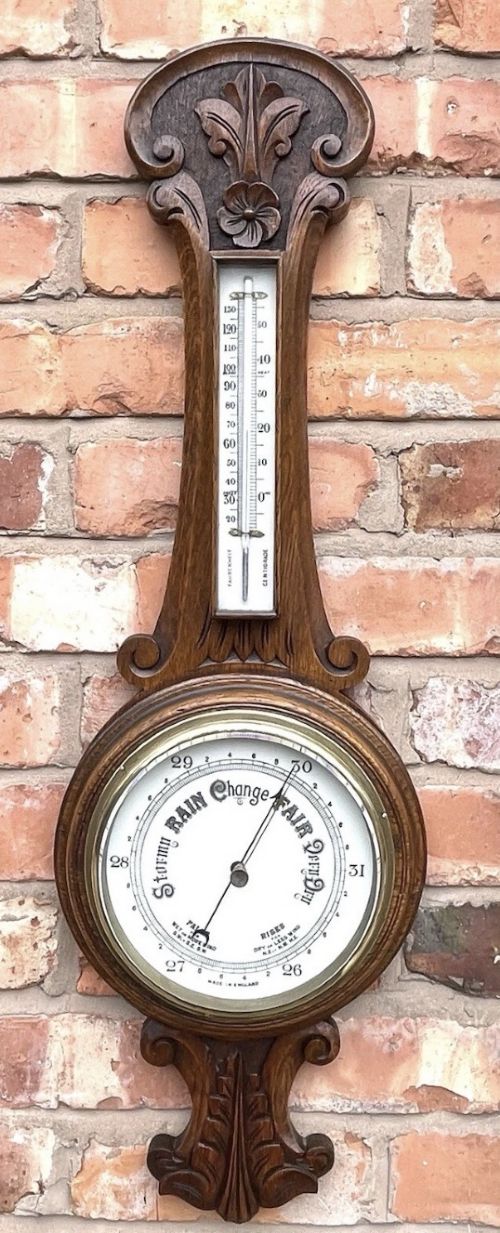
A carved barometer thermometer combines a weather-measuring dial with an integrated thermometer on a wooden wall-hanging mount. When you search for a carved barometer thermometer, you encounter pieces originating from the Victorian and Edwardian eras, spanning from the mid-nineteenth century to the early twentieth century.
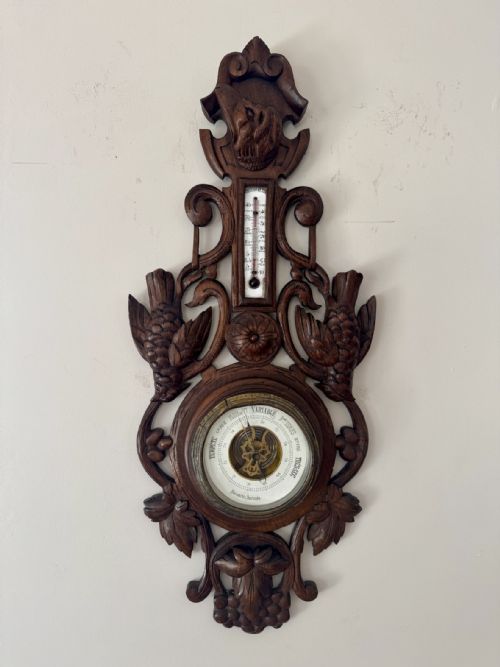
The surviving examples take several forms, most notably the banjo barometer shape alongside oak architectural wall pieces and Black Forest carvings. Walnut, burr walnut, and carved oak provide the structural support for the glass dials and brass bezels found across these items.
Makers such as Negretti & Zambra and Maple & Co produced these instruments alongside regional makers in London, Sleaford, and Glasgow. The regional diversity ranges from British domestic workshops to continental Black Forest and Scandinavian carvers.
Materials and construction methods
Carved barometer thermometer pieces rely upon solid hardwoods including oak, walnut, and mahogany, frequently shaped into banjo or architectural profiles. The timber frames receive hand-carved ornamentation, such as foliage or birds, executed by craftsmen before the fitting of the mechanical works.
Aneroid movements or traditional liquid columns connect to glass dials and brass surrounds, while secondary thermometer scales utilise ivory, porcelain, or glass panels. These components integrate into the wooden chassis alongside carved bezels and crests.
The documented pieces span from the mid-nineteenth century through the Edwardian period, incorporating Black Forest and Neo-Classical styles.
Distinctions in craftsmanship and origin
The distinction between standard domestic barometers and superior examples rests in the depth and execution of the wood carving. Pieces bearing the signatures of notable makers or retail houses display greater refinement in the dial engraving and the cabinetwork.
Proportions and timber selection drive the character of each piece, with burr walnut and figured oak representing the higher end of material choice. The integration of auxiliary instruments, such as combined clocks and crescent thermometers, separates utilitarian pieces from elaborate wall decorations.
Hyde & Sons Sleaford·G & L Guanziroli London·Negretti & Zambra·W Watson & Sons·J Hughes London·Maple & Co·James H Kelly of Glasgow
The Carved Barometer Thermometer Glossary
- Aneroid barometer
- An instrument that measures atmospheric pressure using a flexible metal box called an aneroid cell, without employing liquid mercury. This mechanism allowed makers to construct compact wall-hanging instruments.
- Banjo barometer
- A weather glass housed in a shaped wooden case resembling a banjo, featuring a circular dial at the top and a long trunk below. This form dominated domestic interiors during the Victorian period.
- Stick barometer
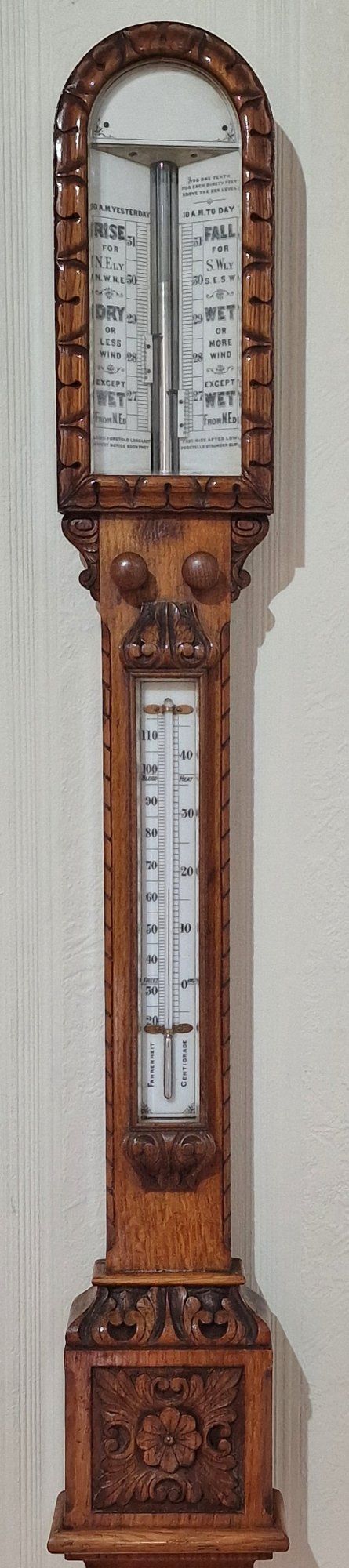
- A tall, slender instrument containing a vertical tube of liquid that displays atmospheric pressure changes. These pieces represent a traditional method of weather forecasting.
- Black Forest
- A style of wood carving originating from a mountainous region in Germany, characterised by naturalistic depictions of animals and foliage. These carved pieces often feature deep relief work.
- Dial
- The face of the instrument where the weather descriptions and numeric pressure scales are printed. Dials are protected by glass within a brass bezel.
Carved Barometer Thermometer: Frequently Asked Questions
How do aneroid barometers work?
An aneroid barometer measures air pressure through the expansion and contraction of a sealed metal capsule inside the case. This movement transfers through mechanical linkages to the pointer on the visible dial.
Such mechanical systems made barometers more robust and suitable for domestic wall hanging without the risk of liquid spills.
Where should I hang a wall barometer?
Wall barometers belong on interior partitions away from direct sunlight, central heating radiators, and draughty doors. Stable ambient conditions ensure the internal mechanism responds purely to atmospheric pressure changes.
Securing the piece to a sturdy wall fixing supports the weight of the hardwood case and glass components.
How do I date a carved barometer?
Dating relies upon stylistic clues within the woodwork, such as Neo-Classical marquetry, Art Nouveau curves, or Victorian Gothic Revival motifs. Maker signatures and retailer stamps inscribed on the dial or timber case provide further chronological evidence.
Comparing the timber types, like burr walnut or dark oak, against known production periods narrows the era of manufacture.
What is a crescent thermometer?
A crescent thermometer is a curved temperature scale mounted on the wooden body of a barometer, following the arc of the carved case. This auxiliary display shows ambient temperature alongside the main pressure dial.
Such curved thermometers appear frequently on nineteenth-century oak and walnut weather instruments.