




Oak Wall Thermometer
An oak wall thermometer is a domestic instrument that brings together practical weather tracking and solid timber craftsmanship.
Oak Wall Thermometer
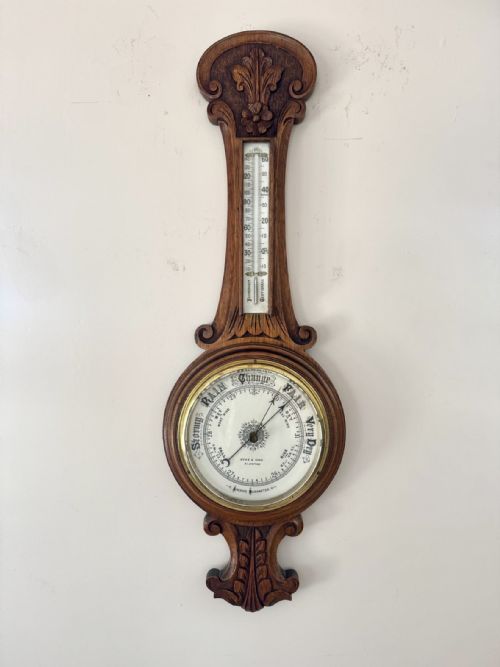
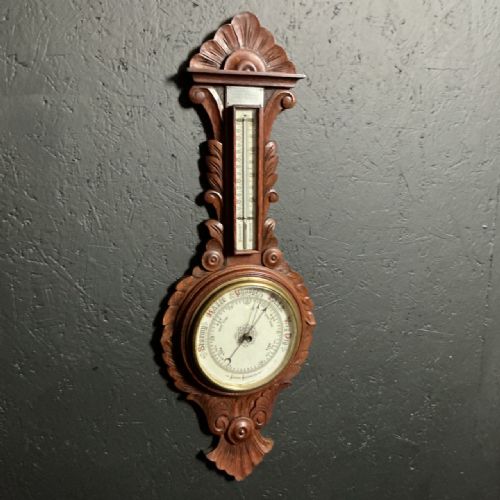
When you search for an oak wall thermometer, you are looking at domestic weather instruments housed in timber cases. These pieces appear primarily alongside barometers and clocks from the Victorian, Edwardian, and nineteenth-century periods.
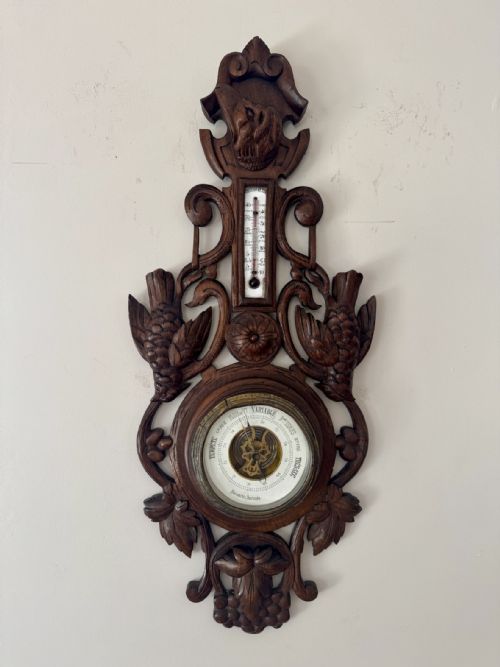
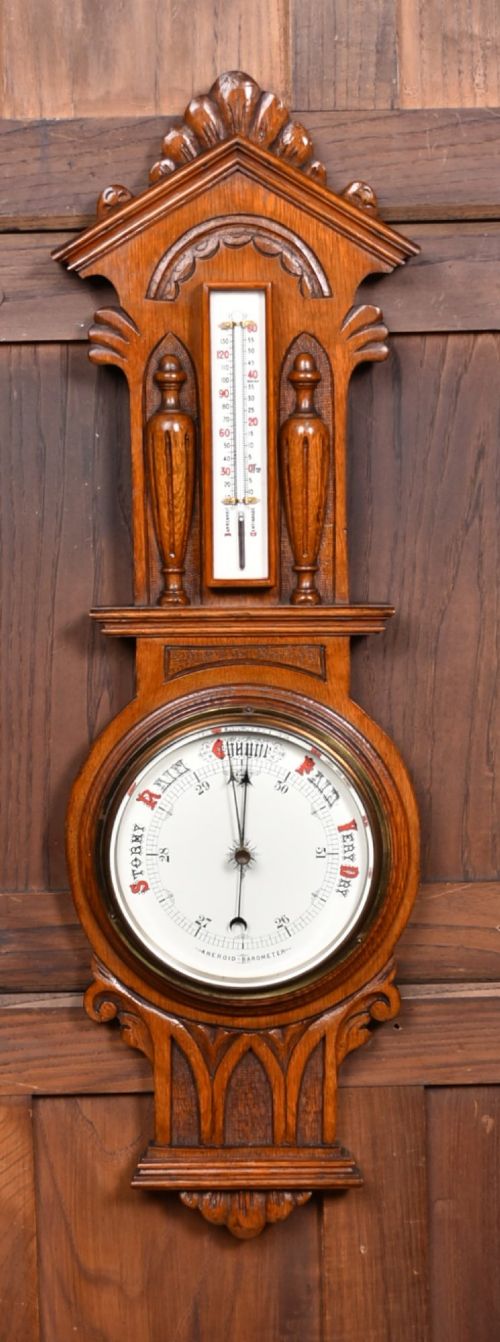
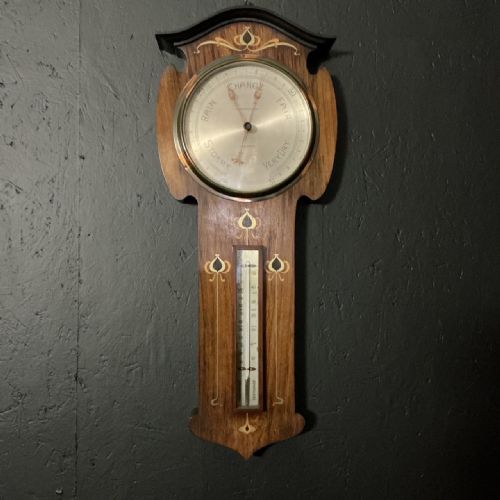
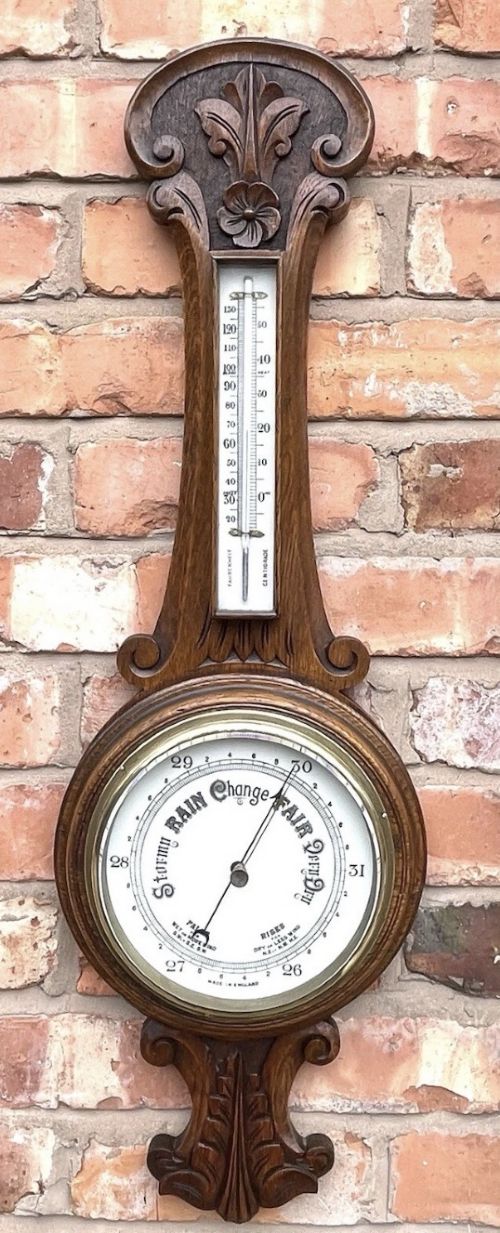
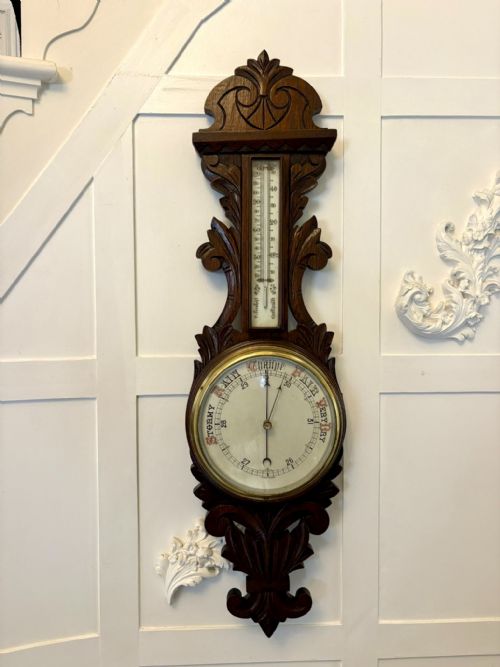
The most common form you will meet on this page combines a thermometer with a barometer within a carved oak housing. These instruments reflect the domestic interiors of the late nineteenth and early twentieth centuries, constructed to hang directly upon a wall.
Materials and construction
Makers built these pieces using solid oak, carved wood, and occasionally walnut or mahogany, fitted with brass bezels and glass dials. These wooden housings frequently received hand-carved decorative motifs, particularly in Black Forest, Arts and Crafts, and Victorian Gothic Revival styles.
Internal mechanisms utilised mercury or aneroid systems to measure atmospheric changes, mounted alongside exposed thermometer scales made of ceramic, porcelain, or glass. Artisans mounted these delicate instruments securely into heavy timber frames designed to withstand domestic wall placement.
Listings incorporate oak, walnut, and mahogany timbers paired with ceramic, porcelain, and glass thermometer scales across the Victorian and Edwardian periods.
Indicators of quality
The depth and execution of the wood carving separate standard production pieces from finer examples. Crisp hand-carved details, such as birds or foliage, indicate superior workshop origins compared to plain or mechanically shaped timber cases.
The reputation of the retailer or maker listed on the dial also alters the standing of an instrument. Signed pieces by established scientific instrument makers carry greater distinction than unsigned utilitarian pieces.
Negretti & Zambra·Hyde & Sons Sleaford·W Watson & Sons·J Hughes London·Maple & Co
The Oak Wall Thermometer Glossary
- Aneroid barometer
- An instrument that measures atmospheric pressure without liquids, using a flexible metal box. This mechanism is standard in many wall-hanging combination instruments.
- Banjo barometer
- A wall barometer shaped with a circular head and an elongated trunk. This profile allowed space for dials, thermometers, and decorative carvings.
- Mercurial barometer
- A weather glass that uses liquid mercury in a glass tube to indicate barometric pressure shifts. These represent traditional scientific design from the nineteenth century.
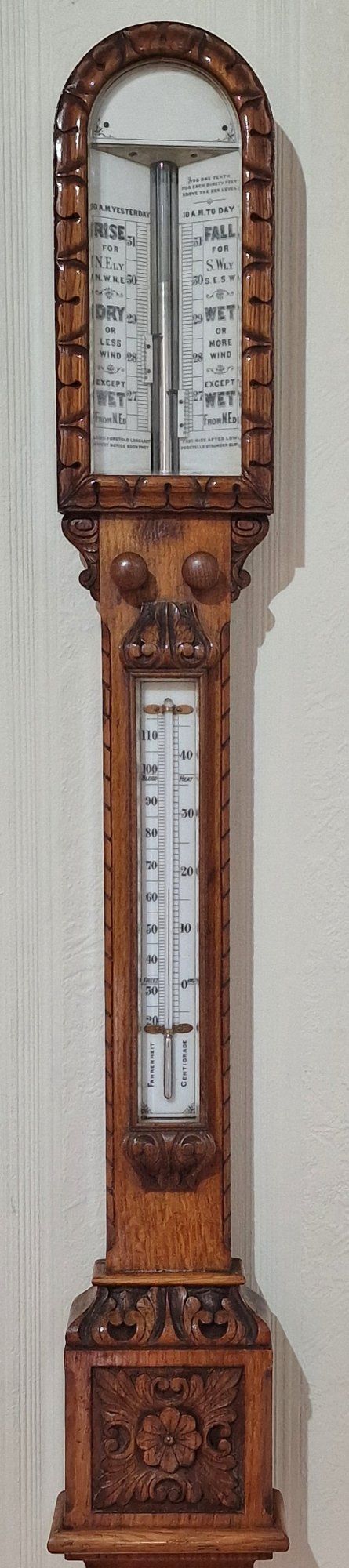
- Stick barometer
- A tall, narrow instrument featuring an exposed vertical tube and scale. These pieces emphasise linear timber framing alongside the glass column.
- Bezel
- The metal ring that holds the glass cover in place over the dial face. Brass is the predominant metal used for this component.
Oak Wall Thermometer: Frequently Asked Questions
How do I mount an oak wall thermometer?
These instruments are designed to hang securely from a sturdy wall hook using the mounting bracket or eyelet fitted to the reverse of the oak case.
Ensure the wall fixing matches the weight of the timber and brass components before hanging the piece in a stable domestic environment.
Do these instruments still tell the temperature accurately?
Many surviving thermometers retain their functional glass or ceramic scales and continue to register ambient room temperature.
However, antique instruments serve primarily as decorative historical objects and may require professional calibration if strict measurement is needed.
How do I tell Victorian from Edwardian pieces?
Victorian instruments often feature heavier, elaborate carvings with gothic or Black Forest influences, reflecting mid-to-late nineteenth-century tastes.
Edwardian pieces generally display lighter Arts and Crafts or simpler Edwardian design lines, consistent with the opening decades of the twentieth century.
Why are thermometers combined with barometers?
Combining multiple weather instruments into a single oak wall case provided households with a complete meteorological station.
This practical arrangement saved wall space while offering both temperature readings and atmospheric pressure tracking in one decorative object.