




Carved Back French Bench
A carved back french bench brings classical European lines into a modern interior through shaped woodwork and comfortable seating.
Carved Back French Bench
A carved back french bench encompasses a range of seating forms including settees, sofas, daybeds, and settles originating from various European periods. The listings present pieces spanning from the eighteenth century through to the early twentieth century, showing substantial variety in regional interpretation.
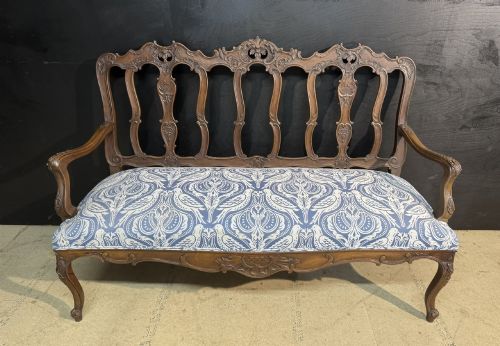
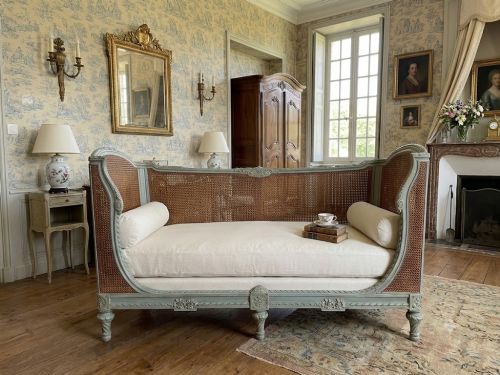
Buyers frequently encounter examples influenced by classic French design vocabulary, such as Louis XVI style frames, Rococo Revival details, and Gustavian aesthetics. These seating options often feature exposed wooden structures shaped into channel backs, triple backs, or open frameworks paired with cane panels or upholstery.
Origins stretch across French provincial workshops as well as broader continental traditions, utilising walnut, oak, beech, and mahogany timbers. The formats range from small parlor settees on fluted legs to larger three-seater couches and box-seated settles.
Materials and construction methods
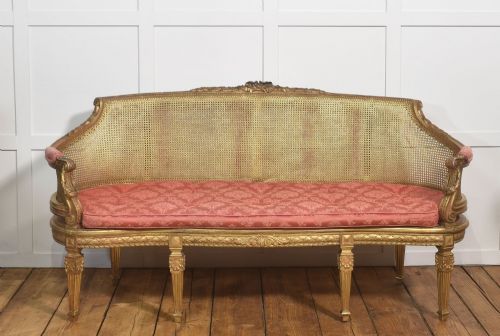
Makers utilised solid hardwoods including walnut, oak, beech, and mahogany to form the structural frames, allowing for deep relief carving along the crest rails and aprons. Giltwood, painted wood, and gilded surfaces frequently finish these wooden skeletons, sometimes combining paint and gold leaf for decorative contrast.
Seating areas and backrests often incorporate natural woven cane panels inserted directly into carved wooden channels. Alternatively, frames support traditional upholstery finished in textiles, linen, fabric, or specialised prints such as Vaas by Emma Grant.
Some nineteenth-century settees hide modern textile art inside traditional French frames, proving historical woodwork loves a contemporary fabric twist.
Distinctions in craftsmanship and finish
The refinement of the wood carving dictates much of the visual hierarchy, distinguishing deeply chiselled botanical motifs and crisp fluting from softer, less detailed moulding. Superior examples maintain structural integrity across complex joinery, ensuring that joined elements remain tight despite age and movement.
Surface treatments also set pieces apart, where original or period-appropriate paint finishes, patinated gilding, and tightly woven cane display superior ageing compared to later, heavier interventions. The quality of the underlying timber selection directly influences how cleanly the carved details hold their edge.
The Carved Back French Bench Glossary
- Canapé
- A traditional French sofa or settee, usually featuring an exposed carved wooden frame and upholstered or caned back. These pieces often reflect specific court styles like Louis XVI.
- Bergere
- An enclosed upholstered armchair or settee with closed sides, typically featuring exposed wood framing and a loose seat cushion. They provide a comfortable, enveloping seat.
- Giltwood
- Timber coated with a thin layer of gold leaf or gold paint applied over a prepared gesso surface. This finish creates a luminous, reflective appearance popular in formal reception rooms.
- Settle
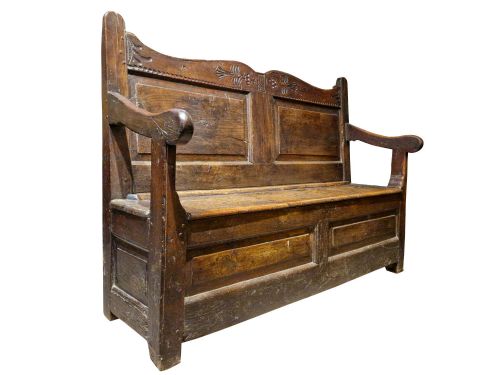
- A wooden bench with high backboards designed to block drafts, often incorporating a box seat for hidden storage. Eighteenth-century examples rely heavily on solid oak construction.
- Fluted legs
- Columns or furniture legs decorated with parallel vertical grooves. This classical detail appears frequently on furniture following neoclassical design principles.
Carved Back French Bench: Frequently Asked Questions
What is a canape corbeille?
A canapé corbeille is a basket-shaped French settee characterised by a rounded, enveloping backrest that curves continuously into the armrests. This design creates a snug, enclosed seating area.
Such forms typically emerge within revival styles of the late nineteenth and early twentieth centuries, pairing exposed carved frames with caned or upholstered panels.
How do I identify a Louis XVI style bench?
Louis XVI style seating relies on classical straight lines, symmetrical proportions, and geometric forms. Look for fluted legs, carved rosettes at the joint corners, and rectangular or oval backrests.
These pieces contrast sharply with the earlier curved, asymmetrical lines of the Rococo or Louis XV periods.
Can I use an antique settee daily?
Historic settees and benches function well in daily use provided the internal frame and joints remain stable. Cane panels and upholstered seats can be repaired or replaced if necessary.
Placing them away from direct heat sources helps preserve the dried hardwoods and traditional finishes.
What is the difference between a settee and a settle?
A settee is typically an upholstered or caned seat designed for comfort in a parlor or living space, featuring padded cushions and decorative exposed frames. A settle is a heavier wooden bench, often with a high solid back and enclosed base, historically used in halls to keep out drafts.
Settles rely entirely on timber construction rather than textile upholstery.