




Neoclassical Painted Settee
A neoclassical painted settee brings classical restraint and light colour into a room, offering both formal elegance and comfortable seating.
Neoclassical Painted Settee
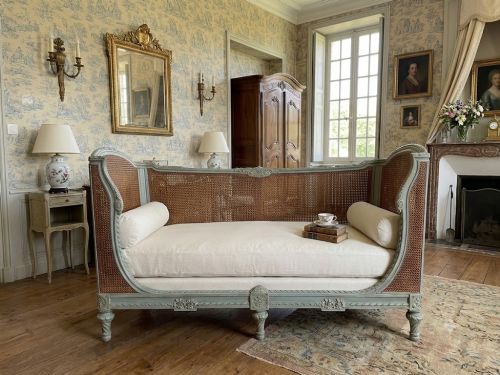
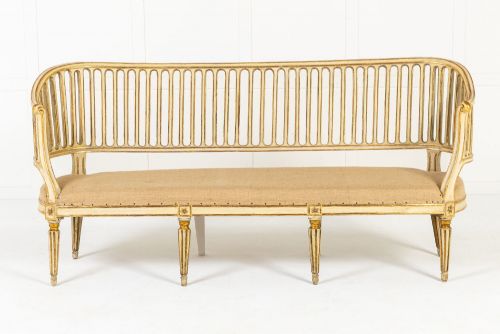
When you search for a neoclassical painted settee, you are looking at seating furniture defined by symmetry, straight lines and classical ornamentation. These pieces typically feature painted wooden frames in cream or pale tones, often highlighted with gilt details.
The versions you are most likely to meet on this page span the eighteenth, nineteenth and early twentieth centuries. They include French Louis XVI style models, Swedish Gustavian pieces, and Italian variations alongside later Edwardian revivals.
Forms range from double and triple back settees to caned daybeds and smaller couches. Many utilise cane work for the seats or backs alongside upholstered elements in linen or fabric.
How they were made
Makers constructed the structural frames of these settees using hardwoods such as beech and satinwood. Woodcarvers shaped the timber with fluted legs, rosette blocks and restrained classical motifs.
Surface decoration relied on layers of paint, frequently finished with gold leaf applied to carved details. Canework was woven by hand into the frames to create light, resilient panels for seats and backs.
Some nineteenth-century makers evidently grew tired of straight lines and snuck subtle curves into otherwise strict neoclassical frames.
What varies in quality
The refinement of the carved wooden ornamentation dictates the standing of a piece. Crisp detailing on the floral swags and fluted legs separates finer work from simpler production.
The execution of the painted finish and the preservation of original or early surfaces matter significantly. Original paint with subtle craquelure holds more appeal than heavy modern repainting.
The Neoclassical Painted Settee Glossary
- Gustavian
- The Swedish interpretation of French neoclassical design, known for its pale painted finishes and austere elegance. This style emerged during the reign of King Gustav III.
- Canework
- Woven rattan or cane panels utilised for the seats or backs of seating furniture. It provides a lightweight and flexible surface.
- Bergère
- An enclosed upholstered armchair or sofa with solid upholstered sides. The style became popular in France during the eighteenth century.
- Satinwood
- A durable timber with a natural golden lustre often utilised in fine cabinet making. It provides a smooth surface suitable for decorative painting.
- Gilt
- A thin layer of gold leaf applied to the wooden carved surfaces of furniture. It highlights specific architectural details and mouldings.
Neoclassical Painted Settee: Frequently Asked Questions
How do I clean a painted frame?
Dust the painted wooden surfaces gently with a soft, dry cloth to remove loose particles. Avoid harsh chemical cleaners that can damage the historical paint layers.
For stubborn marks, use a barely damp cloth with mild soap, drying the timber immediately afterwards.
Are these settees comfortable for daily use?
Many of these pieces were designed for formal sitting rather than deep lounging. Their upright backs and structured proportions encourage an upright posture.
Upholstered versions with supportive cushions offer adequate comfort for regular sitting in a drawing room.
How do I identify a Gustavian piece?
Gustavian pieces typically display a distinct Swedish character with lighter, softer painted finishes in cream or grey. The carving is more restrained than French counterparts, favouring simple fluting and tapered legs.
Proportions tend to be direct and functional while maintaining classical symmetry.
Can I place one in a modern interior?
The neutral painted finishes and clean classical lines of these settees suit contemporary spaces well. They provide a historical focal point without overwhelming a minimalist room.
Pair them with simple textiles to let the wooden frames stand out.