
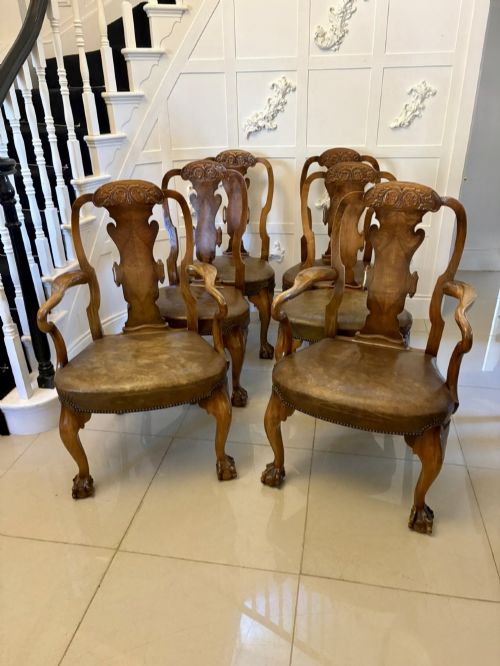
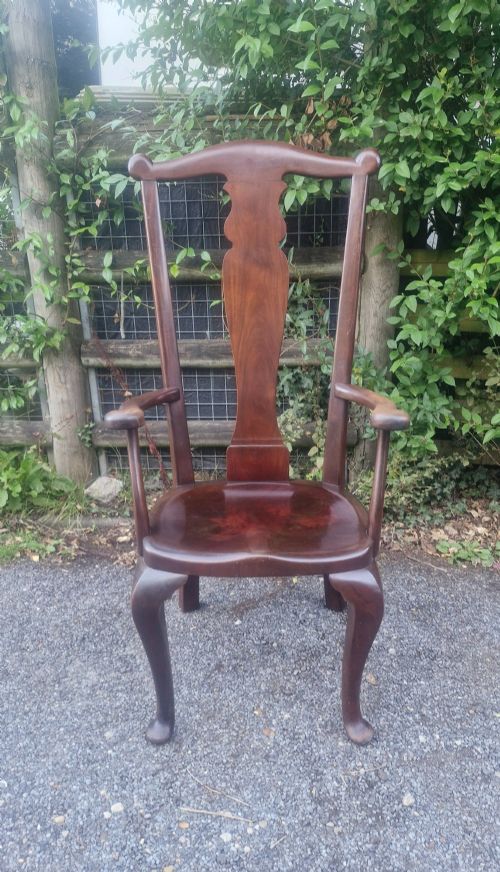
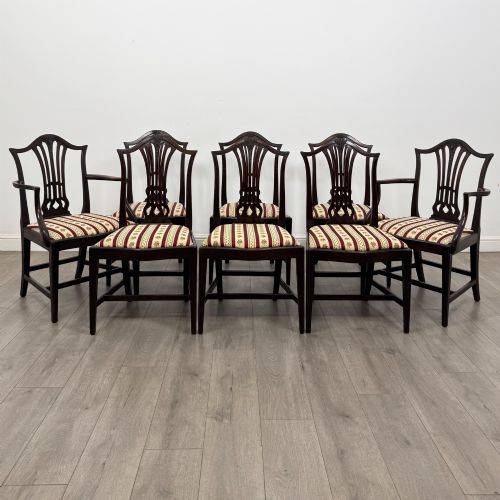
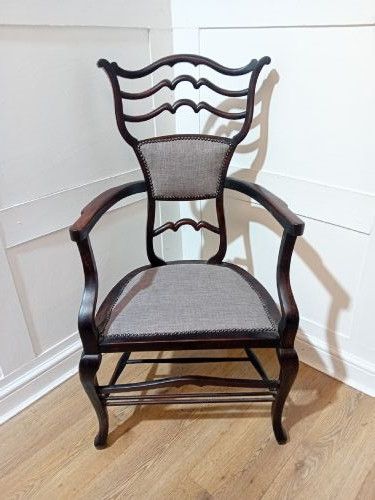

Carved Back Carver
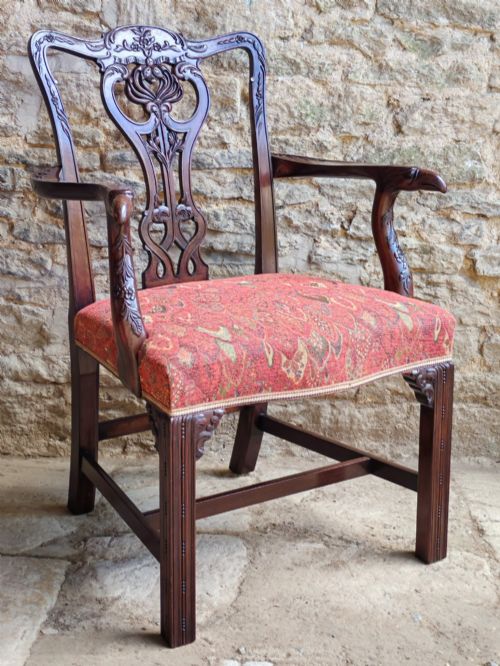
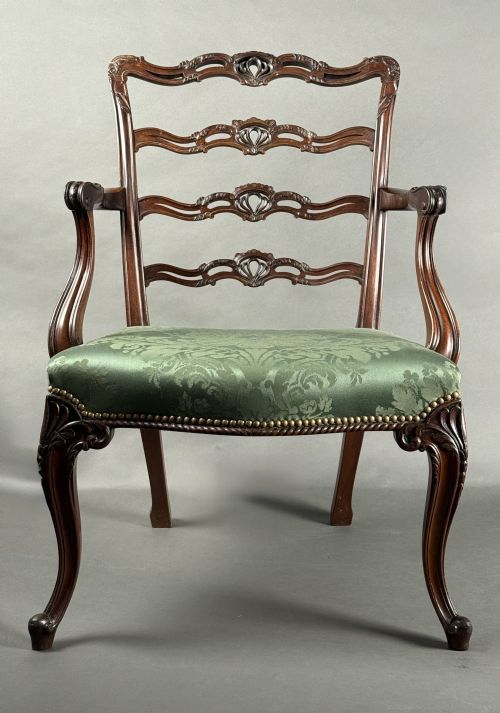
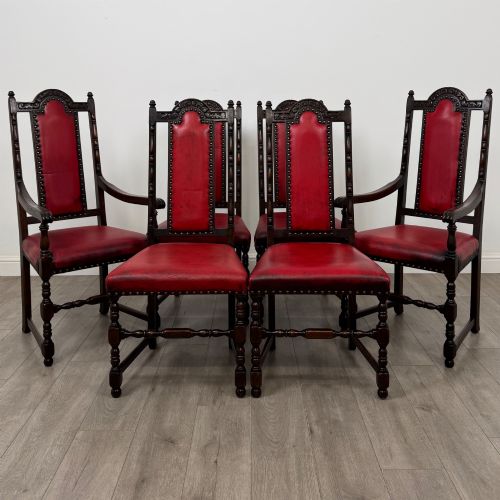
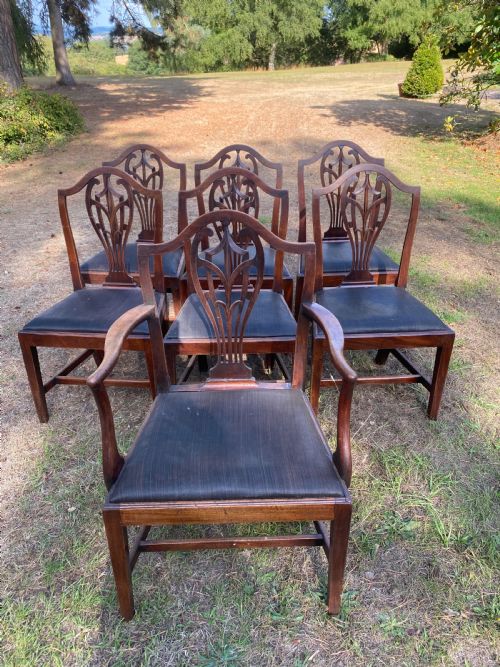
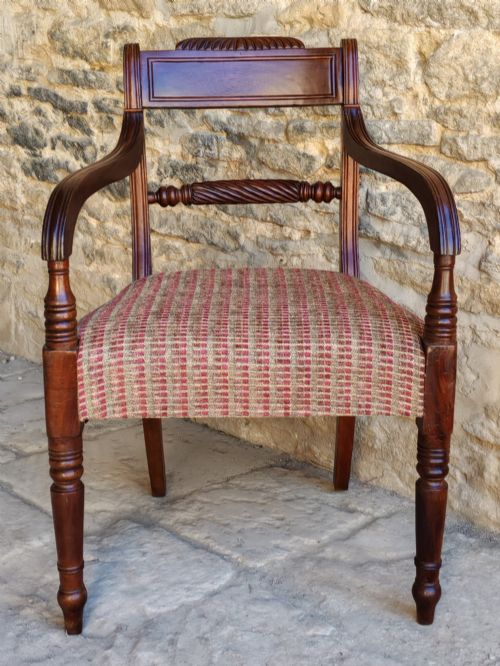
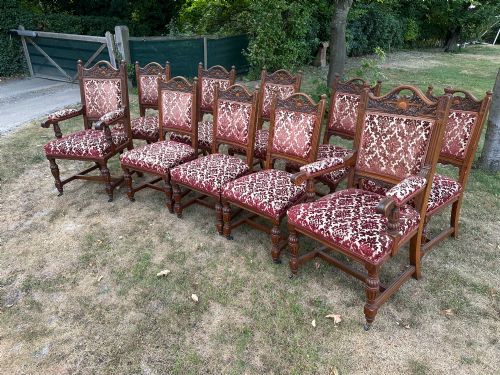
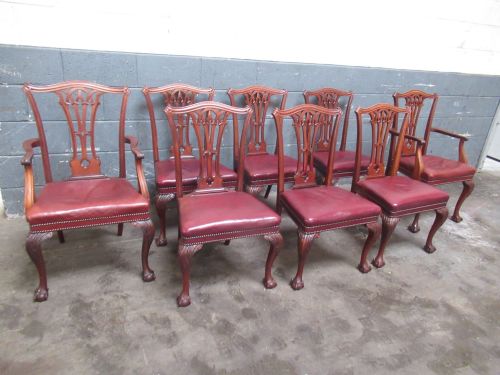
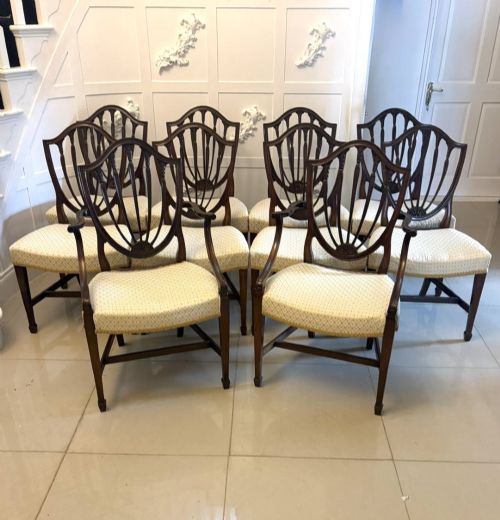
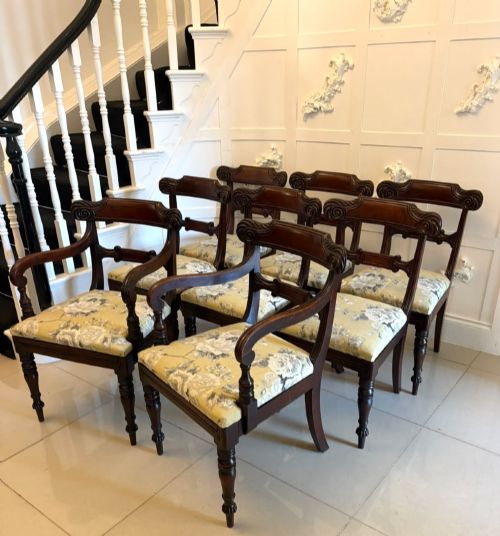
A carved back carver brings architectural presence to a dining table or desk, offering substantial arms and shaped splats for daily use.
Carved Back Carver
A carved back carver is an armchair designed to match a set of dining chairs, distinguished by its open arms and an ornamentally worked back splat or rail. These pieces appear frequently in mahogany, walnut, and oak across the eighteenth, nineteenth, and early twentieth centuries.
The selections available range from formal Georgian and Regency dining chairs with scroll arms to heavy Victorian burr walnut models and Edwardian revivals of Chippendale and Hepplewhite forms. Buyers most commonly encounter single armchairs or matched pairs intended to sit at the heads of a table.
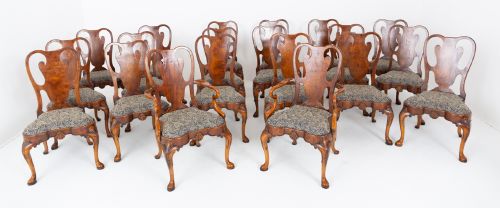
Makers drew on various historical idioms, producing pieces in the Carolean, Jacobean, and Queen Anne styles alongside regional ladder-back and shield-back variations.
Materials and Construction
Cabinet makers relied primarily on dense hardwoods such as mahogany and walnut, which held crisp details under hand chiselling and carving tools. Oak and elm appear in vernacular kitchen and country armchairs designed for heavier utility.
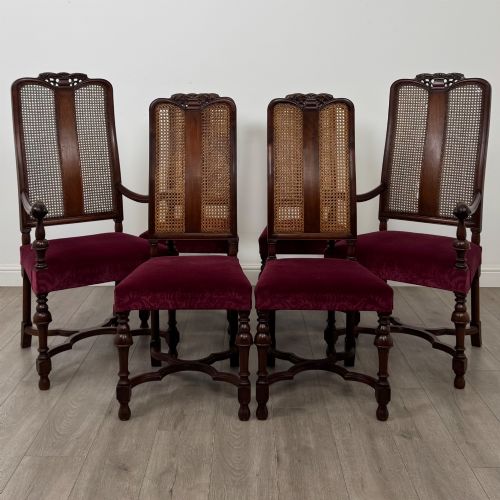
Construction techniques combined traditional mortise and tenon joinery with steam-bent timber for curved crest rails and open scroll arms. Seats were typically dropped in or upholstered over webbing, utilising leather, fabric, velvet, or woven cane.
Several armchairs retain their original tan leather, having survived centuries of dinners and desks.
The Measure of Quality
Quality rests in the depth and crispness of the hand-carved ornament on the backsplat and the structural integrity of the arm supports. Finer examples display clean timber selection with matching grain patterns across the frame and arms.
Proportion and scale dictate the distinction between standard production pieces and superior workshop commissions. The strength of the joinery where the arm meets the upright post determines how well the chair survives heavy daily use.
Howard and Sons·Maple and Co·Alfred Allen of Birmingham
The Carved Back Carver Glossary
- Carver
- An armchair designed to match a set of dining chairs, featuring open arms to accommodate wider clothing. These chairs traditionally stood at the head and foot of the dining table.
- Splat
- The vertical central strip of wood in the back of a chair, often shaped, pierced, or carved. In these pieces, the splat receives the most elaborate ornamentation.
- Shield back
- A chair back shaped in the outline of a heraldic shield, popularised in the late eighteenth century by designers like Hepplewhite. The internal framing often incorporates carved drapery or wheatears.
- Cane
- Woven rattan material used for chair seats and backs. It provides a resilient, lightweight surface that requires careful tension during installation.
- Scroll arm
- An armrest curved outward in a spiral scroll profile. This shape appears frequently on Regency and Victorian dining armchairs.
Carved Back Carver: Frequently Asked Questions
How do I distinguish a carver from a standard dining chair?
A carver includes open armrests designed to provide extra support and room for the person sitting at the head of the table. Standard dining chairs lack these arms to allow multiple chairs to tuck closely together along the sides.
While matching sets often included two carvers and several armless chairs, individual carvers were also built as dedicated desk chairs.
Where should I place a carved back carver in my home?
These armchairs function naturally at the head of a dining table or paired with a writing desk. Their decorative backs and substantial arms also make them suitable as standalone accent pieces in a hallway or bedroom.
Ensure the height of the armrests aligns with the clearance underneath your table or desk if you intend to push it fully underneath.
How do I identify the period of a carved back carver?
Dating relies on timber choice, carving style, and construction methods. Eighteenth-century pieces typically feature solid mahogany with restrained hand-carving, while nineteenth-century and revival pieces often display heavier proportions and dense walnut or oak.
Revival furniture from the Edwardian era frequently mimics earlier Georgian or Jacobean aesthetics but uses machine-assisted finishing techniques.
Can I use a cane seat carver every day?
Cane seats provide sturdy and flexible support when woven correctly, but they require sensible care to prevent drying or snapping. Avoid placing woven chairs in direct sunlight or beside intense heat sources.
Many antique chairs with cane retain their original structural strength and handle daily seating without issue.