


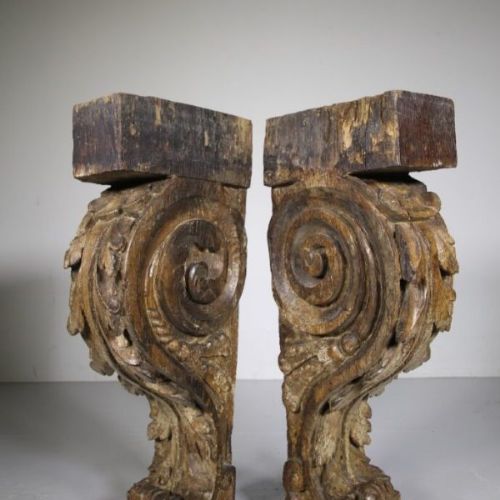


Carved Architectural Brackets
Carved architectural brackets are structural supports and ornamental projections shaped from wood, stone, and plaster to carry heavy beams or display objects on a wall.
Carved Architectural Brackets
When searching for carved architectural brackets, buyers encounter structural supports originally built into buildings to hold up ceilings, shelves, or cornices. These pieces emerge from centuries ranging from the medieval period through the Georgian era and the Victorian age.
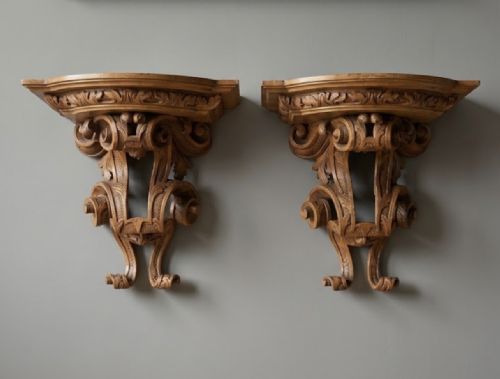
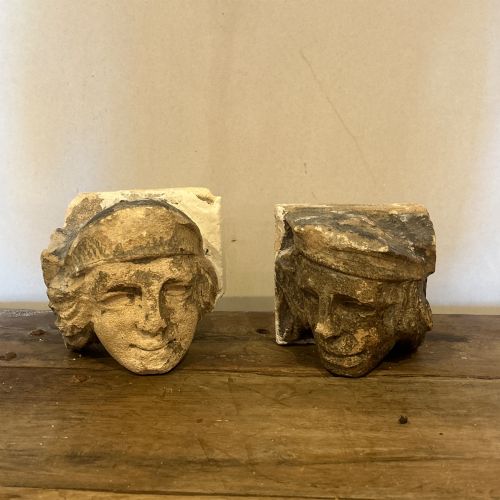
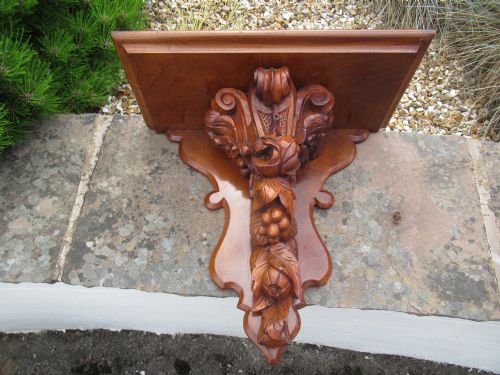
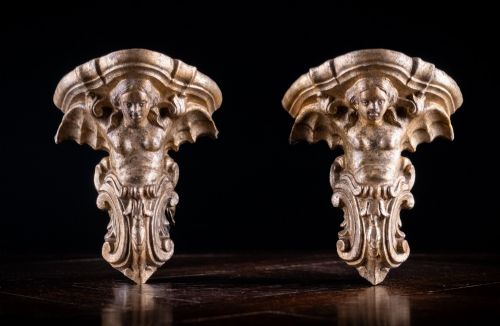
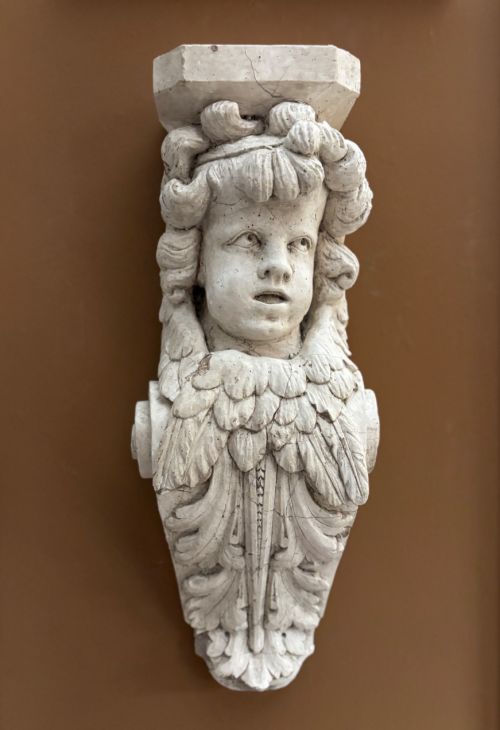
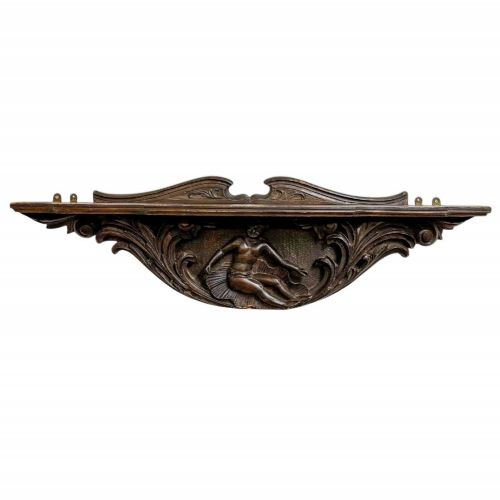
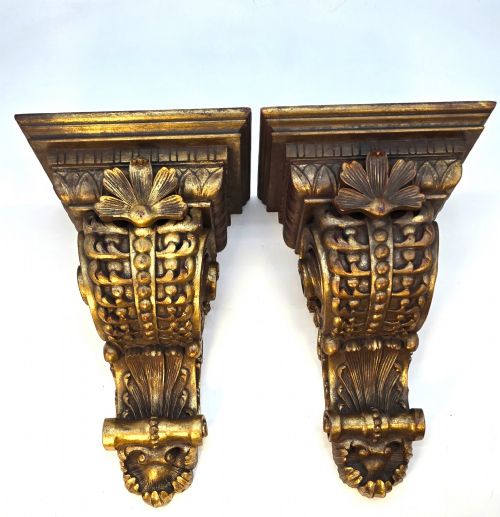
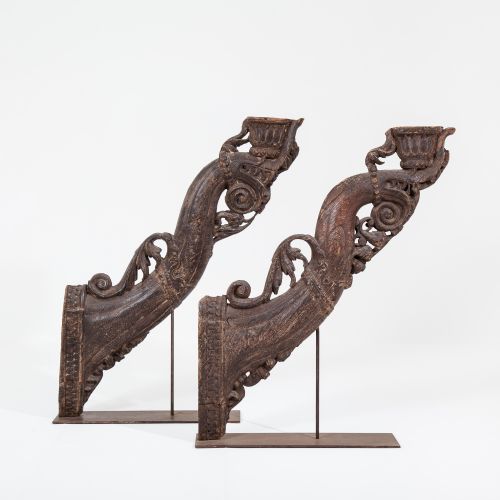
The inventory on this page contains solid oak, walnut, and pine wall brackets alongside limestone corbels and plaster architectural carvings. Forms include paired shelf supports, figural caryatids, and capitals shaped in Gothic, Neoclassical, and Renaissance styles.
Most examples function today as decorative wall shelves or standalone sculptural elements rather than load-bearing members. Buyers frequently find pairs suited for supporting mantels, display boards, or heavy overdoor pediments.
How they were made
Craftsmen carved these pieces primarily from dense timbers such as oak and walnut using chisels and gouges to achieve high relief. Stone examples like medieval limestone corbels were hewn from blocks with heavy mallets and pitched irons.
Surface treatments recorded in the evidence include historic layers of paint, gilt finishes, and exposed waxed wood grains. Plaster versions were cast in moulds and finished by hand to mimic carved stonework.
What varies in quality
Quality in these carvings rests on the depth of the relief and the crispness of the tool work. Master carvers achieved anatomical proportion and fluid drapery in figurative pieces like caryatids and putti, whereas lesser works remain stiff and shallow.
The integrity of the timber or stone dictates longevity. Pieces retaining their original structural tenons or solid mounting blocks hold higher sculptural and historical value than those trimmed down for decorative display.
Luigi Frullini
The Carved Architectural Brackets Glossary
- Corbel
- A structural stone or wooden bracket projecting from a wall to carry a weight above it. Medieval examples often feature grotesque or figural carving.
- Caryatid
- A sculpted female figure serving as an architectural support taking the place of a column or pillar. 17th-century examples frequently show detailed Flemish or Continental attire.
- Capital
- The uppermost member of a column or pilaster, often carved with acanthus leaves or volutes in classical orders like the Corinthian style.
- Overdoor
- A decorative panel or pediment positioned above a doorway, sometimes incorporating a small shelf supported by carved brackets.
- Architectural salvage
- Elements rescued from buildings slated for demolition or alteration. This category preserves historic woodwork and masonry for modern interior display.
Carved Architectural Brackets: Frequently Asked Questions
How were architectural brackets originally used?
Builders placed these supports beneath ceiling beams, roof timbers, and projecting cornices to distribute heavy structural loads safely down into the masonry walls.
Over time, craftsmen also utilised smaller versions internally to support heavy mantelpieces, window hoods, and upper galleries.
Can these old brackets support shelves today?
Many solid oak and walnut brackets retain sufficient structural integrity to hold wooden boards when properly anchored to wall studs. Buyers should inspect the rear mounting points and weight capacity before loading them.
Lighter plaster and delicate giltwood examples are best suited for visual display rather than heavy weight-bearing duties.
How do I tell a 17th-century bracket from a Victorian copy?
Early pieces from the 17th century display tool marks left by hand chisels and show dense timber shrinkage consistent with age. Oak pieces from this era often feature dark patination and deep, primitive relief.
Victorian interpretations frequently utilise machine-sawn backing boards and exhibit different stylistic revivals such as Neoclassical or Medieval Gothic details.
What materials should I look for?
Hardwoods like oak and walnut dominate the finest historic carved brackets, offering durability and rich grain patterns. Stone materials such as limestone appear in medieval and ecclesiastical contexts.
Plaster and terracotta options provide alternative textures, often found in 18th and 19th-century French and Italian architectural schemes.