



18th Century Wall Brackets
These 18th century wall brackets provide architectural support and decorative presence, bringing period craftsmanship directly into your interior.
18th Century Wall Brackets
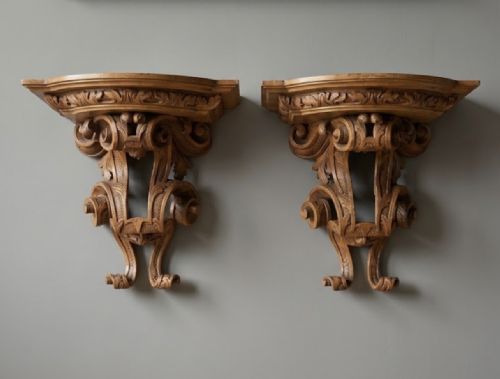
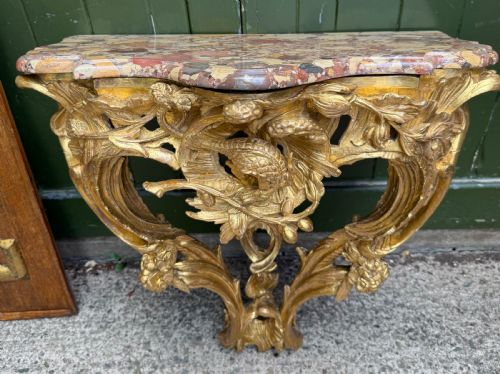
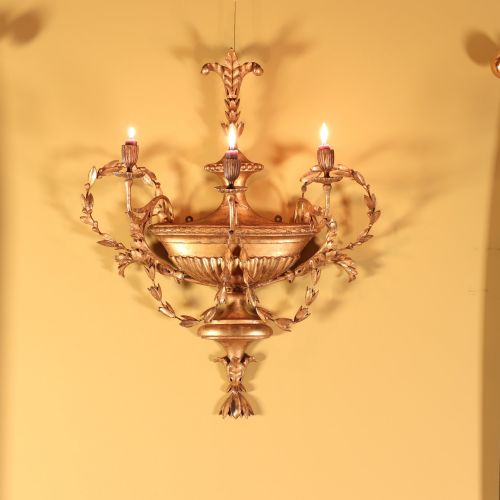
These 18th century wall brackets encompass architectural elements, console tables, and sconces designed to mount directly onto vertical surfaces. Walnut, giltwood, and gesso dominate the forms, reflecting both English Georgian and continental European aesthetics.
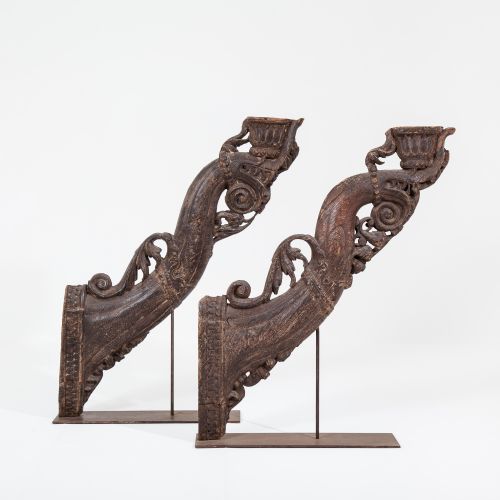
The selection ranges from carved wooden consoles with marble tops to large corbels and functional lighting supports. Pieces span the Georgian and Neoclassical periods, alongside occasional later interpretations.
Buyers meet pairs of carved walnut brackets, giltwood console tables, and structural elements intended for displaying objects or illuminating spaces. Each piece demonstrates the heavy reliance on wall mounting for both utility and ornamentation during the era.
How they were made
Woodcarving forms the primary construction method, utilising walnut and softwoods shaped by hand before receiving decorative finishes. Gesso is applied as a ground layer to accept gold leaf or paint, creating the reflective surfaces seen on giltwood examples.
Marble tops, such as breche d'alep, integrate with stone and wooden bases, while brass and painted wood appear on specialised items like clocks and candleholders. Joinery and structural support rely on period techniques suited to weight-bearing architectural fixtures.
What varies in quality
Depth and crispness of the carving distinguish finer examples, particularly where acanthus leaves, scrollwork, or figurative elements like eagles are rendered with high definition. The integrity of the original gesso and gold leaf surface layers dictates how well a piece has survived centuries of atmospheric change.
Material selection plays a role, with figured marble tops and dense timber framing providing greater structural substance. The harmony between the original design and any later surface treatments determines the overall visual cohesion of the bracket.
Henry Deykin, Worcester·John Seddon of London
The 18th Century Wall Brackets Glossary
- Giltwood
- Wood that has been coated with gold leaf over a prepared gesso ground. This finish creates a luminous surface that catches candlelight or natural illumination.
- Gesso
- A plaster-like mixture applied to wood surfaces to provide a smooth base for gilding or painting. It allows intricate decorative details to be moulded or carved before finishing.
- Corbel
- A structural piece of stone, wood, or plaster projecting from a wall to support a weight. In interior settings, large examples serve both load-bearing and decorative functions.
- Console table
- A table supported by wall brackets or corbels rather than traditional legs. These pieces fit flush against vertical surfaces and frequently feature marble tops.
- Sconce
- A wall-mounted lighting fixture designed to hold candles or lamps. Period examples often incorporate mirrored backs or carved wooden arms to amplify light.
18th Century Wall Brackets: Frequently Asked Questions
How were 18th century wall brackets used?
These pieces served primarily to support clocks, porcelain, busts, or lighting in period rooms. They elevated objects to eye level and made use of vertical wall space.
Larger console versions functioned as small tables without floor legs, often placed beneath mirrors or between windows.
Can these brackets hold heavy weight?
Many structural brackets and corbels were engineered to bear substantial loads, including heavy marble tops and architectural elements. Their capacity depends entirely on the original wall fixing and timber strength.
Wall-mounted clocks and large console tables required robust attachment to masonry or timber studs to remain secure.
What periods are represented in these brackets?
The selection spans the 18th century, incorporating Georgian, Neoclassical, and Baroque styles. Pieces range from early 18th century designs to the turn of the 19th century.
Later interpretations from subsequent centuries also appear, reflecting ongoing interest in earlier aesthetic traditions.