



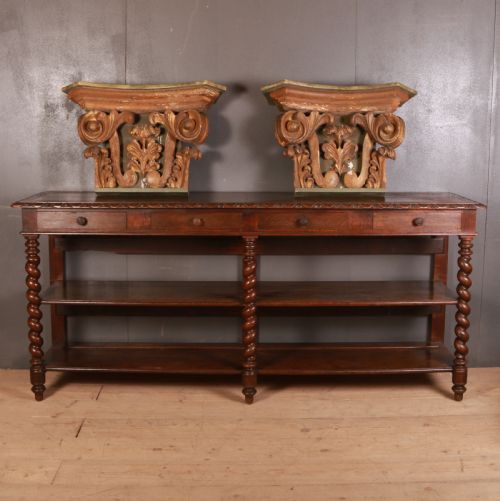

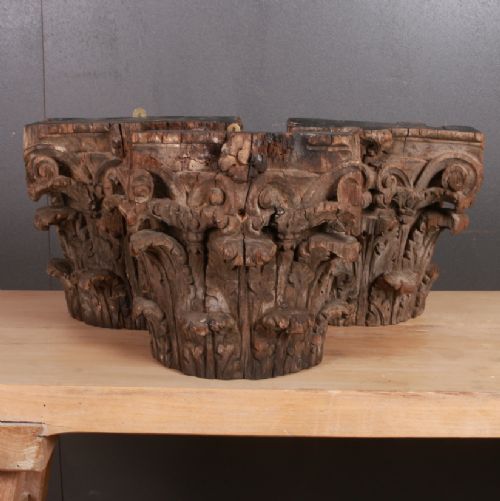
Acanthus Leaf Corbels
These acanthus leaf corbels are architectural supports and wall brackets carved or moulded from timber, plaster, and stone to carry weight or frame interiors.
Acanthus Leaf Corbels
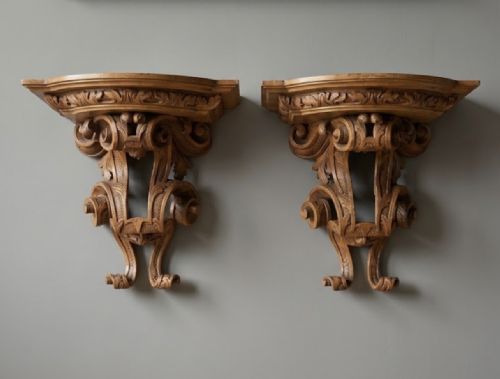
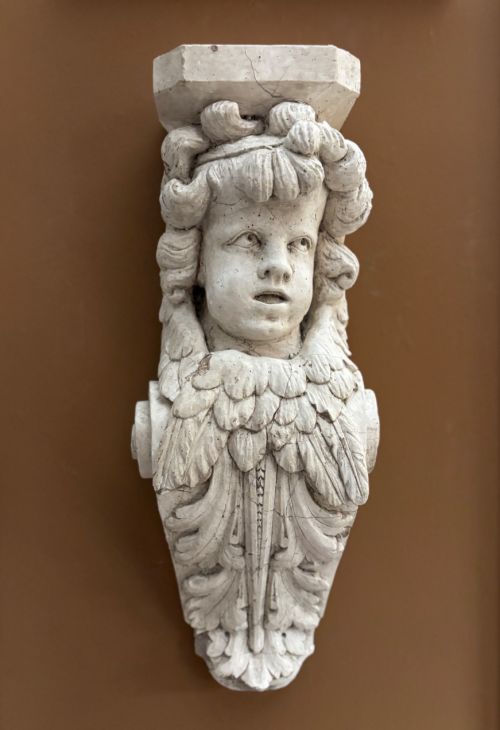
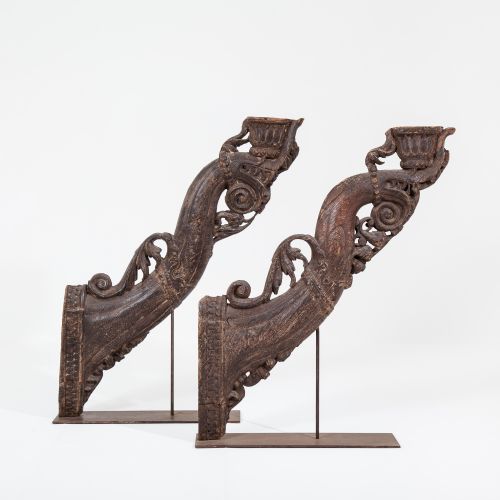
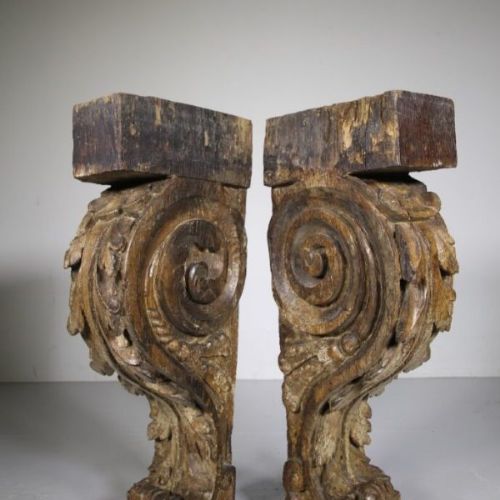
When you search for acanthus leaf corbels, you encounter architectural elements designed to project from walls and support structural loads or decorative shelves. The examples gathered here span the eighteenth and nineteenth centuries, taking the form of wall brackets, capitals, and architectural salvage.
You are most likely to meet timber and plaster versions originating from Georgian, Rococo, and Neoclassical traditions. Pieces range from matched pairs in carved walnut and oak to single plaster brackets finished with gold leaf, gesso, or paint.
How they were made
Carvers shaped these ornaments from solid timbers such as walnut and oak using gouges and chisels to define the scrollwork and foliage. Other pieces utilise plaster or composition cast in moulds, sometimes finished with gesso and gold leaf.
Makers applied surface treatments including paint and gilding to enhance the depth of the carving and protect the material. Joinery on timber brackets often reveals period construction techniques appropriate to eighteenth and nineteenth century workshops.
Current listings feature pieces spanning the 18th Century, 19th Century, and 1930, utilising carved wood, plaster, gesso, and gold leaf.
What varies in quality
The distinction between ordinary and exceptional work lies in the crispness and depth of the carving. Master carvers undercut the foliage to create deep shadows and realistic movement, whereas lesser pieces rely on shallow surface relief or heavy composition layers that obscure detail.
Proportion and symmetry also define the grade of a piece, particularly in matched pairs where balance is essential. Original surface finishes, such as untouched gilding or aged patina on walnut, hold greater integrity than later repainting.
The Acanthus Leaf Corbels Glossary
- Corbel
- A structural member projecting from a wall to carry a weight above it. These pieces often feature scrolling foliage and decorative carving.
- Capital
- The uppermost member of a column or pilaster, serving to concentrate the load from the lintel. Many architectural examples take this classical form.
- Gesso
- A plaster mixture used as a smooth base for paint or gold leaf on wood and plaster surfaces. It allows for fine detail work before gilding.
Acanthus Leaf Corbels: Frequently Asked Questions
How were acanthus leaf corbels used?
These pieces functioned as structural supports for beams, mantelpieces, and overmantels within formal rooms. They also served as decorative wall brackets to display porcelain, busts, and lighting.
Over time, many were removed from buildings during alterations and repurposed as standalone interior ornaments.
What materials are common?
Makers utilised hard timbers like walnut and oak for robust, finely carved architectural brackets. Plaster and composition materials allowed workshops to cast ornate decorative details more rapidly.
Surface finishes frequently included gold leaf, gesso, and paint to mimic stone or enrich the wood.
How do I date an antique corbel?
Dating relies on examining the timber species, tool marks left by the carver, and the composition of underlying gesso or plaster layers. Georgian and eighteenth-century pieces typically display hand-carved details in dense hardwoods.
Nineteenth-century examples often incorporate cast composition or softer pine structures alongside period revival styles.
Can I mount heavy shelves on them?
Solid timber brackets carved from walnut or oak possess the structural integrity to support substantial weight if properly anchored to wall studs. Plaster and composition versions are primarily decorative and suit lighter loads.
Assessment of the rear fixing points and overall material strength dictates safe weight capacities for installation.
Do they come in pairs?
Matched pairs appear frequently among architectural salvage, having originally framed fireplaces, doorways, or windows symmetrically. Single pieces also survive where companion brackets were lost during building alterations.
Pairing allows for balanced interior placement beneath shelves or architectural cornices.