

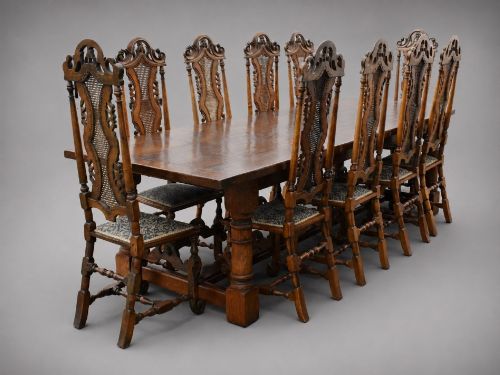
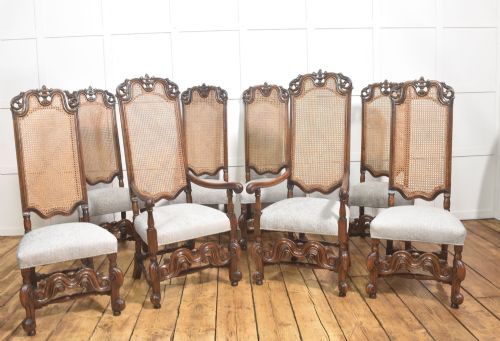
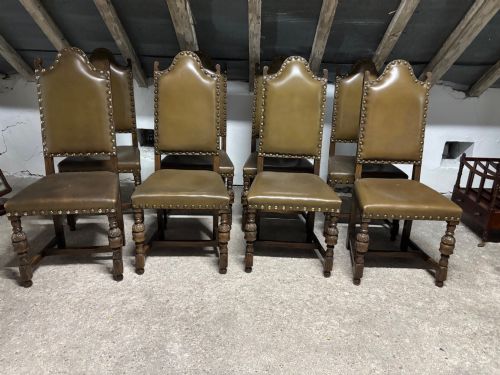
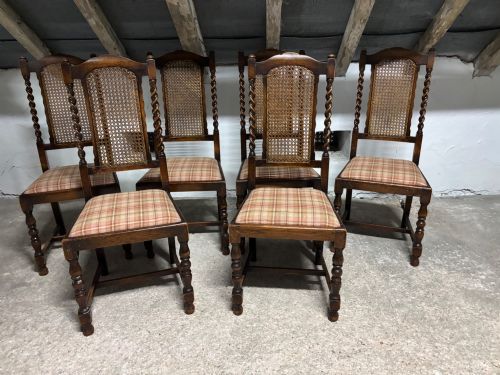
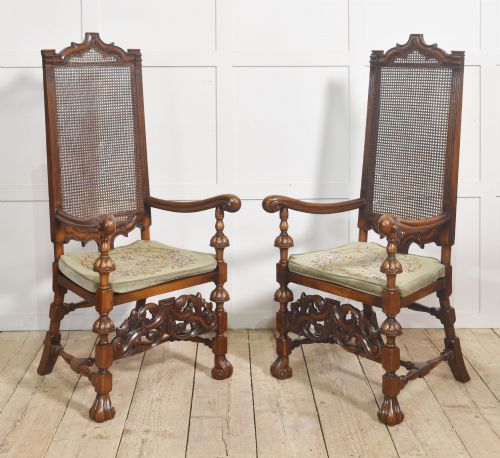


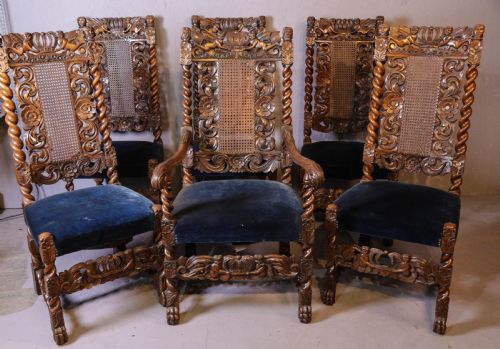

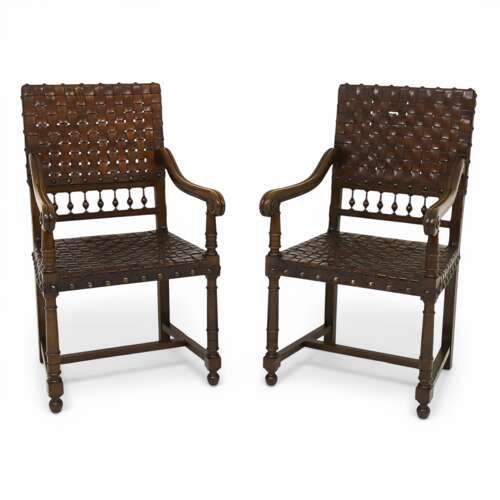

Carolean Style Chairs
Carolean style chairs bring robust 17th-century revival seating into modern rooms with carved timber and high backs.
Understanding Carolean style chairs
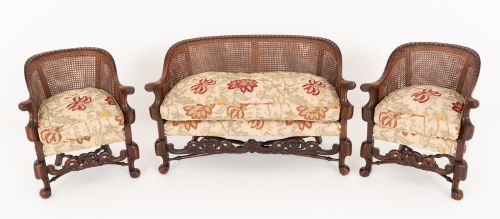
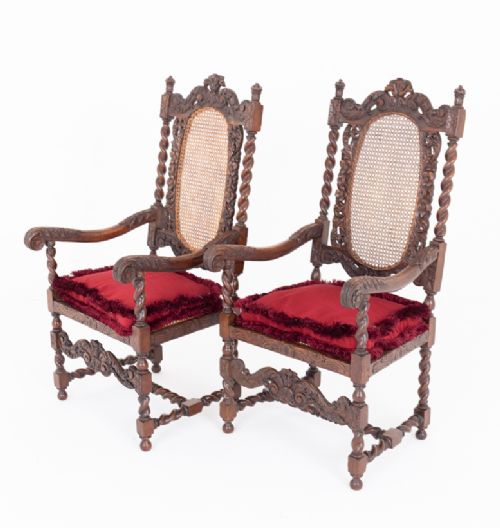
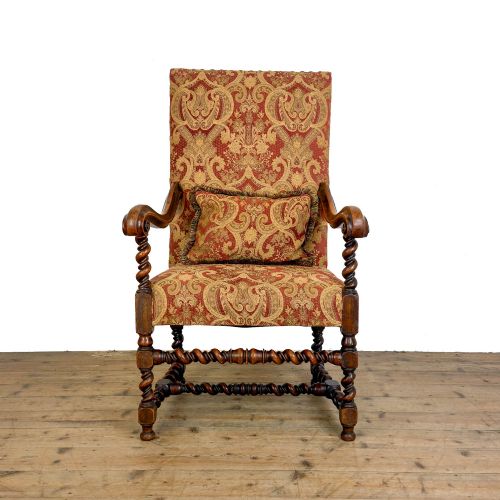
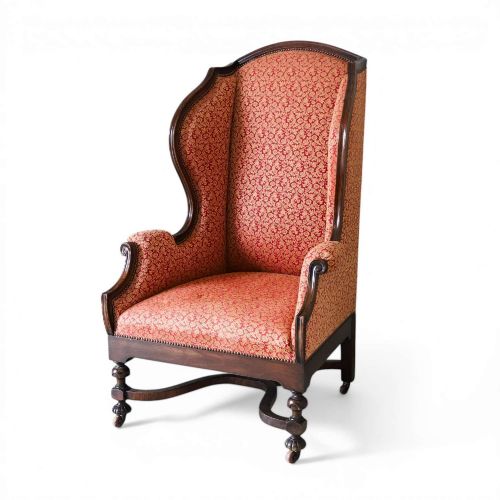
Carolean style chairs draw upon the ornate seating designs of the late seventeenth century, reinterpreted across the nineteenth and early twentieth centuries during various revival movements. When you search for carolean style chairs, you encounter dining chairs, armchairs, hall chairs, and large throne chairs designed with prominent vertical proportions.
The evidence shows these revival pieces appearing across the nineteenth century, around nineteen hundred, and into nineteen twenty, alongside terms such as Jacobean revival, Jacobethan, and Carolean itself. Sets ranging from pairs up to ten chairs emerge frequently, often featuring high backs intended for formal dining rooms or halls.
Oak and walnut form the structural backbone of these pieces, matched with seats and backs in cane, woven leather, fabric, and needlepoint. Turned legs and elaborate carving define the silhouette, bridging the gap between original seventeenth-century models and later revival craftsmanship.
Materials and construction methods
Makers utilised solid timbers including oak and walnut, alongside dark oak and timber marquetry for decorative surface detail. Brass elements appear alongside structural woodwork, while frames frequently incorporate turned legs and shaped stretchers.
Backs and seats rely heavily on natural materials like cane, woven leather, needlepoint, and various upholstery fabrics. Carved ornamentation defines the frames, executed by hand to mimic the elaborate scrollwork and cresting of the original seventeenth-century aesthetic.
Retail Price Guide 2026
Typical UK retail prices for carolean style chairs, calculated from the Sellingantiques database of over a million retail prices indexed since 2003. This retail price guide relies exclusively on Sellingantiques data; no external sources or auction records are used, so the figures do not describe the wider market.
Listings span oak, walnut, cane, leather, fabric, brass, and timber marquetry across dining chairs, armchairs, hall chairs, and throne chairs.
Distinguishing quality in revival seating
Depth and crispness of the carved detail separate standard production from finer examples, as sharper chisel work creates greater definition in the scrolls and foliage. The choice of primary timber also influences character, with select walnut and dense oak offering superior weight and grain presence.
Completeness of sets and matching upholstery materials determine the desirability of larger groupings, particularly when ten or more chairs survive together. The structural integrity of turned legs and high backs dictates how well the chair handles daily use.
The Carolean Style Chairs Glossary
- Carolean style
- A revival design echoing the opulent furniture fashions of the reign of Charles II. These pieces typically feature scrolled woodwork, crown and cherub motifs, and tall cane or upholstered backs.
- Jacobean revival
- An architectural and furniture style drawing on early seventeenth-century English design. It often overlaps with Carolean pieces through the use of dark oak and turned supports.
- Bergere
- A closed-arm upholstered armchair with a cane back and sides. This form appears occasionally within the revival seating selection.
- Marquetry
- Decorative veneer inlaid into wood surfaces to form intricate patterns. Examples in this category utilise timber marquetry for surface ornamentation.
- Stretcher
- Horizontal wooden members connecting the legs of a chair for stability. Revival models frequently shape these supports with turning and central finials.
Frequently Asked Questions
What is a carolean style chair?
A carolean style chair is a 19th-century or early 20th-century interpretation of late 17th-century English seating. These chairs typically feature high carved backs, turned legs, and materials like oak, walnut, and cane.
They reflect historic revival movements rather than the original 1600s period, offering decorative timber framing and formal proportions suitable for dining rooms and halls.
How do I date a carolean revival chair?
Dating these pieces relies on examining the timber, secondary woods, and construction marks. Most revival examples date from the Victorian era up to the 1920s.
Comparing the style to documented pieces from 1800, 1840, or 1920 helps narrow down the manufacturing era, while machine-cut elements or modern fixings indicate later production.
Are carolean style chairs comfortable for daily use?
Many carolean style chairs feature high backs and upright seating positions designed for formal dining rather than lounging. Upholstered armchairs and needlepoint versions offer softer seating.
Pairing them with a dining table or placing them in a hallway as statement seating balances practical use with period aesthetics.
What is the difference between carolean and jacobean revival?
Jacobean revival draws on the earlier, heavier oak furniture styles of the early 17th century with straight lines and geometric panels. Carolean style reflects the later reign of Charles II with richer carvings and scrolled woodwork.
Overlap occurs frequently in marketplace listings, where makers combined elements from both periods into unified dining sets and armchairs.