

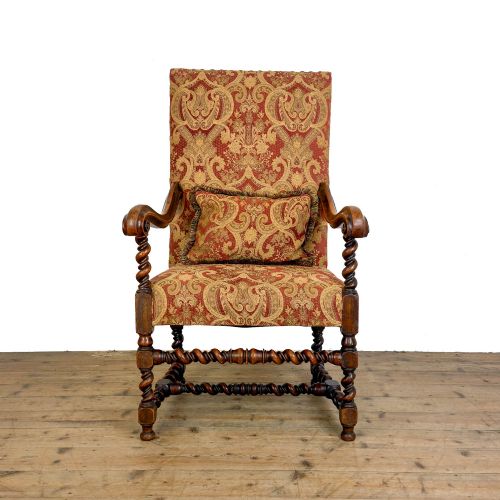
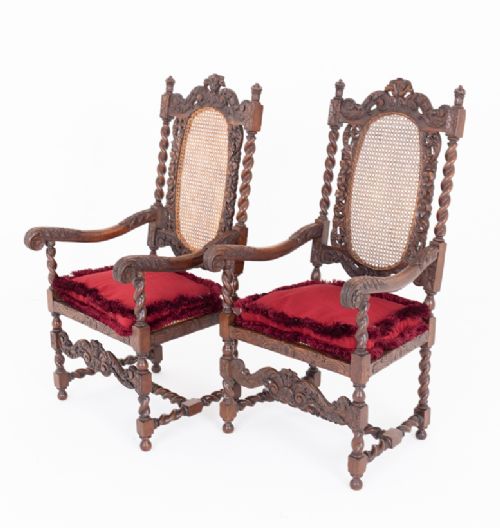
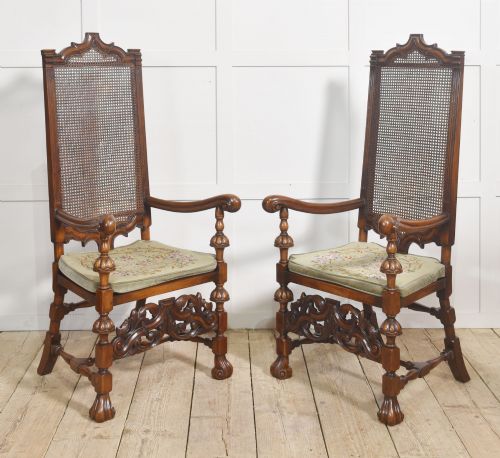

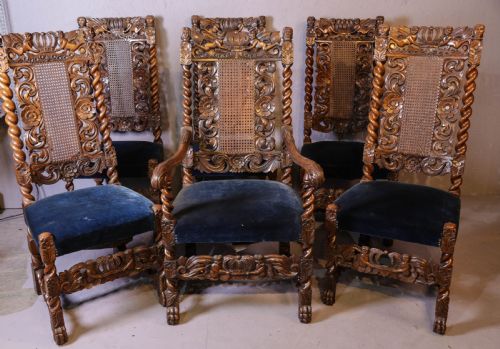

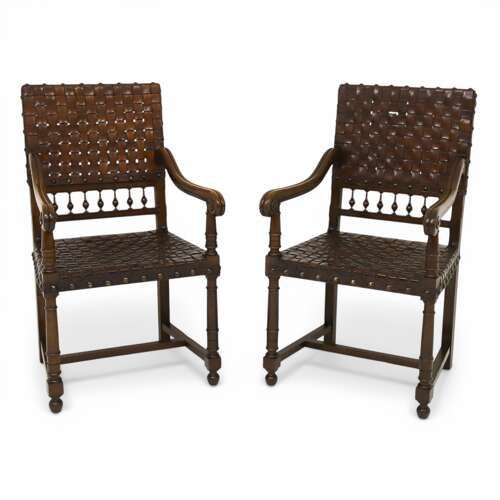


Carolean Style Armchairs
Carolean style armchairs bring heavy, carved woodwork and high-backed seating into a room, offering period presence and grand seating.
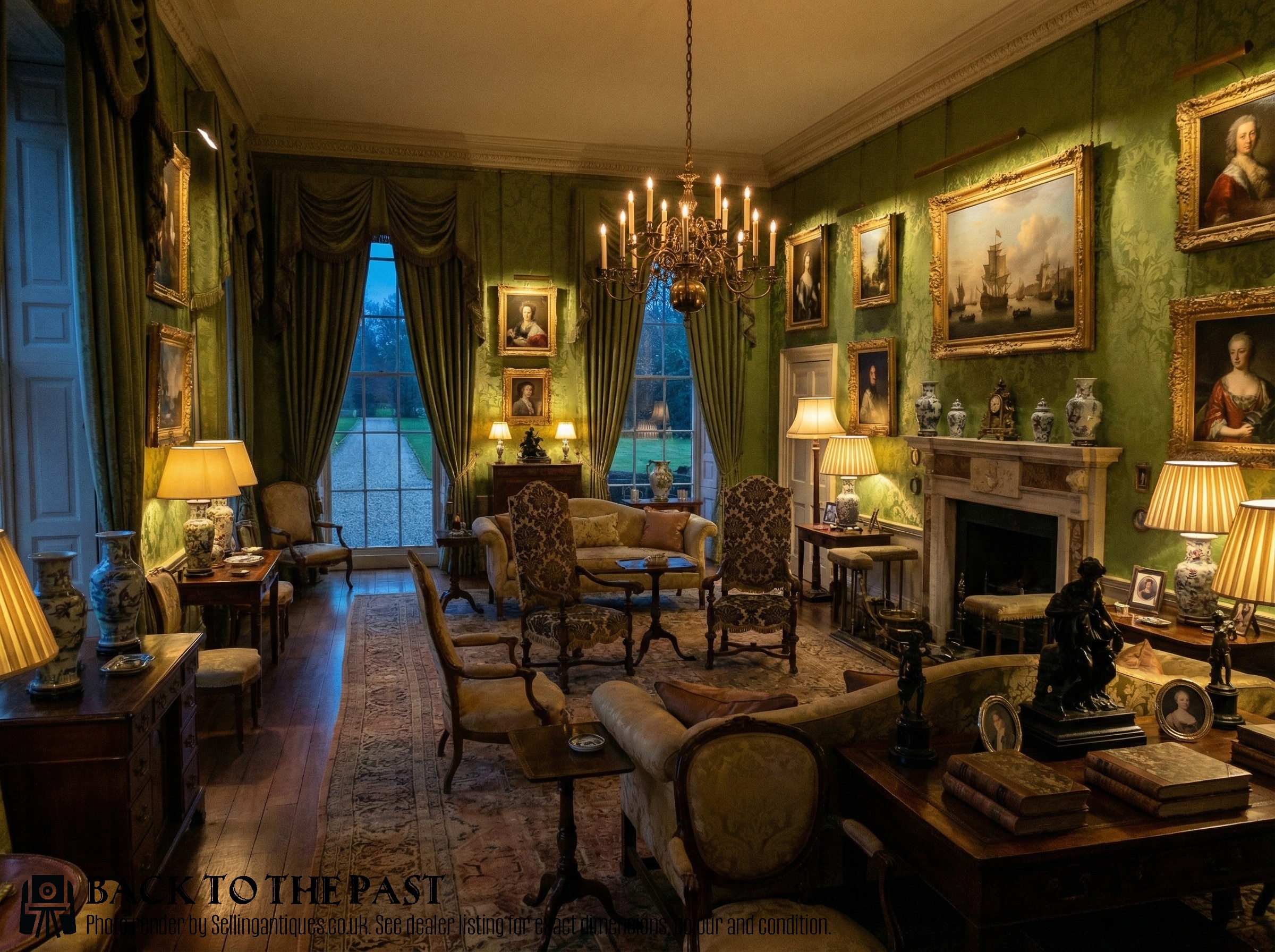
Carolean Style Armchairs
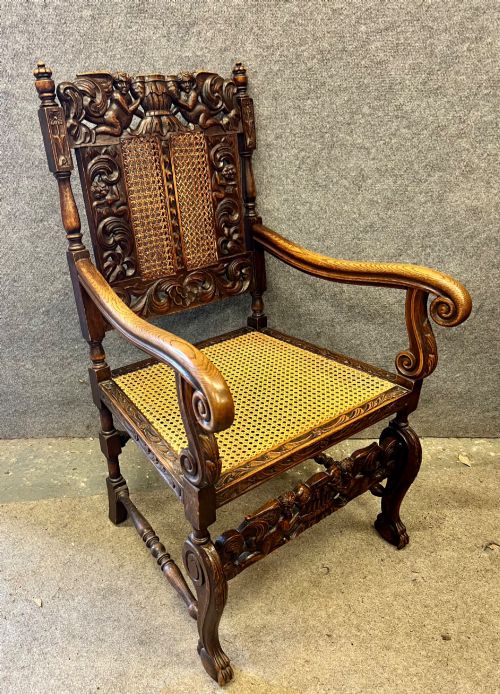
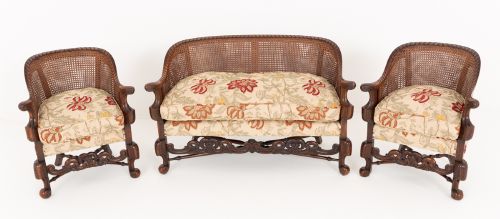
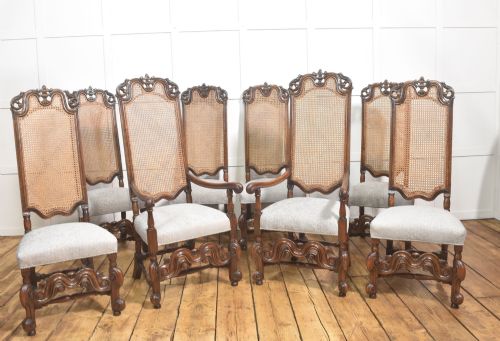
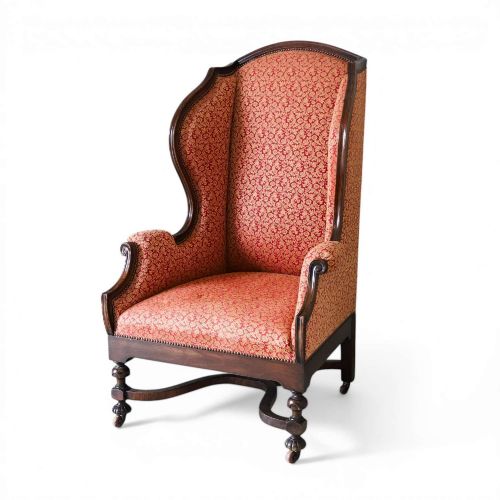
The selection ranges from high-back dining chairs and open armchairs to heavy throne chairs and wing armchairs. Walnut and oak dominate the forms, frequently paired with cane panels, leather, velvet, or tapestry upholstery.
Most pieces available in this search fall into the nineteenth-century revival period or early twentieth-century interpretations rather than the original seventeenth century. These revival pieces repeat the grand scroll arms, turned legs, and heavily carved crest rails of the Charles II era.
What varies in quality
The depth and crispness of the wood carving distinguish superior examples from plain production. Heavily carved walnut and oak frames with sharply defined acanthus leaves, scrolls, and pierced cresting command greater attention than shallow, mechanical tooling.
The choice of primary timber and secondary materials dictates the character of the piece. Solid walnut frames with intact cane panels or original leather and tapestry upholstery represent a higher grade of craftsmanship than simpler oak or painted alternatives.
Proportion and scale separate imposing library and throne chairs from ordinary seating. Well-balanced armchairs maintain structural harmony despite heavy crest rails, expansive wings, and elaborate scroll arms.
Carolean Style Armchairs Retail Price Guide 2026
Typical asking prices for carolean style armchairs among the pieces listed under this phrase on Sellingantiques today, from the lower quarter to the upper quarter. They describe what is for sale here now, not the wider market.
Listings feature oak and walnut frames alongside cane, velvet, leather, and tapestry across the nineteenth century and revival periods.
The Carolean Style Armchairs Glossary
- Crest rail
- The top horizontal member of a chair back, often heavily carved in seventeenth-century revival designs. This prominent section typically displays scrollwork or coats of arms.
- Caning
- Woven plant material used to form light, flexible chair backs and seats. Walnut dining chairs frequently incorporate this technique.
- Wing armchair
- An upholstered seat with side panels designed to shield the sitter from drafts. These large pieces often feature exposed wooden legs and carved arm supports.
- Throne chair
- An imposing, high-backed wooden armchair designed for formal presentation rather than casual lounging. They showcase extensive carving and substantial proportions.
- Scroll arm
- A curved armrest resembling a roll of parchment, characteristic of Restoration-era seating. This form provides a distinct silhouette on open armchairs.
- Needlepoint
- Stitched textile work used to upholster seats and backs. This material appears frequently on revival armchairs from the nineteenth century.
Carolean Style Armchairs: Frequently Asked Questions
What is a carolean style armchair?
A carolean style armchair is a heavily carved wooden seat inspired by the Restoration period of Charles II. These pieces feature prominent scroll arms, turned legs, and decorative high backs.
They draw on seventeenth-century English design principles, though many examples date from the nineteenth-century revival movements.
How do I tell original pieces from revivals?
Original seventeenth-century armchairs display distinct tool marks, timber ageing, and construction methods appropriate to that era. Structural wear patterns and wood patina help differentiate them from later copies.
Nineteenth-century revival pieces often exhibit machine-assisted joinery or different wood preparation methods, even when utilising traditional carving styles.
Where should I place these chairs?
These imposing chairs suit reception halls, studies, or living rooms where their heavy timber frames can anchor the space. Throne chairs and wing armchairs work well as standalone focal points.
Dining chairs function effectively around large wooden tables, particularly when set in matching groups.
What materials were used?
Cabinetmakers built the frames using solid oak and walnut. These durable timbers supported deep relief carving and complex joinery.
Upholstery materials included woven cane, leather, velvet, tapestry, and needlepoint, secured with brass tacks.