


Carolean Oak Coffer
These heavy carolean oak coffer pieces are sturdy storage chests built to last generations, offering practical historical character for any room.
Carolean Oak Coffer
A carolean oak coffer is a robust storage piece originating from the seventeenth century, spanning the Jacobean and Charles II eras. These heavy wooden chests were essential household items used to secure valuables, linens, and documents before built-in closets became common.
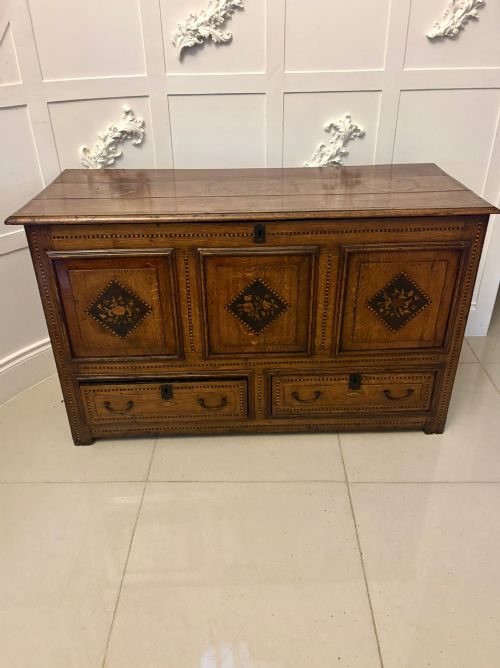
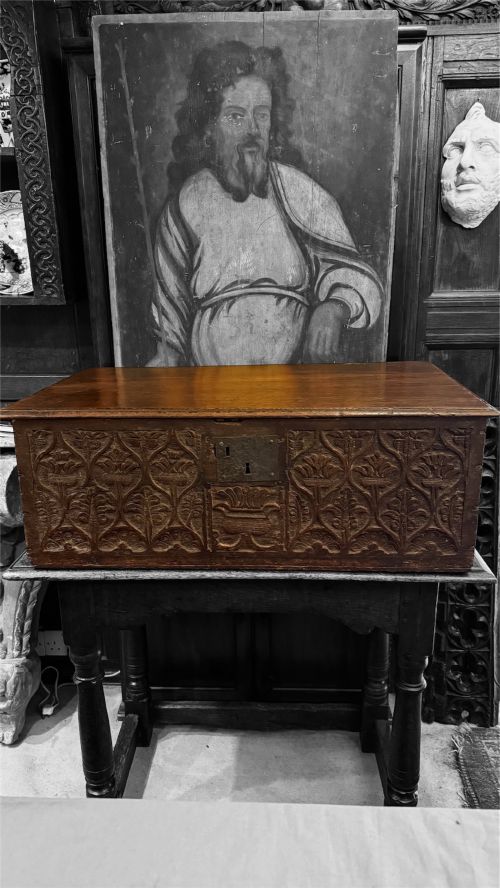
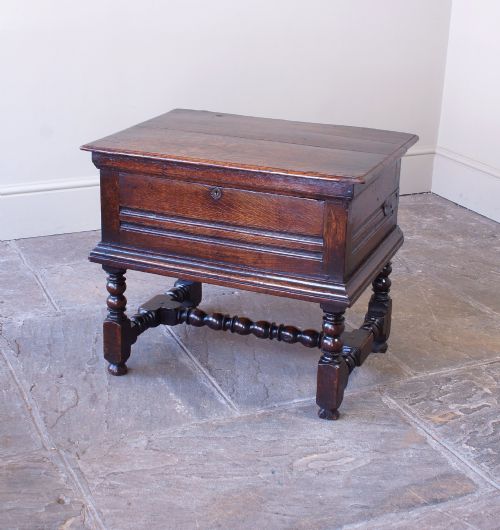
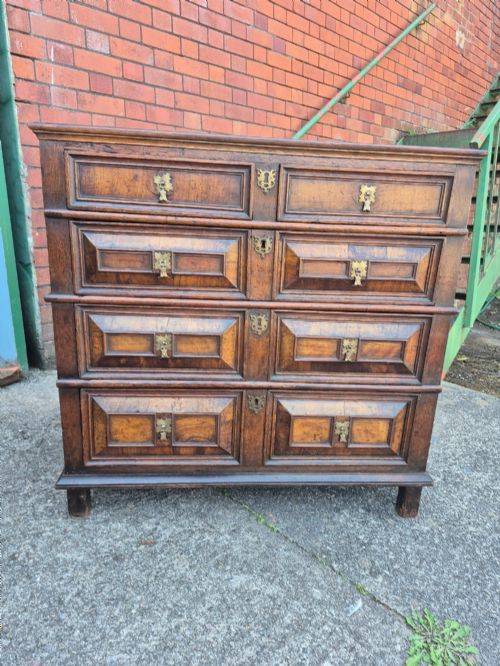
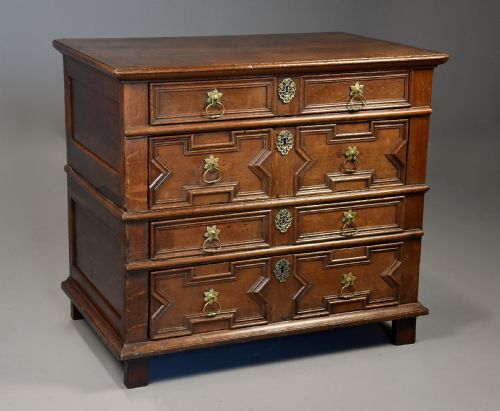
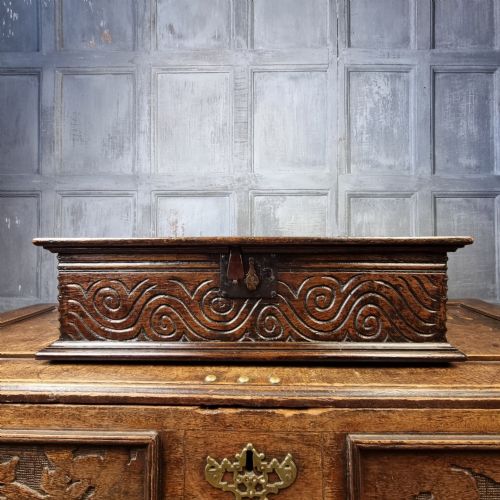
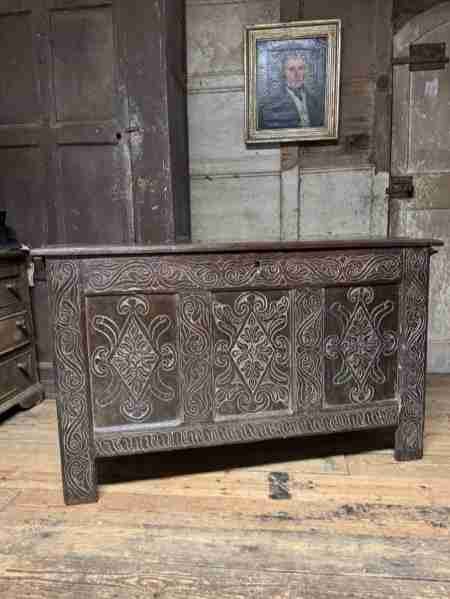
The versions most frequently met on this page include solid plank-lid coffers, panelled chests, mule chests with lower drawers, and smaller safe or Bible boxes. They originate mainly from English workshops, reflecting the sturdy vernacular furniture-making traditions of the period.
How they were made
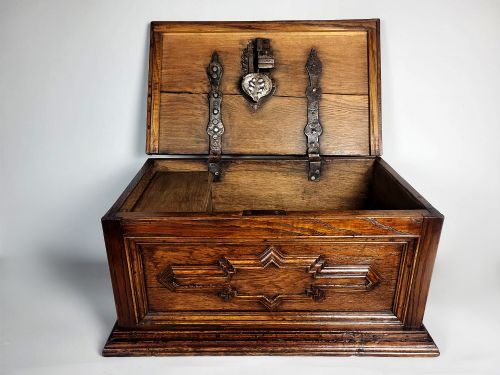
Joinery defines these pieces, utilising traditional mortise and tenon joints to frame solid oak panels that expand and contract with the air. Lid construction often relies on heavy single oak planks secured with iron strap hinges or original complex steel locks.
Decoration is achieved through surface manipulation and contrasting additions, including geometric mouldings, chip carving, and marquetry inlay. Selected pieces incorporate secondary timbers such as walnut, fruitwood, and snakewood to enrich the primary oak structure.
Several boxes include complex original steel locks designed to guard family bibles from prying eyes.
What varies in quality
The degree of original surface preservation and timber selection separates standard examples from exceptional ones. Pieces retaining their unstripped, faded natural patina display a warmer visual depth compared to those subjected to modern refinishing.
Structural integrity and the retention of original hardware, such as complex steel locks and brass fittings, mark the upper tier of quality. More ambitious decorative elements, like fine marquetry inlay and intricate geometric mouldings, also elevate a piece.
Thomas Dennis
The Carolean Oak Coffer Glossary
- Coffer
- A large wooden chest traditionally used for storing valuables and household goods. These solid receptacles often feature heavy plank lids and panelled construction.
- Mule chest
- A storage chest equipped with one or more drawers built into the base beneath the main compartment. This form bridges the traditional coffer and the modern chest of drawers.
- Bible box
- A small, sloping-lidded desktop box used to store family bibles and important documents. They frequently sat upon tables or benches in seventeenth-century homes.
- Marquetry
- The art of applying thin veneers of various woods in decorative patterns onto a structural surface. It appears on select pieces alongside fruitwood and snakewood highlights.
- Patina
- The surface sheen and colour acquired by wood over centuries through light, handling, and age. A fine, faded patina indicates minimal modern interference.
Carolean Oak Coffer: Frequently Asked Questions
What is a carolean oak coffer?
A carolean oak coffer is a heavy wooden storage chest dating from the seventeenth-century reign of Charles II. These pieces served as secure household storage for linens, valuables, and documents.
Built using traditional joinery methods, they often feature panelled construction and solid plank lids. Their robust nature has allowed them to survive for centuries in various domestic settings.
How do I care for antique oak?
Caring for seventeenth-century oak requires maintaining a stable indoor environment away from direct heat sources and dramatic humidity shifts. Excessive dryness can cause old timber to split.
Applying a traditional beeswax polish occasionally helps nourish the wood and maintain its historic surface sheen. Avoid modern silicone sprays or harsh chemical cleaners.
How can I tell the period?
Dating relies on examining construction techniques, tool marks, timber selection, and decorative styles typical of the seventeenth century. Hand-riven oak, pegged joints, and wrought iron hardware point toward early fabrication.
Stylistic markers such as geometric mouldings, chip carving, and regional joinery traits help narrow down the decade of manufacture. Comparing hardware to known examples provides further chronological context.