

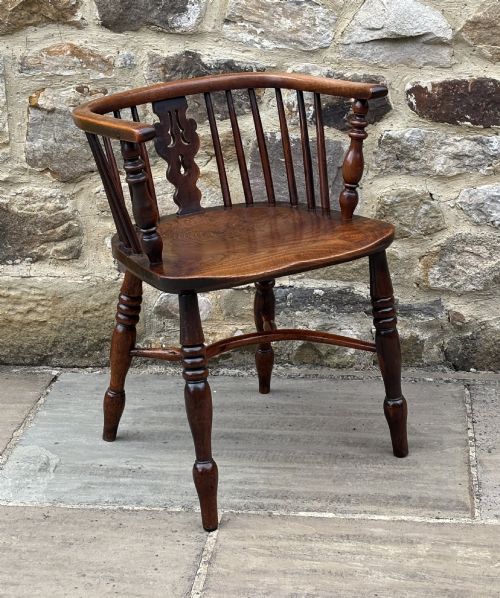
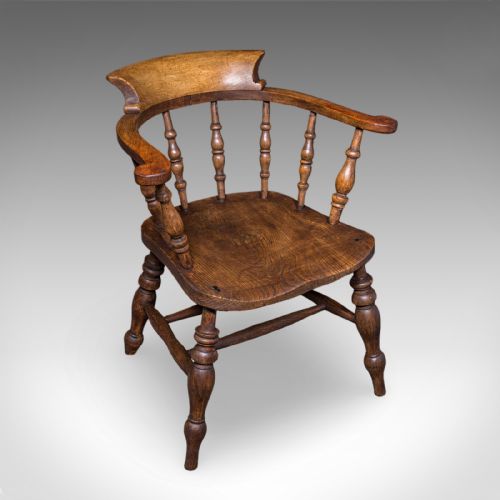
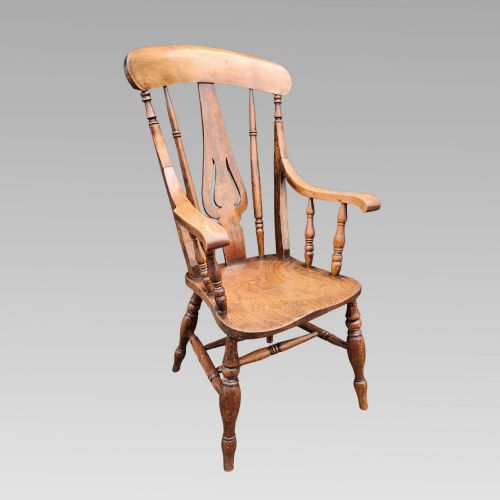
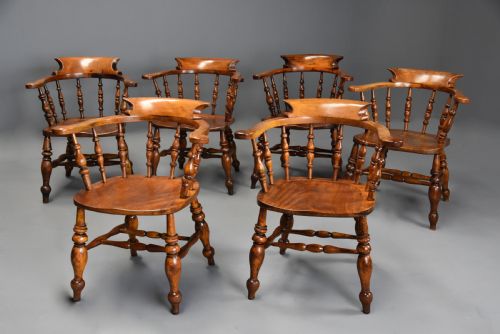
Captains Windsor Chair
Captains windsor chair designs are sturdy timber armchairs built for low seating and enduring comfort.
Captains Windsor Chair
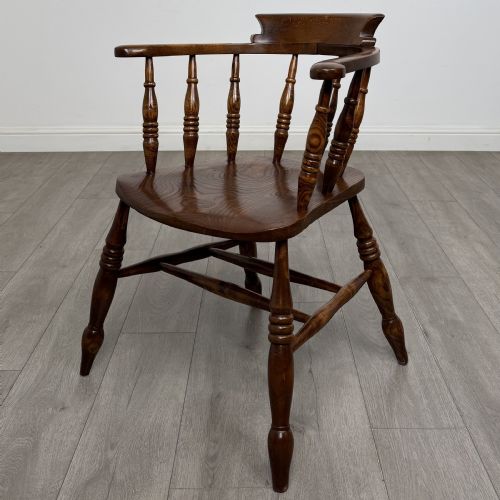
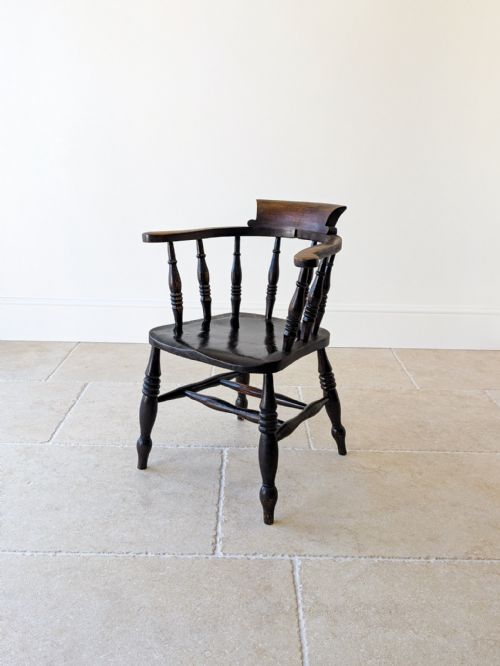
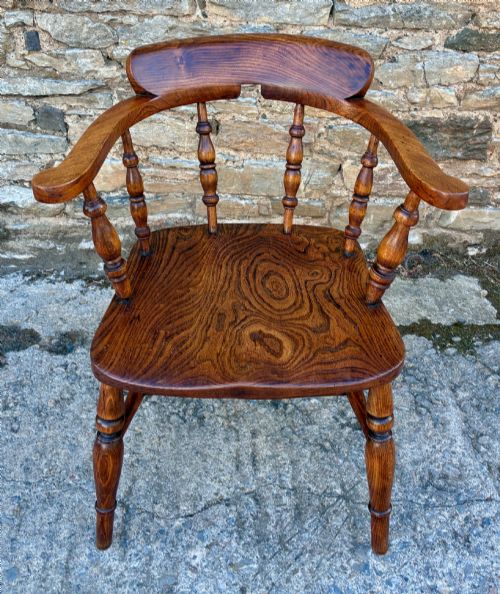
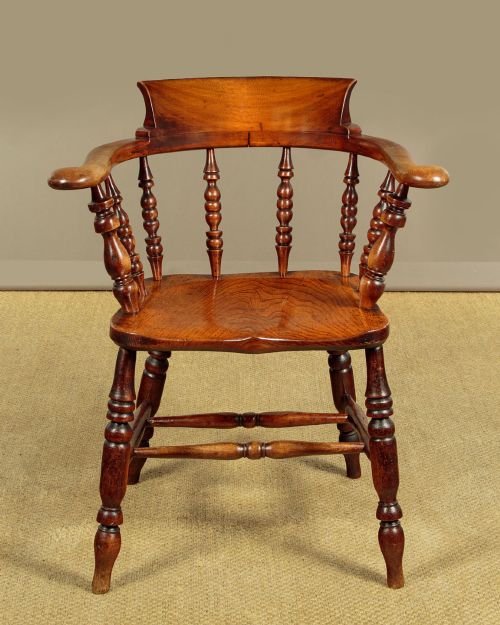
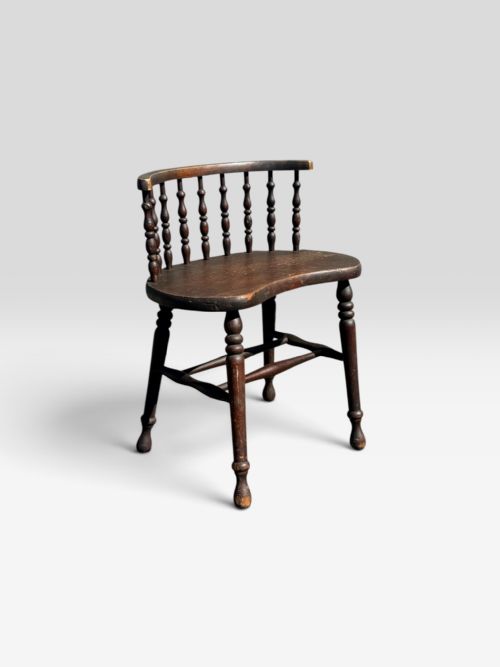
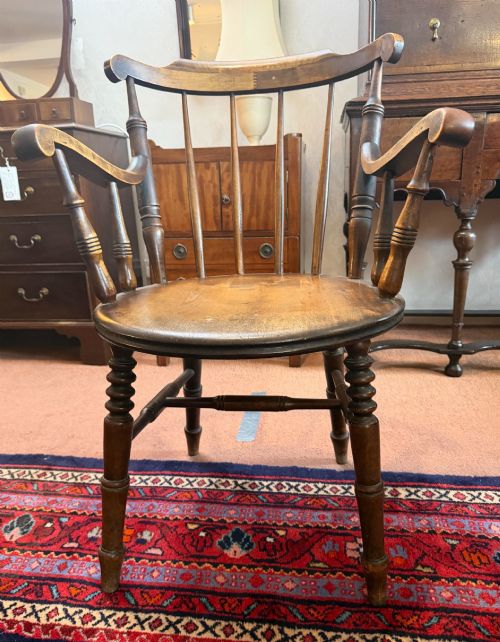
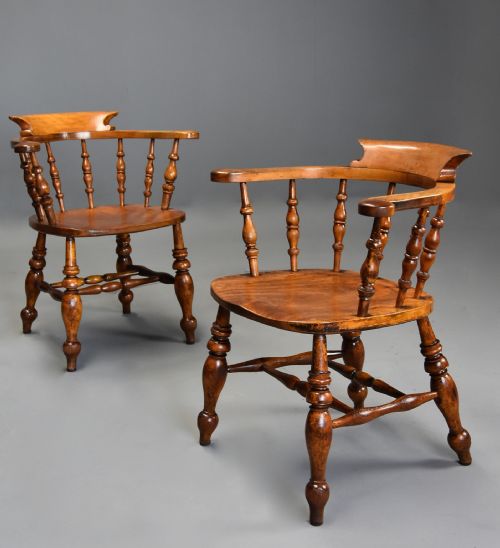
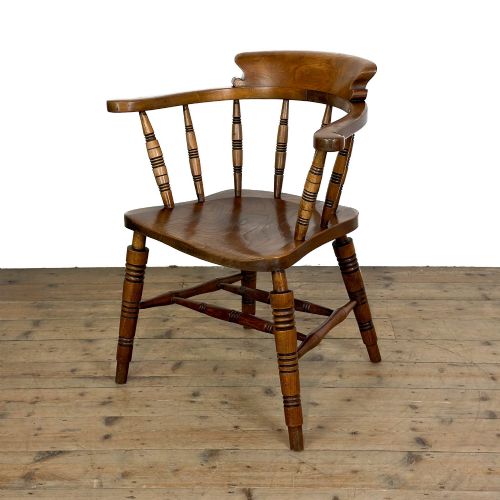
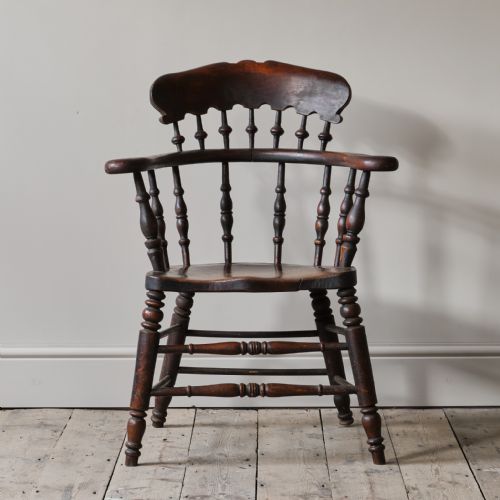
A captains windsor chair combines the low curved back of a smoker's bow with the traditional spindle construction of country seating. These sturdy armchairs served as practical seats in offices, country houses, and farmhouses throughout the nineteenth century.
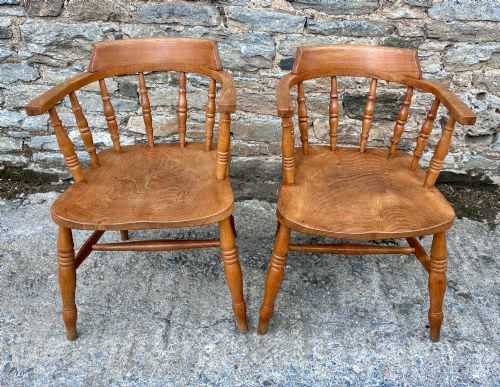
The versions most commonly met on this page date from the Victorian and Edwardian periods, alongside a few mid nineteenth century examples. They appear singly, in pairs, or occasionally in larger sets of dining or desk chairs.
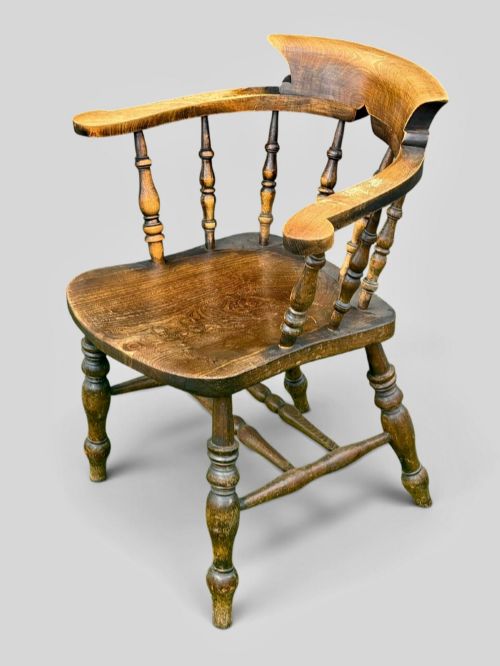
Makers shaped these utilitarian seats with low crest rails and continuous armrests supported by turned spindles. Their robust proportions reflect an era when office and domestic seating required daily service without delicate maintenance.
How they were made
Joiners built these chairs using mixed native timbers, pairing sturdy elm for solid, shaped seats with bent ash, beech, or birch for the bowed backrests. This constructive division utilised the natural strength of each wood species.
The components were shaped by hand using drawknives and spokeshaves before being joined with traditional wedged mortise and tenon joints. Turned spindles and legs provided rigid structural support without adding excessive weight to the armchair.
Captains Windsor Chair Retail Price Guide 2026
Typical asking prices for captains windsor chair among the pieces listed under this phrase on Sellingantiques today, from the lower quarter to the upper quarter. They describe what is for sale here now, not the wider market.
The listings here feature chairs spanning the Victorian and Edwardian periods, constructed predominantly from elm, ash, and beech.
What varies in quality
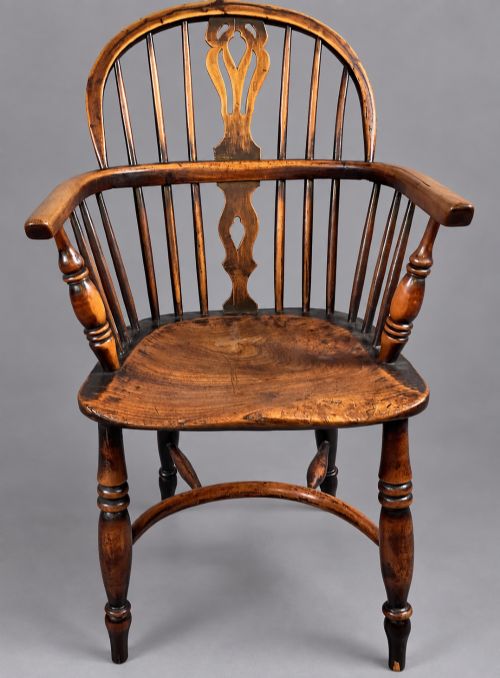
The distinction between standard utility seating and finer examples rests largely in the choice of secondary woods and the richness of the timber grain. Chairs incorporating figured yew or richly grained elm display superior visual depth compared to plain beech alternatives.
Proportional balance and the fluidity of the steam-bent backrest also separate basic workshop output from more considered regional carpentry. Subtle refinements in the turning of the legs and arm supports indicate greater care taken by the maker.
The Captains Windsor Chair Glossary
- Smoker's bow
- A low-backed Windsor armchair with a continuous rounded armrail, frequently utilised as a desk or smoking chair.
- Comb back
- A Windsor chair variation where vertical spindles extend above the armrail to support a high, comb-like headrest.
- Saddle seat
- A thick timber seat carved into a hollowed contour to provide ergonomic comfort for the occupant.
- Spindle
- A slender, turned wooden rod used vertically to fill the space between the seat and the backrest or arms.
- Vernacular furniture
- Domestic objects made by regional craftsmen using local materials, prioritising utility and function over high-style academic design.
Captains Windsor Chair: Frequently Asked Questions
What is a captains windsor chair?
A captains windsor chair is a sturdy wooden armchair featuring a low, continuous curved backrest and a shaped timber seat.
These pieces combine traditional country joinery with compact proportions suited for desks, parlours, and communal tables.
How were these chairs used?
They served as practical seating in offices, country houses, and farmhouses where durability was essential.
Their low profile and supportive armrests made them suitable for writing at a desk or relaxing near a hearth.
How do I date a windsor chair?
Dating relies on observing wood species, turning styles on the legs, and the method of construction used in the seat.
Nineteenth-century examples often display deep surface patination and mixed native timbers like elm and ash.
How do I care for antique elm?
Antique elm requires minimal maintenance, needing only occasional dusting and treatment with natural beeswax to preserve the timber.
Keep these chairs away from direct heat sources and extreme humidity fluctuations to prevent wood shrinkage.