


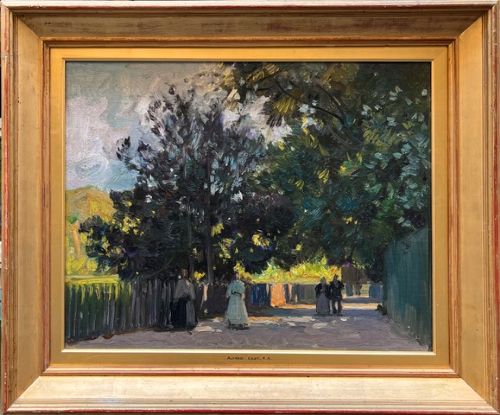
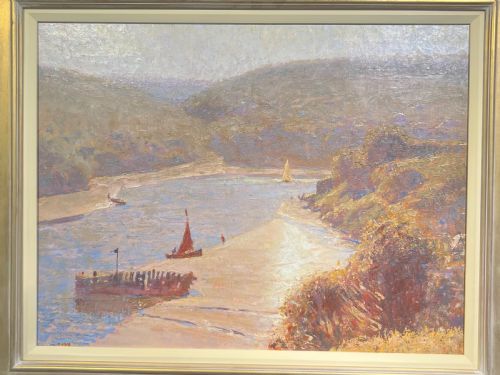
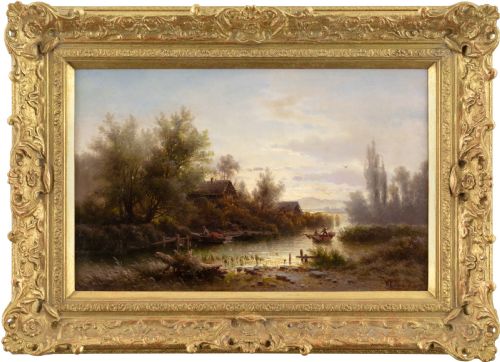
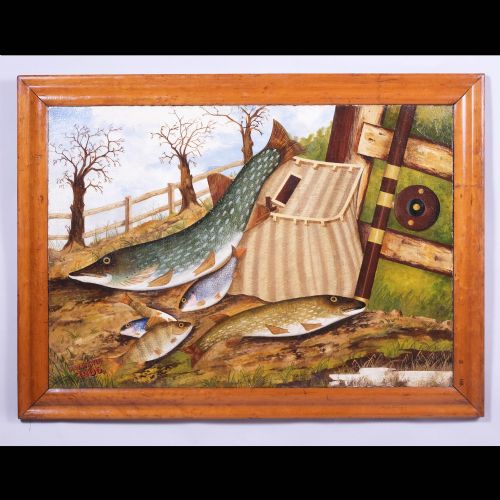
Canvas River Wall Art
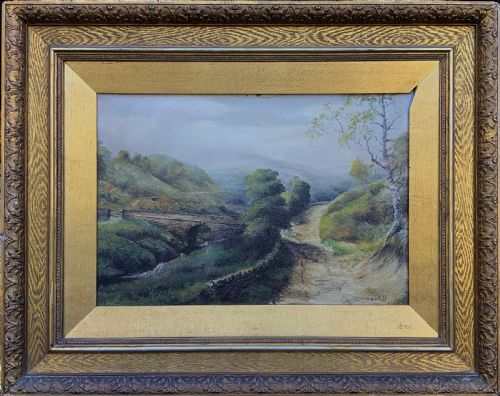
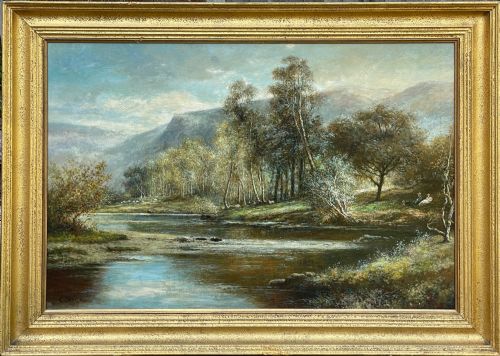
Canvas river wall art brings nineteenth and twentieth-century landscapes into a room through oil paint on stretched canvas and wood.
Canvas River Wall Art
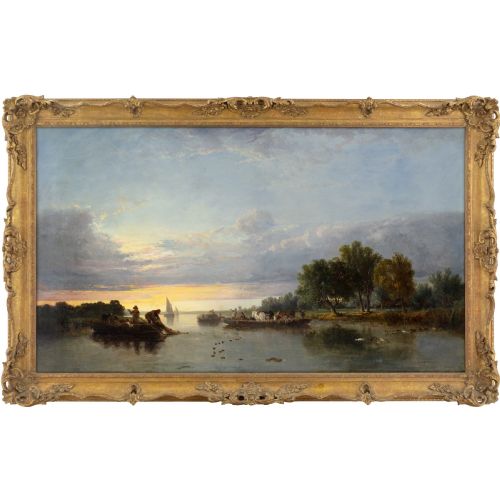
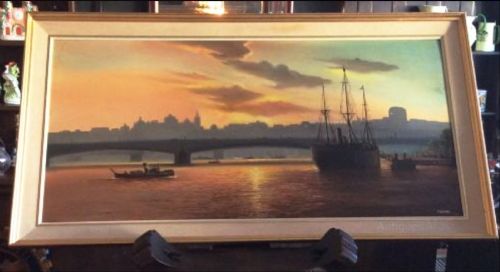
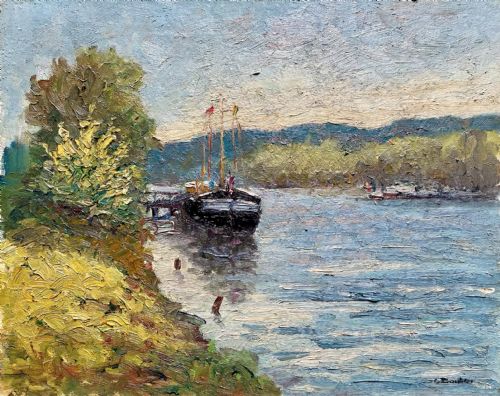
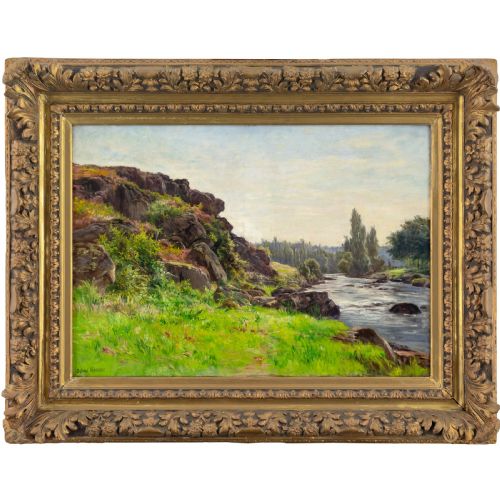
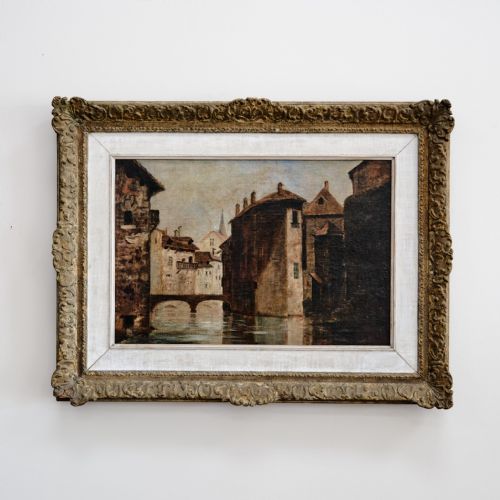
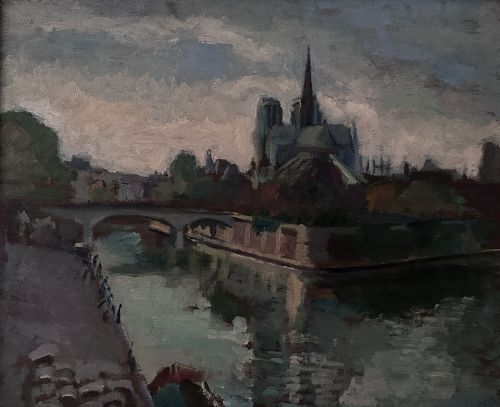
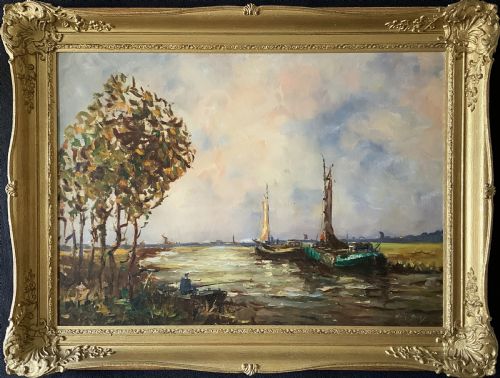
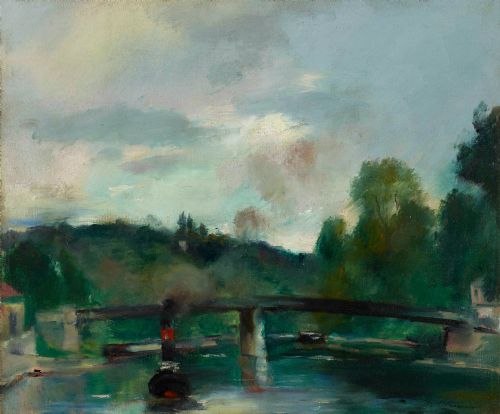
When you search for canvas river wall art, you encounter oil paintings spanning the Victorian, Edwardian, and mid-century periods. These works capture waterways, bridges, and rural banks through British, French, and Dutch artistic traditions.
The pieces on this page appear primarily as oil paintings on canvas or board, framed within period giltwood or gesso surrounds. They range from panoramic cityscapes of the Thames and the Seine to quiet rural streams and fishing scenes.
Makers and schools represented include nineteenth-century British landscapists, French post-impressionists, and mid-century impressionists. Each canvas records a specific waterway, whether an urban canal or a wooded country river.
What Varies in Quality
Quality rests upon the sureness of the brushwork and the artist's ability to render light reflecting off water and vegetation. A strong composition uses the curve of a river or the arch of a bridge to guide the eye across the canvas.
The survival of the original wooden frame and its matching gesso or gilt finish influences the integrity of the piece. Untouched canvas surfaces that retain their original tension and pigment depth stand apart from heavily restored examples.
Several canvases swap rural serenity for bustling nineteenth-century dockyards, letting you trade a quiet river bend for a passing steamboat.
Albert Bierstadt·Willem Bos·Henry H Parker·John Ferneley Senior·Charles William Wyllie
The Canvas River Wall Art Glossary
- Canvas
- A heavy woven fabric stretched across a wooden frame to serve as a support for oil painting. It provides a textured surface that holds layered pigment.
- Gesso
- A plaster-like mixture applied to wooden frames as a smooth base before gilding or painting. It creates crisp relief details along the moulding edges.
- Giltwood
- Timber carved and coated with gold leaf or metallic powder to form decorative frames. This material reflects light around the perimeter of the artwork.
- Impressionism
- A style of painting focused on capturing light, atmosphere, and movement through visible brushstrokes rather than tight detail. It appears frequently in late nineteenth and mid-century river scenes.
Canvas River Wall Art: Frequently Asked Questions
How do I hang a heavy oil painting safely?
Secure the frame using picture wire rated well above the weight of the canvas and fix your wall brackets directly into wall studs or masonry.
Position the work at eye level, ensuring the weight distributes evenly across two hanging points for stability.
What lighting suits a nineteenth-century river painting?
Display the canvas away from direct, harsh sunlight to prevent the oil pigments from fading or the varnish from yellowing over time.
Utilise low-heat LED picture lights mounted above the frame to illuminate the brushwork and metallic gilt details evenly.
How can I tell a Victorian river scene from a mid-century one?
Victorian and Edwardian canvases typically feature tighter realism, muted earth tones, and intricate gesso frames. Mid-century works showcase looser impressionist brushwork, brighter palettes, and simpler wooden surrounds.
Examining the canvas texture, stretcher bars, and framing technique helps confirm the period of manufacture.