

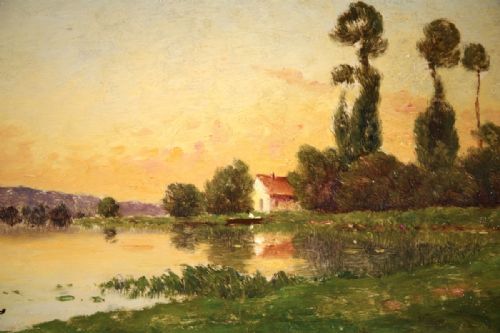


French River Scene Artwork
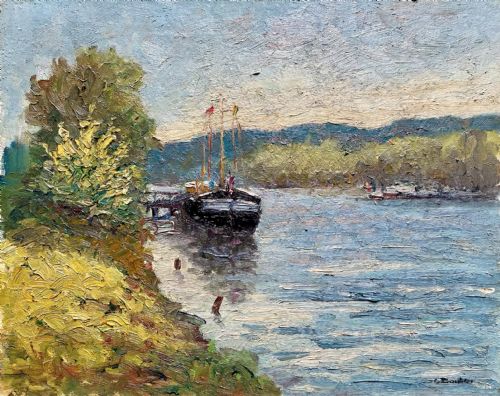
French river scene artwork captures water, light and atmospheric banks along the Seine or Loire in oil and pastel.
French River Scene Artwork
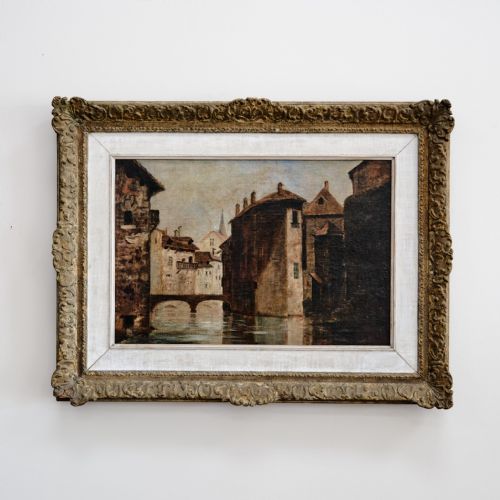
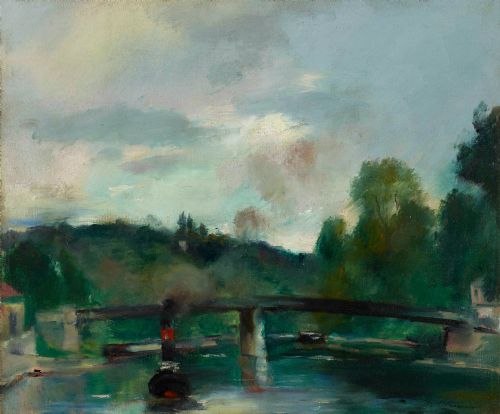
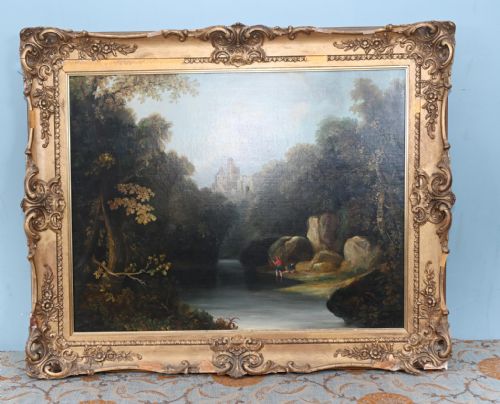
French river scene artwork depicts pastoral waterways, chateaux, canals and working barges across the French countryside and Paris. When you search for french river scene artwork, you encounter nineteenth-century canvases, post-impressionist panels and mid-century views.
The most common examples on this page are nineteenth-century and early twentieth-century oil paintings on canvas, capturing the shifting light of Normandy and the banks of the Seine. These pieces range from Barbizon school pastorals to impressionist plein air studies.
Subjects include fishermen, washerwomen, footbridges and urban riverbanks. Painters worked directly on the water or recorded the atmospheric haze of provincial rivers.
Materials and Techniques
These works rely primarily on oil paint applied to canvas, wood panels or board. Artists utilised fluid brushstrokes and layering to capture the reflective surface of water and the changing light of the French landscape.
Many works incorporate gesso grounds beneath the oil paint to brighten the colour palette. Gilt wood frames often accompany the canvases, reflecting the framing traditions of nineteenth and twentieth-century French salons.
Listings feature oil paint, canvas, wood panels, gesso and gilt wood frames across nineteenth and twentieth-century French works.
Evaluating Quality
Quality rests in the handling of light, brushwork confidence and the atmospheric depth of the water and sky. Stronger works demonstrate a confident grasp of tone and movement, whereas lesser examples rely on formulaic foliage and static water.
The distinction also lies in the artist's ability to render the specific topography of locations such as the Seine or the Loire rather than a generic waterway. A deft touch with plein air observation separates standard decorative pieces from accomplished artistic records.
Henri Ottmann·Honore Cavaroc·Henri Jaques Delpy·Ron Folland·Armand Guillaumin·Edmond Defonte·Antoine Bouvard·Pierre Peltier·Adolphe Gumery·Charles Edmond Rene His·Henri Joseph Harpignies
The French River Scene Artwork Glossary
- Plein air
- Painting outdoors to capture natural light and direct visual conditions. This approach became central to impressionist river landscapes.
- Barbizon School
- A nineteenth-century French art movement focused on realism and pastoral landscapes. Artists painted rivers and forests directly from nature.
- Post-Impressionism
- An art movement extending impressionism while rejecting its limitations. Painters used vivid colours and distinct brushwork for river scenes.
- Gesso
- A plaster mixture applied to canvas or wood panels as a base for oil paint. It provides a smooth, bright surface for the pigments.
- Oil on panel
- A painting created on a wooden board rather than stretched fabric. Panels offer a rigid support popular for smaller plein air works.
French River Scene Artwork: Frequently Asked Questions
What periods do these river paintings cover?
The selection spans from the nineteenth century through to the mid-twentieth century, including works from the eighteen-sixties, nineteen-twenties and nineteen-fifties.
You will find Barbizon pastoral canvases alongside mid-century post-impressionist interpretations of Parisian and provincial waterways.
How do I distinguish impressionist from barbizon works?
Barbizon paintings tend to focus on earthy tones, muted light and structured rural realism. They capture quiet riverbanks with a sober palette.
Impressionist and post-impressionist works employ brighter, broken brushstrokes that emphasise shimmering light on water and transient atmospheric effects.
Where were these river scenes usually painted?
Many subjects centre on the river Seine in Paris and Normandy, alongside the Loire, the Danube and various French canals. Artists travelled these waterways to capture local commerce and natural scenery.
Scenes frequently feature recognizable elements such as washing stations, footbridges, barges and rural chateaux.
How should I hang and light an oil painting?
Hang oil paintings away from direct sunlight and fluctuating heat sources to protect the canvas and the oil pigments. Stable indoor humidity preserves the structural integrity of both canvas and wood panels.
Utilise picture lights with low heat output, such as LED fittings, to illuminate the brushwork and colour harmonies without damaging the paint surface.