


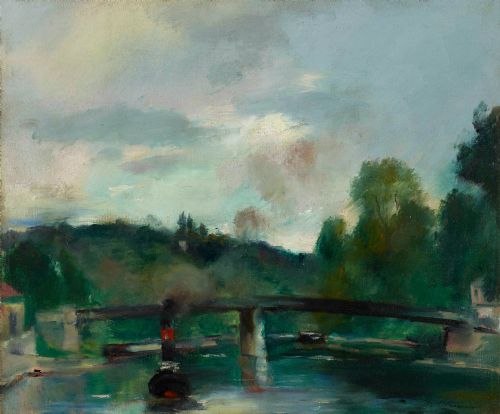
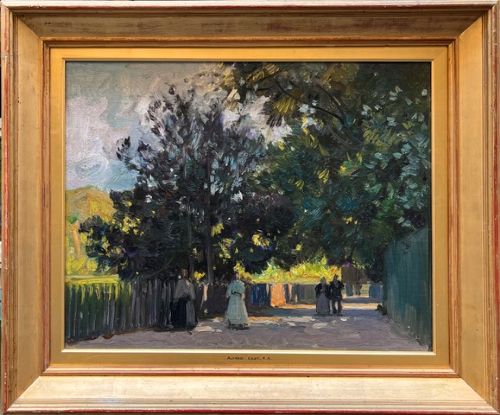
Canvas River Landscape Artwork
Canvas river landscape artwork brings together water, open skies and quiet banks, captured in oils from the nineteenth and twentieth centuries.
Canvas River Landscape Artwork
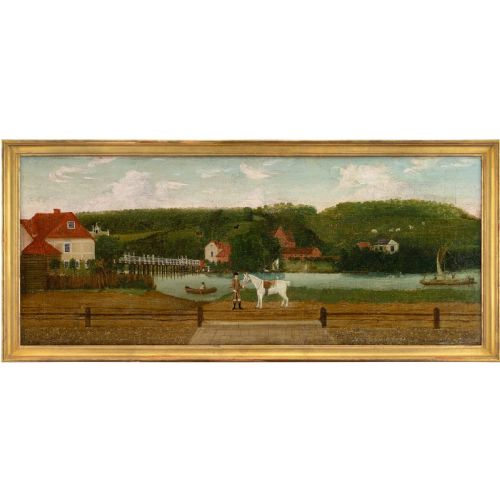
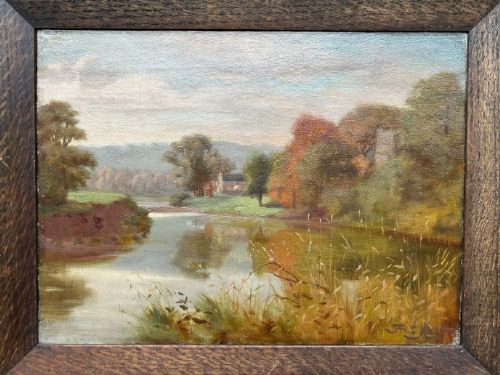
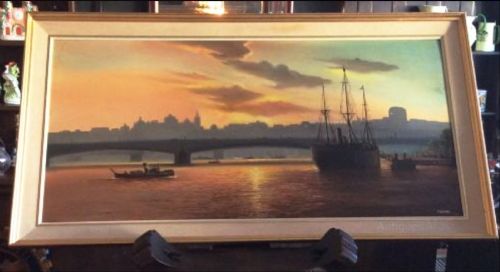
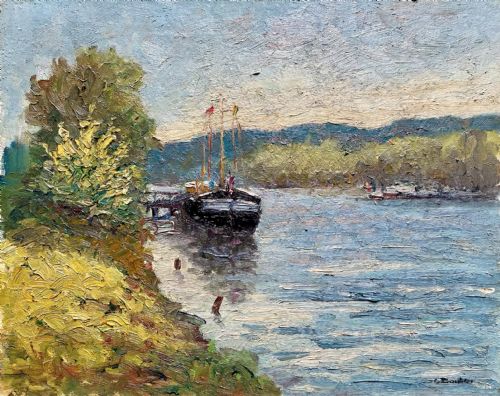
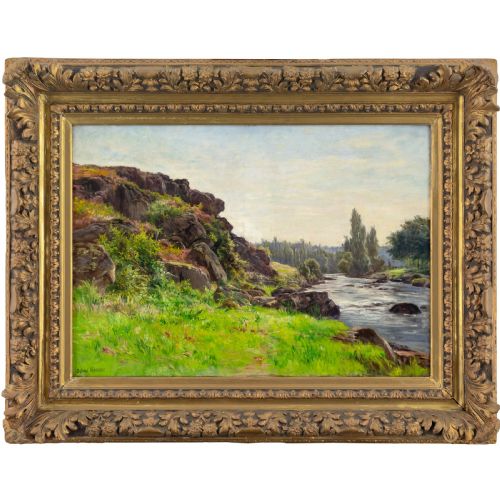
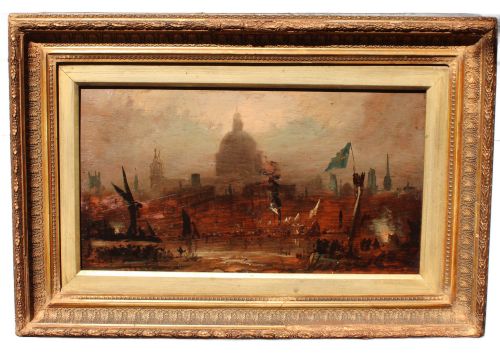
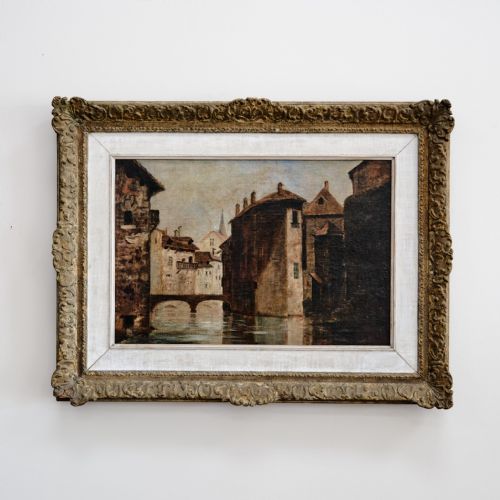
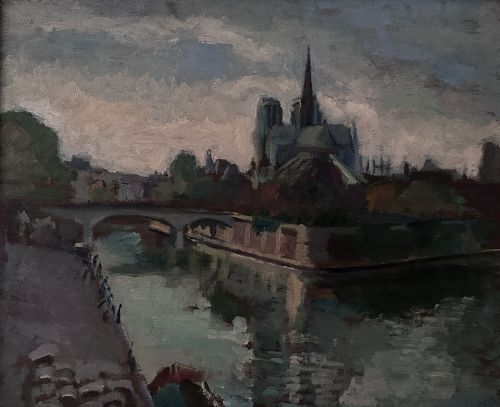
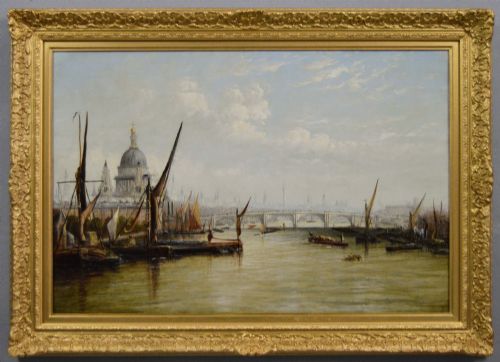
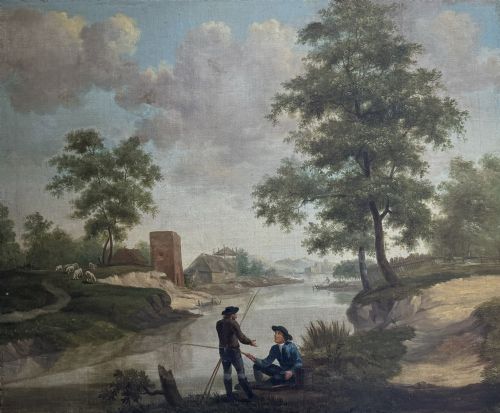
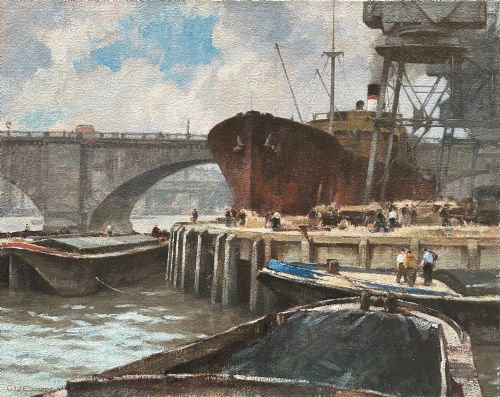
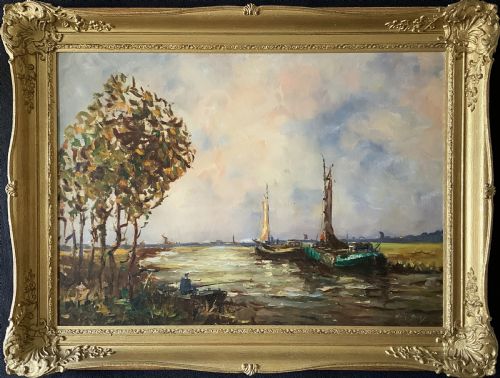
When you search for canvas river landscape artwork, you encounter painted scenes of waterways, bridges and rural banks recorded by British and European artists. These works range from late Victorian topographical views to mid-twentieth-century Post-Impressionist interpretations of rivers like the Thames and the Seine.
The selections on this page lean heavily toward nineteenth-century oil paintings on canvas, framed in wood and gesso, alongside select early twentieth-century examples. You meet panoramic marine escapes, quiet rural tributaries and bustling urban waterfronts executed in varied schools of painting.
How they were made
These works are executed primarily in oil paint applied to woven canvas stretched over wooden frames, occasionally utilising oil on board or charcoal on canvas. Pigments are layered to build depth in the water and sky, capturing shifting light across rivers and bridges.
Many of the older pieces retain their original wooden frames finished with gesso and gold leaf or gilt details. The application of paint varies from tight academic realism to looser Impressionist brushwork.
Canal ducks occasionally share the water with nineteenth-century steam tugs and nineteenth-century mayors.
What varies in quality
The standard of a canvas river landscape artwork depends on the confidence of the brushwork and the artist's command of atmospheric light on water. Superior pieces demonstrate a balanced composition that draws the eye naturally along the river course or towards architectural landmarks.
Quality also rests in the preservation of the canvas and the harmony of the framing. Finer examples retain their original surface texture and pigment vibrancy without heavy restoration altering the artist's initial touch.
Kenneth Cozens·Frederick Marriott·Gabriel Mathieu·Francis Moltino·Albert Bierstadt·Willem Bos·Henri Ottmann·Alfred East·Herbert Royle·Albert Rieger·Henry H Parker·John Horace Hooper·John Ferneley Senior·Honore Cavaroc·Archibald Kay·Henri Jaques Delpy·Charles William Wyllie
The Canvas River Landscape Artwork Glossary
- Oil on Canvas
- Pigment mixed with drying oil applied to a woven fabric support. This combination allows for rich colour blending and textured brushwork.
- Gesso
- A plaster-like mixture applied to wooden frames as a base for gilding. It provides a smooth surface that takes gold leaf cleanly.
- Impressionism
- A nineteenth-century painting style focusing on transient effects of light and ordinary subject matter. Artists utilise loose brush strokes and unblended colours.
- Post-Impressionism
- An extension of Impressionism that rejects its limitations while retaining vibrant colours. Painters emphasise symbolic content and distinct formal patterns.
- Provenance
- The documented history of ownership of an artwork. It establishes authenticity and traces the piece from its creation to the present.
Canvas River Landscape Artwork: Frequently Asked Questions
What periods do these river paintings cover?
The works span from the eighteenth century through the nineteenth and twentieth centuries, capturing evolving artistic interpretations.
Victorian and Edwardian academic styles sit alongside later French and British Impressionist approaches.
How should I care for an oil painting on canvas?
Keep paintings away from direct sunlight and dramatic shifts in temperature or humidity. This prevents the canvas from warping and the oil paint from cracking over time.
Dust the surface gently with a soft, dry brush without applying pressure to the pigment or canvas.
Are these works signed by the artists?
Many pieces feature visible signatures or monograms applied by the painter, while others remain attributed to specific schools or circles.
Signatures often help place the work within a specific exhibition period or regional movement.
What framing comes with these artworks?
The selections frequently include period wooden frames, some finished with gilt or gesso moulding. These housings complement the era of the painting itself.
Check individual pieces to see whether the frame is original to the canvas or a later replacement.