
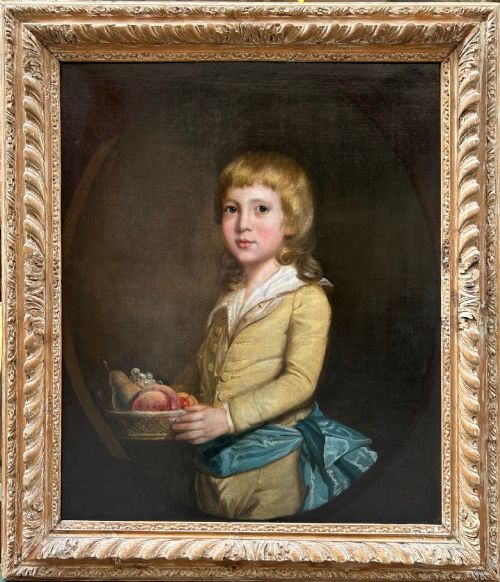
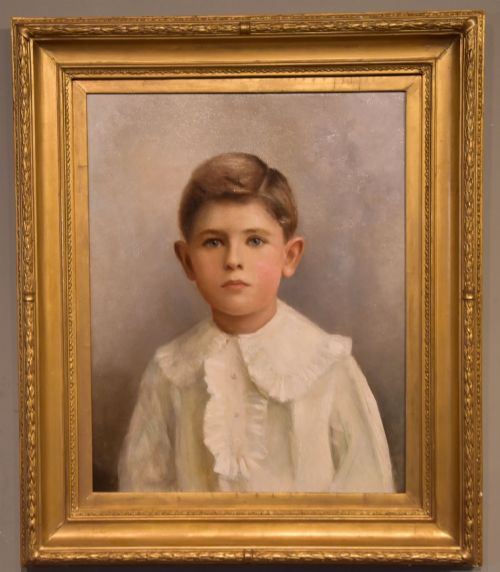

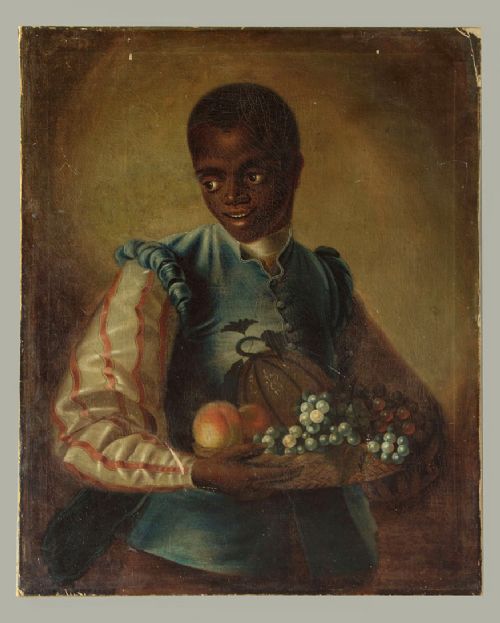


Canvas Portrait of Boy
A canvas portrait of boy brings centuries of character into a room through oil paint and textile.
Canvas Portrait of Boy
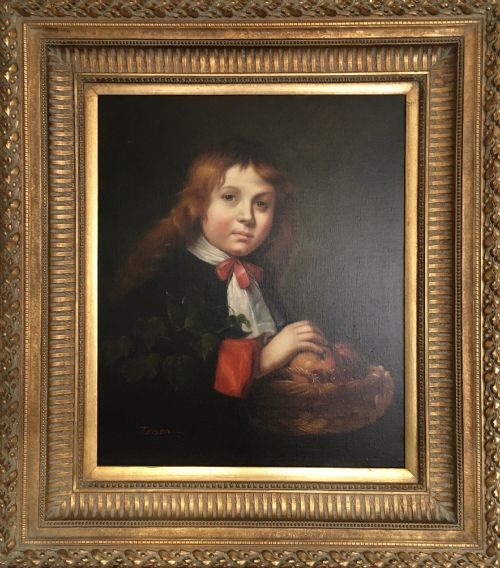
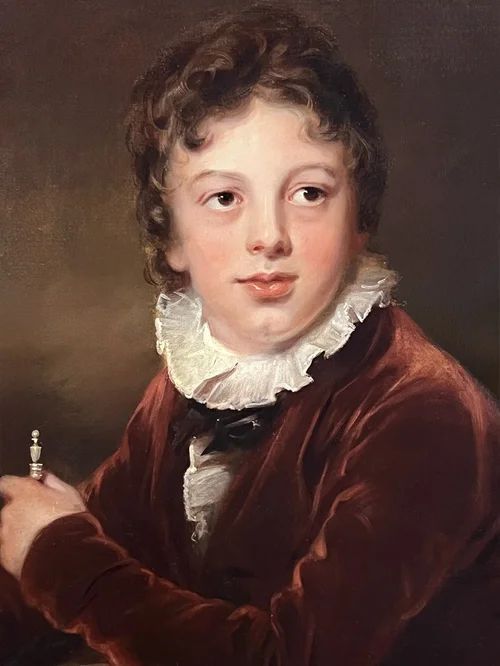
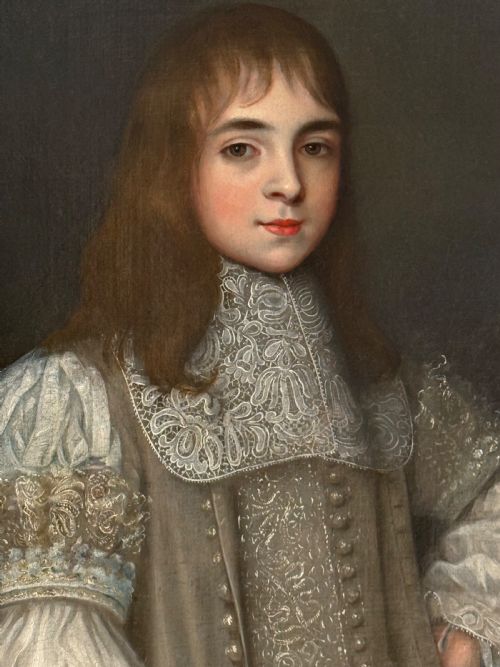
A canvas portrait of boy captures youthful subjects across centuries, ranging from formal 17th-century depictions in elaborate costume to naive 19th-century works and later mid-century examples.
The most common pieces on this page are 19th-century oil paintings on canvas, frequently showing subjects accompanied by dogs, birds, or toys such as spinning tops and puzzle maps.
Origins span English, European, and regional schools, encompassing both named artists and skilled provincial portraitists working in oils or embellished oleographs.
How They Were Made
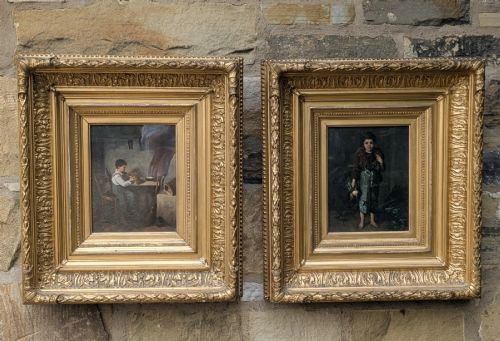
These works rely primarily on oil paint applied to stretched canvas, sometimes supported by wood strainers and housed within period giltwood or gesso frames.
Techniques range from finely blended academic brushwork seen in Georgian and Victorian fine art to textured oleographs and naive applications of pigment.
Several young sitters share the canvas with eager King Charles spaniels and persistent birds.
What Varies in Quality
Quality rests upon the anatomical proportion and psychological depth achieved by the painter, distinguishing master portraiture from stiffer provincial or naive output.
The condition of the canvas surface, the stability of the oil paint layers, and the authenticity of the accompanying period giltwood frame significantly influence the standing of each piece.
Margaret Sarah Carpenter·John Michael Wright·Thomas Beach·Henry Windsor Fry·Septimus Scott·Evaristo Cappelli·Luca Postiglione·Mary Beale·Paul Jones·William Tate·Joseph Wright of Derby·Jacob Huysmans·Philip Mercier·Frank Owen Salisbury·George Romney·Sir Thomas Lawrence·Robert Byng·Henry Scott·Edward Bird·William Orpen·Sir James Guthrie·John Russell·John Vanderbank·Thomas P Hall·Valentine Cameron Prinsep
The Canvas Portrait of Boy Glossary
- Oleograph
- A mechanical colour print textured to imitate an oil painting. These reproductions appeared widely in the 19th and 20th centuries.
- Giltwood
- Timber carved and coated with gold leaf or metallic gilt. It provided ornate borders for Georgian and Victorian paintings.
- Gesso
- A plaster-like preparation applied to wood before gilding. It creates a smooth base for intricate frame mouldings.
- Naive art
- Work produced by an artist without formal academic training. These pieces often feature charming perspective distortions.
- Circle of
- A designation indicating the work comes from an unknown hand closely associated with a master. It denotes period proximity rather than direct authorship.
Canvas Portrait of Boy: Frequently Asked Questions
How do I date a canvas portrait of boy?
Dating relies primarily on the subject's costume, hair style, and the preparation of the canvas or stretcher frames behind the work. Portrait conventions shifted noticeably between the heavy lace of the seventeenth century and the relaxed tailoring of the Victorian era.
Secondary clues include the framing materials and any inscribed names, dates, or biographical details found on the reverse of the canvas.
What subjects typically accompany the boys in these paintings?
Children in these works are frequently paired with animals such as spaniels, setters, dogs, and birds, reflecting affectionate companionship or family status. Other common attributes include toys, books, fruit baskets, or sports equipment like riding crops and spinning tops.
Such objects often carry symbolic meaning regarding the child's upbringing, education, or future role in society.
How should I care for an antique oil painting?
Keep oil paintings out of direct sunlight and away from rapid fluctuations in household temperature and humidity to prevent canvas slackening and paint cracking. Dust the surface gently with a soft, dry brush without applying moisture or cleaning solutions.
If the paint layer shows signs of flaking or if the canvas sags, consult a professional paintings conservator rather than attempting repairs at home.
What is the difference between a fine art painting and an oleograph?
A fine art painting is an original, unique creation applied by hand using oil pigments directly onto a prepared canvas support. Each brushstroke reflects the immediate decisions and skill of the artist.
An oleograph is a later reproduction printed with oil-based inks and mechanically embossed to simulate the textured surface of a genuine canvas painting.