


Blue Jacket Portrait Painting
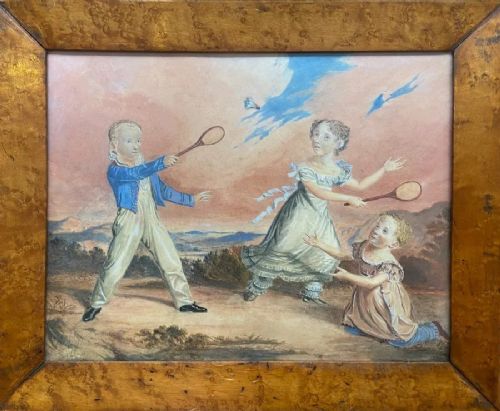
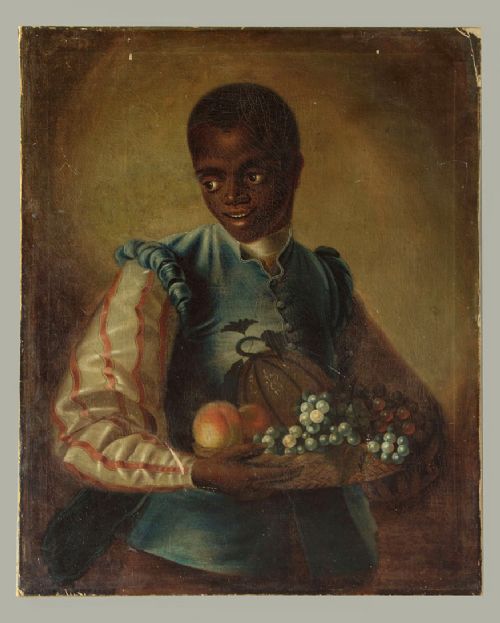
A blue jacket portrait painting captures a sitter in uniform or civil attire, offering an immediate window into past lives that collectors prize for character and historical dress.
Blue Jacket Portrait Painting
A blue jacket portrait painting brings together subjects ranging from naval officers and young gentlemen to children and travelling musicians, all defined by their distinctive outerwear. These works span from the early 18th century through the Victorian era and into the modern British period, charting shifts in portraiture conventions over three hundred years.
The format varies considerably across the selection, appearing as miniature paintings, watercolours on paper, and substantial oil paintings on canvas framed in wood and glass. Domestic sitters share space with military figures, creating a diverse group where social standing and occupation dictate the style of dress and setting.
The most common examples on this page are 19th-century works, alongside earlier Georgian canvases and early 20th-century illustrations. Each piece presents a distinct individual, whether through a formal oil technique or a more intimate watercolour study.
How they were made
Artists relied on oil paint applied to canvas or watercolour on paper, often framing the finished image behind glass with wood mouldings. Gilding occasionally appears to highlight details within the composition, adding depth to the sitter's surroundings.
Pigments and binders varied according to the period, with 18th-century oils employing different drying oils compared to later 19th-century watercolours and early 20th-century illustrative works.
Blue Jacket Portrait Painting Retail Price Guide 2026
Typical asking prices for blue jacket portrait painting among the pieces listed under this phrase on Sellingantiques today, from the lower quarter to the upper quarter. They describe what is for sale here now, not the wider market.
One depicted air ace is caught mid-action, shooting his pistol straight from the cockpit at the enemy.
What varies in quality
Condition plays a central part in the overall integrity of the work, where undisturbed surfaces on canvas or well-preserved paper and watercolour without fading maintain the original impact intended by the painter.
Henry Travis·William Jones of Bath·Septimus Scott·Sidney Riesenberg·John Verelst
The Blue Jacket Portrait Painting Glossary
- Oil painting
- A work executed with pigments bound in a drying oil, typically applied to canvas or wood panel. This medium allows for rich colour blending and deep tonal graduation.
- Watercolour
- A painting method where fine pigment is suspended in a water-based solution, usually worked on paper. It creates transparent washes that capture light effectively.
- Miniature painting
- A small-scale portrait designed for intimate viewing, often highly detailed to compensate for its reduced physical dimensions.
- Georgian
- The period spanning the reigns of the four King Georges, characterised in art by structured portraiture and refined portrait conventions.
- Victorian
- The era covering the reign of Queen Victoria, marked by diverse artistic movements ranging from romantic realism to early illustration.
Blue Jacket Portrait Painting: Frequently Asked Questions
What periods do these paintings cover?
The selection spans from the early 18th century through the Georgian and Victorian eras, extending into early 20th-century illustration and modern British works.
This broad chronological range allows collectors to trace how portraiture and clothing styles evolved across different centuries.
What materials were used?
Artists utilised oil paint on canvas, watercolour on paper, and gilded elements, encased in wood and glass frames.
These varied media reflect the specific period and the intended function of the portrait, whether a formal canvas or an intimate watercolour.
Who are the typical subjects?
Subjects include naval officers, young gentlemen, children with pets, travelling musicians, and air aces from the early 20th century.
Such diversity shows that blue jackets were worn across various social strata and professions, from military service to everyday life.
How do I care for these works?
Protect paper and watercolour works from direct sunlight to prevent fading, and keep oil paintings away from excessive moisture and extreme temperature fluctuations.
Displaying them in stable indoor environments ensures the pigments and framing materials remain preserved for years to come.