





Canton Rose Medallion Porcelain
Canton rose medallion porcelain comprises vibrant Chinese export pieces filled with intricate enamel panels and gilt detailing, prized for their rich storytelling scenes and decorative presence.
Canton Rose Medallion Porcelain
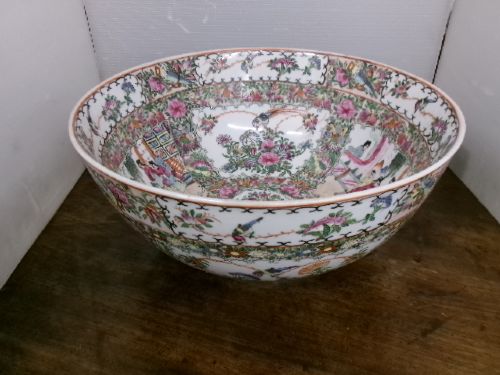
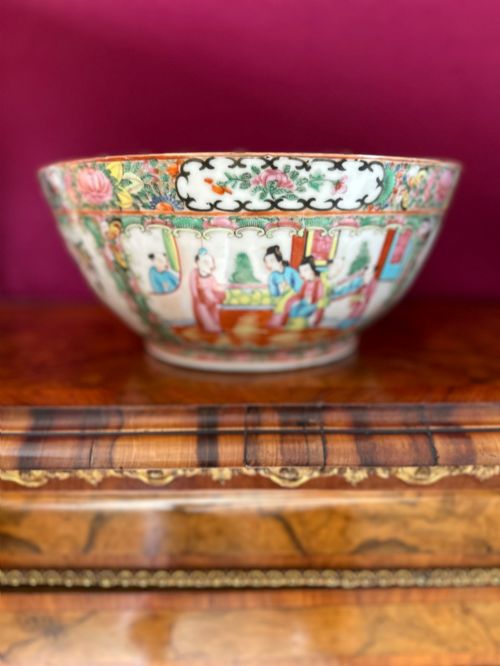
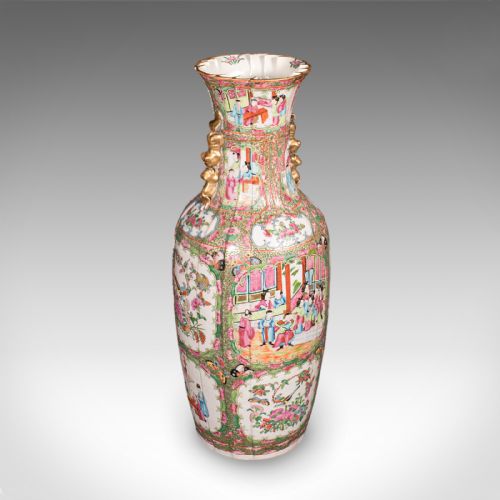
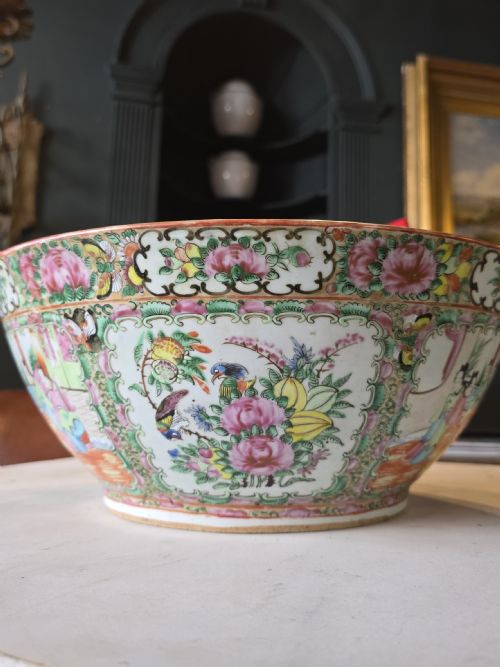
Canton rose medallion porcelain centres on large punch bowls, floor vases, decorative dishes and garden seats made for export. These pieces typically display alternating panels containing figures, birds, and flowers rendered in bright enamels.
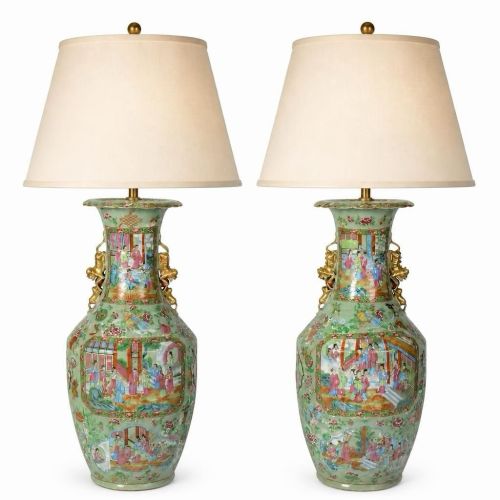
The objects seen here date predominantly from the nineteenth century, including Victorian periods and the Qing dynasty. Large scale punch bowls and pairs of baluster vases dominate the selection alongside converted table lamps.
Forms range from trefoil trays and shamrock shaped dishes to monumental umbrella stands and centrepiece bowls. Many examples retain traditional motifs such as butterflies and foliage framing the central medallion.
Materials and technique
Potters shaped these ceramics from white porcelain clay before applying extensive hand painted polychrome enamels and gold leaf. Gilding highlights the borders and panel dividers, creating a rich contrast against the white ceramic ground.
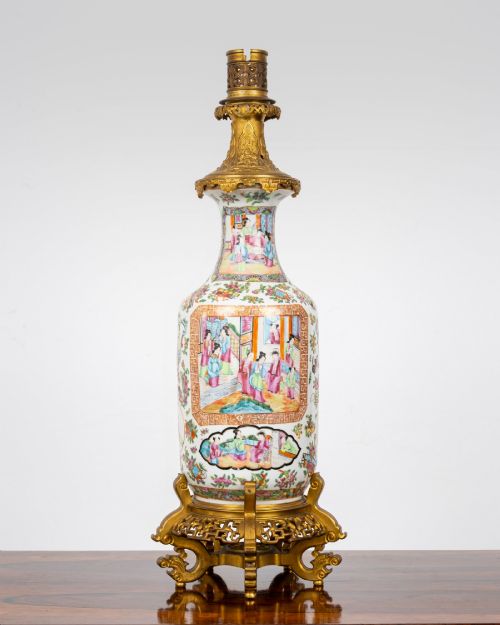
Many nineteenth century pieces integrate auxiliary materials like brass, gilt bronze mounts, or padouk wood stands. Some items show later adaptations into wired table lamps utilising fabric shades.
Listings span the eighteenth, nineteenth, and twentieth centuries, incorporating Victorian items alongside Qing dynasty exports in porcelain and enamel.
Quality variations
Quality rests in the precision of the hand painted brushwork and the density of the enamel decoration across the surface. Finer examples display meticulous detail in the facial expressions and garments of the figures within each panel.
The application of gold leaf and the crispness of the porcelain body also distinguish superior items. Robust potting and well proportioned baluster forms separate standard export wares from monumental pieces.
The Canton Rose Medallion Porcelain Glossary
- Famille rose
- A palette of opaque enamel colours dominated by pink or rose shades, introduced to Chinese ceramics during the Qing dynasty. This palette forms the primary coloration of rose medallion wares.
- Chinese export porcelain
- Ceramics manufactured in China specifically for western markets. These objects combine traditional Chinese forms and techniques with western decorative preferences.
- Ormolu
- Gilded bronze mounts applied to the base or rim of porcelain vessels. This technique appears on several nineteenth century lamps and bowls.
- Baluster vase
- A tall vase with a rounded body tapering to a narrow neck and flared rim. These vessels frequently feature covers and form matched pairs.
- Trefoil tray
- A shallow serving dish formed with three lobes or rounded leaves. These smaller items display the standard compartmentalised enamel patterns.
Canton Rose Medallion Porcelain: Frequently Asked Questions
How were these porcelain bowls used originally?
Large punch bowls served communal drinks at western dining tables during the nineteenth century. They held substantial volumes of liquid for guests.
Smaller dishes and trays functioned as decorative serving pieces or display items in formal drawing rooms.
Can I use a rose medallion lamp safely?
Many vases and jars were converted into table lamps during past decades to suit modern interiors. They operate with standard electrical fittings.
Wiring quality varies, so buyers often have a professional electrician inspect older lamps before regular use.
How do I date a nineteenth century piece?
Dating relies on stylistic markers, potting characteristics, and the intensity of the enamel colours. Nineteenth century items often carry specific Qing dynasty context.
Later Victorian reproductions and twentieth century pieces show subtle differences in the weight of the porcelain and the application of gilding.
Are these items painted entirely by hand?
Traditional export pieces feature meticulous hand painted enamel work across every panel and border. Artisans layered pigments to build up the narrative scenes.
Close inspection reveals individual brushstrokes and minor variations within the repetitive geometric borders.