
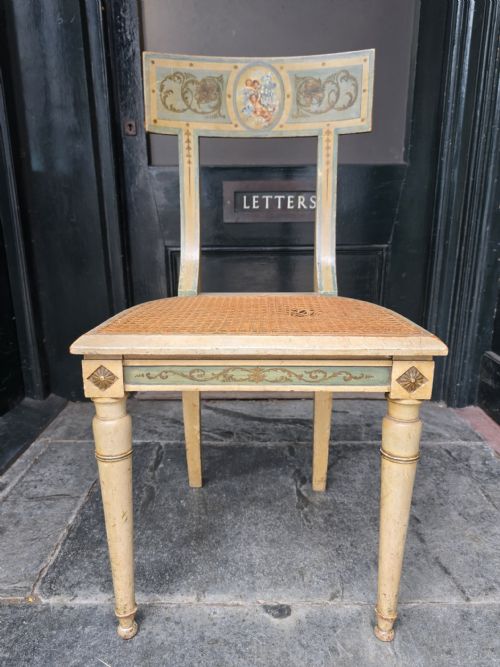
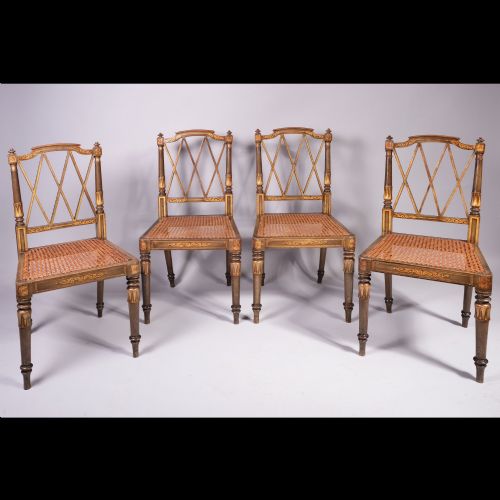
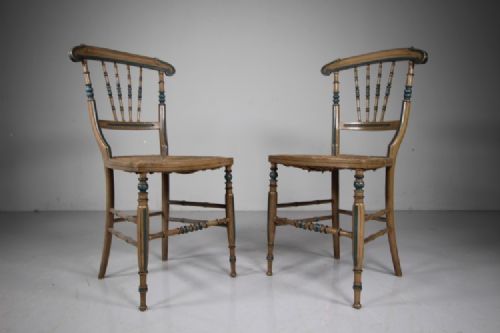

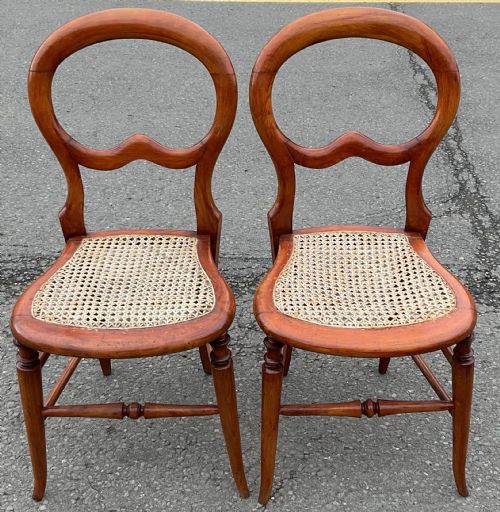


Caned Seat Hall Chair
A caned seat hall chair brings lightness and texture to an interior, combining rigid timber frames with flexible woven seating.
Caned Seat Hall Chair
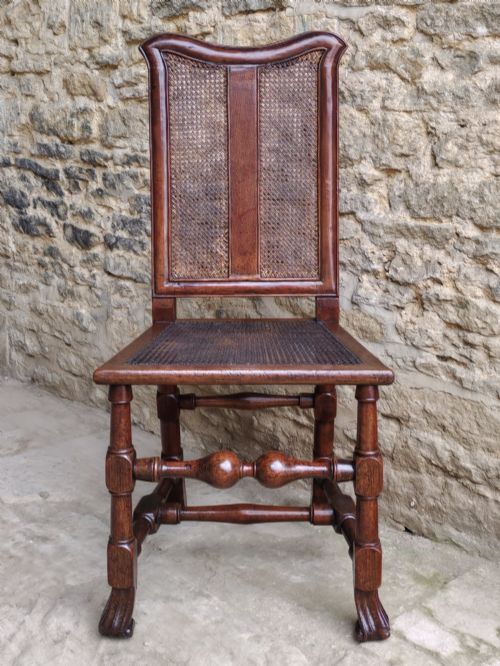
A caned seat hall chair is an upright seating form designed primarily for corridors, reception rooms, and grand entryways. The pieces seen here span centuries of British and continental design, ranging from early eighteenth-century walnut examples to later revival styles.
The selection includes side chairs, occasional chairs, and specific hall seating executed in various regional interpretations. Buyers encounter standard upright formats alongside pairs and sets featuring woven cane panels within wooden frames.
How they were made
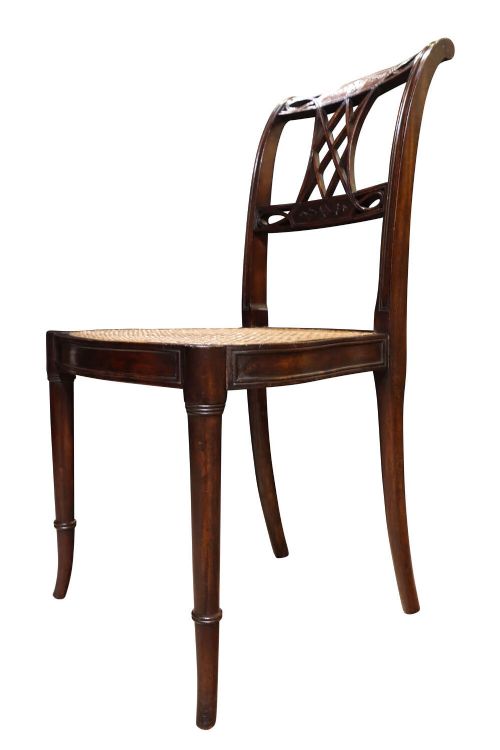
Construction relies upon traditional timber framing utilising hardwoods such as oak, walnut, mahogany, satinwood, and rosewood. Craftsmen shaped these materials into turned, carved, or sabre legs supporting integrated frames designed to receive woven natural cane.
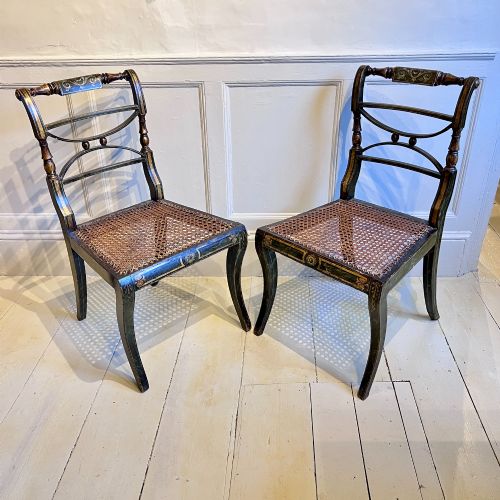
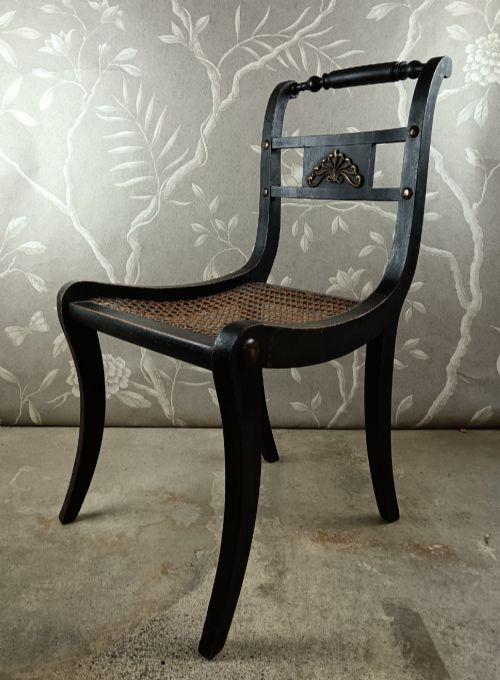
Surface treatments vary from polished wood finishes and ebonisation to painted, japanned, and gilt decorations. Many examples incorporate brass accents or intricate carving reflecting specific historical revivals from William and Mary to the Edwardian era.
Several pieces feature simulated bamboo turning, proving that Victorians loved botanical mimicry almost as much as proper seating.
What varies in quality
Quality resides in the precision of the timber joinery and the fineness of the hand-woven cane mesh. Superior examples exhibit crisp carving on the wooden frame and well-proportioned structural members that withstand daily use.
The integrity of the surface finish also distinguishes finer pieces, whether through original painted decoration, high-grade cabinet timbers like walnut and mahogany, or retained historic patination on the wood.
Waring and Gillow
The Caned Seat Hall Chair Glossary
- Cane
- Woven material made from the outer bark of rattan palms, utilised to create lightweight and resilient seating panels. It provides a flexible yet durable support for the sitter.
- Sabre leg
- A concave-curved furniture leg that tapers toward the foot, frequently associated with Regency design. This form adds visual lightness and stability to side chairs.
- Ebonised
- Timber treated with a stain, dye, or finish to simulate the appearance of solid ebony. This dark treatment was particularly favoured during the Regency and Victorian periods.
- Barley twist
- A type of turning resembling a twisted rope, carved into furniture legs and structural supports. This decorative technique appears frequently in seventeenth-century and revival pieces.
Caned Seat Hall Chair: Frequently Asked Questions
Where should I place a caned seat hall chair?
These chairs suit transitional spaces such as hallways, landings, and entrance vestibules where a deep armchair might obstruct movement. Their relatively light visual weight allows them to stand against plain walls or act as occasional seating in reception rooms.
Because the woven seat is delicate compared to solid wood, they perform best in locations used primarily for brief seating rather than heavy, prolonged lounging.
How do I care for a caned seat?
Natural cane requires moderate humidity to prevent the plant fibres from becoming brittle and snapping under pressure. Regular dusting with a soft brush keeps debris from accumulating within the woven mesh.
Applying a damp sponge very occasionally to the underside can help maintain flexibility in drier indoor environments. Avoid placing these chairs directly against intense heat sources or in prolonged direct sunlight.
How can I tell different historical periods apart?
Stylistic clues within the timber framing indicate the era of manufacture, from the turned barley twists of seventeenth-century revivals to the clean curved lines of Regency sabre legs. Surface decoration such as japanning, gilding, or Edwardian inlaid marquetry also points toward specific stylistic revivals.
Examining the construction methods behind the frame reveals whether a piece originates from an earlier period or a later nineteenth-century revival workshop.
Are these chairs comfortable for daily use?
Caned seats offer a surprisingly springy and supportive surface due to the tension of the woven rattan mesh. While they lack the deep padding of modern upholstered armchairs, they provide adequate support for upright dining or brief tasks.
Adding a loose squab cushion can increase comfort during longer periods of sitting without obscuring the decorative wooden frame.