






Victorian Ceylonese Furniture
Victorian ceylonese furniture brings tropical colonial craftsmanship into British interiors through dense exotic timbers and intricate regional carving.
Victorian Ceylonese Furniture
Victorian ceylonese furniture encompasses nineteenth-century British colonial output originating from Ceylon, spanning the nineteenth century and Victorian periods. Buyers examining this category encounter distinctive forms designed for tropical comfort and formal reception rooms alike.
The assortment on this page concentrates on practical and display household items. Centre tables, hall chairs, occasional tables, accent chairs, settees, sofas, chests, coffers, benches, settles, and etageres form the bulk of the available selection.
Materials and Construction
Makers utilised dense native hardwoods including ebony, satinwood, calamander, and teak. These heavy timbers provided durability in warm climates while offering rich contrast for decorative grain patterns and inlay work.
Construction frequently incorporated exotic specimen wood, bone, cane, upholstery, and brass mounts. Carved elements demonstrate regional techniques developed during the Anglo-Indian and colonial periods.
Assessing Quality and Execution
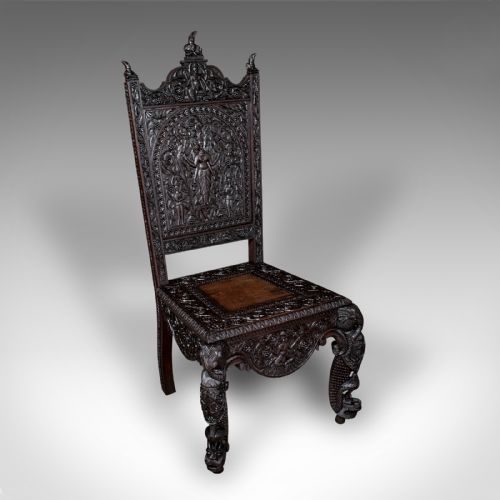
The standard of carving dictates the visual hierarchy of these pieces. Deeply undercut foliage and crisp relief work distinguish finer specimens from simpler workshop output.
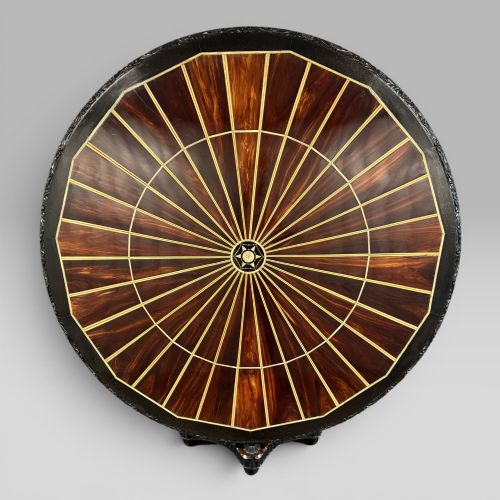
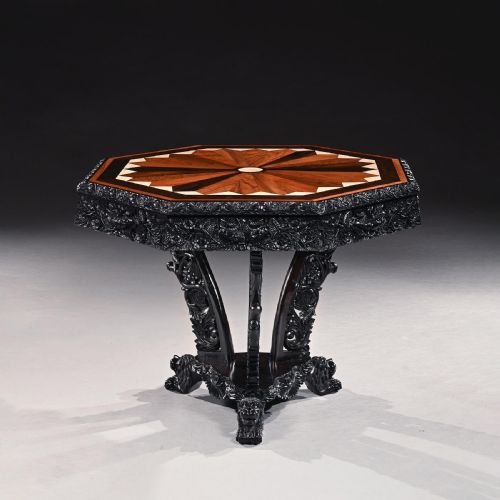
Timber selection and combination also drive the distinction between tiers. Pieces pairing solid ebony with contrasting satinwood or intricate specimen wood marquetry represent the more ambitious end of nineteenth-century production.
The Victorian Ceylonese Furniture Glossary
- Calamander
- A heavy, durable wood derived from Diospyros quaesita, native to Sri Lanka, prized for its dark brown colour with striking black stripes. It appears frequently in high-status nineteenth-century tables and cabinets.
- Satinwood
- A light-coloured, lustrous timber from tropical trees, offering a smooth finish that contrasts sharply with dark ebony. Makers utilised it for solid construction and detailed veneers.
- Etagere
- A piece of furniture consisting of a set of open shelves for displaying ornaments, sometimes referred to as a whatnot in nineteenth-century inventories. These multi-tiered stands allow for the display of small decorative objects.
- Porcupine Sofa
- A distinctive nineteenth-century seating form associated with Ceylonese craftsmanship, featuring elaborate spindle work reminiscent of porcupine quills. It represents specialised regional turning techniques.
- Specimen Wood
- Furniture surfaces composed of multiple small geometric pieces of different coloured timbers arranged in patterns. This technique displays the wide variety of indigenous woods available to colonial workshops.
Victorian Ceylonese Furniture: Frequently Asked Questions
What is ceylonese furniture?
Ceylonese furniture comprises nineteenth-century domestic pieces made in Ceylon under British colonial influence. These items blend European furniture forms with local tropical timbers and traditional carving.
Craftsmen utilised native hardwoods such as ebony and satinwood to construct tables, chairs, and storage pieces intended for both colonial residences and export to Britain.
How do I identify a ceylonese table?
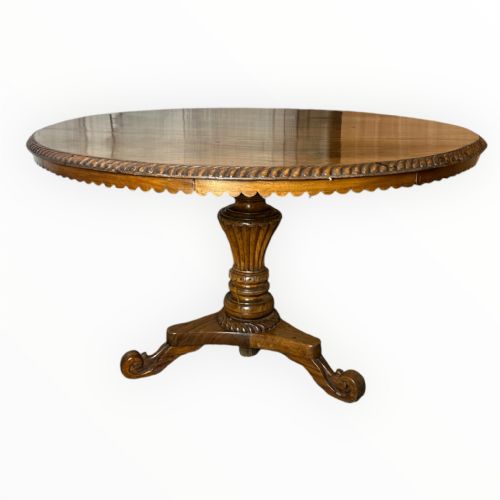
Ceylonese tables typically feature dense tropical timbers like ebony, calamander, or satinwood combined with intricate regional carving. Centre tables and occasional tables often display specimen wood marquetry or heavily carved pedestals.
The regional aesthetic merges Victorian proportions with tropical motifs, setting these tables apart from standard British domestic production of the same era.
Where was this furniture made?
This furniture was manufactured in Ceylon, now Sri Lanka, during the nineteenth century. Specific regional centres, such as the Galle district, developed distinct workshop traditions and timber specialties.
Production catered to British colonial administrators as well as the export market in Britain, resulting in a hybrid style combining European forms with local craftsmanship.
How do I care for exotic timbers?
Exotic timbers like ebony and satinwood require stable indoor humidity to prevent splitting or warping in temperate climates. Dusting with a dry, soft cloth preserves the natural polish of the dense wood.
Avoid placing these pieces near direct heat sources or in strong sunlight, which can fade contrasting grain patterns and dry out historic finishes.