
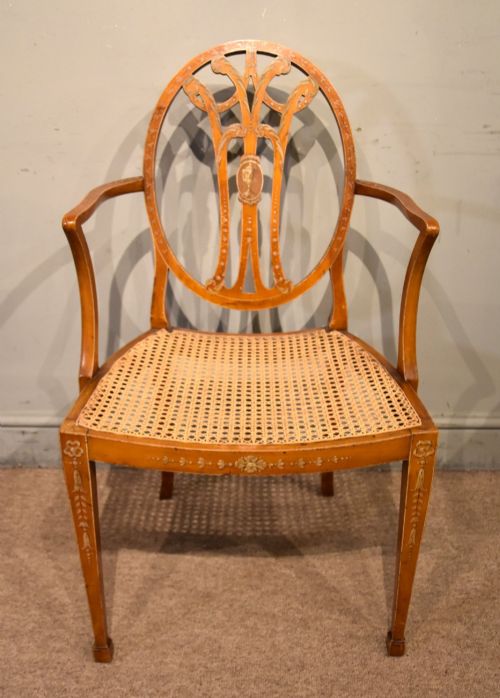


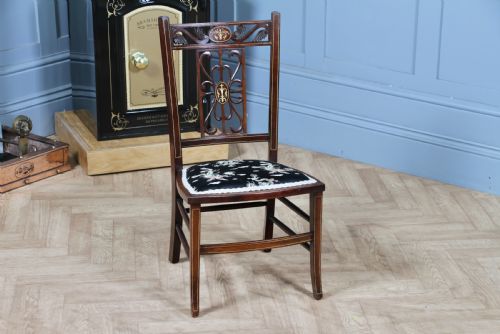


Carved Satinwood Chair
These carved satinwood chair examples combine pale exotic timber with intricate decorative detail, offering collectors a refined piece of period seating.
How they were made
Maker construction relies heavily upon satinwood and mahogany, often enhanced by marquetry inlay and hand-painted decorative motifs. Craftsmen utilised these tight-grained timbers to create smooth, lustrous surfaces suitable for fine decorative carving.
Seating portions incorporate various traditional inserts including cane and fabric upholstery, silk upholstery, and velvet. Structural framing balances solid timber elements with delicate inlay work to achieve both durability and visual lightness.
What varies in quality
Quality differences stem from the crispness of the carving and the precision of the marquetry inlay work. Solid timber construction at the top of the range demonstrates superior material selection compared to veneered alternatives.
The integration of hand-painted details and the preservation of original upholstery materials further distinguish finer examples. Regional variations, such as specific Ceylonese carving techniques on solid satinwood, introduce distinct tiers of craftsmanship.
Listings feature Edwardian, Victorian, and nineteenth century periods alongside mahogany, fabric, cane, and marquetry inlay materials.
The Carved Satinwood Chair Glossary
- Satinwood
- A hard, durable tropical timber known for its golden-yellow colour and lustrous sheen. It serves as the primary surface material for high-status Edwardian and Victorian decorative furniture.
- Marquetry Inlay
- The art of applying decorative pieces of veneer to a structure to form intricate patterns. This technique frequently frames the panels of Edwardian and revival furniture.
- Bergere
- An enclosed upholstered armchair with a wooden frame where the sides are typically filled with cane work. These pieces often feature satinwood frames.
- Sheraton Revival
- A late nineteenth and early twentieth century design movement that reinterprets eighteenth-century neoclassical furniture forms. It draws inspiration from the designs of Thomas Sheraton utilising satinwood and delicate inlay.
- Cane
- Material woven from stripped rattan used for seat panels and backrests. It provides a lightweight, resilient surface popular in period seating.
Carved Satinwood Chair: Frequently Asked Questions
How do I date a satinwood chair?
Dating relies on stylistic markers and structural clues within the timber and upholstery methods. Pieces often span the Victorian, Edwardian, and early twentieth-century periods.
Revival styles from around nineteen hundred frequently mimic earlier Georgian aesthetics while retaining Edwardian manufacturing techniques. Examining the secondary woods and inlay styles helps confirm the precise era of production.
What is satinwood?
Satinwood is a dense, exotic hardwood prized for its reflective, yellow-toned grain that resembles satin fabric. It provides a smooth canvas for fine painted decoration and marquetry inlay.
Because of its distinct appearance, it was reserved for high-end occasional chairs, salon seating, and formal armchairs during the nineteenth and early twentieth centuries.
Are these chairs comfortable for daily use?
Most of these chairs were designed for formal parlours, salons, or occasional use rather than heavy lounging. Their ergonomic comfort depends on the specific form, whether an upholstered armchair or a rigid side chair.
Selecting a version with padded silk, velvet, or fabric upholstery provides a softer seat suited to modern sitting habits.
How should I care for satinwood furniture?
Satinwood surfaces require gentle maintenance to preserve the natural lustre of the timber and any delicate hand-painted details. Regular dusting with a dry, soft cloth prevents particulate buildup.
Keep these chairs away from direct sunlight and extreme temperature fluctuations to protect the vintage wood finishes and prevent the inlay from lifting.