

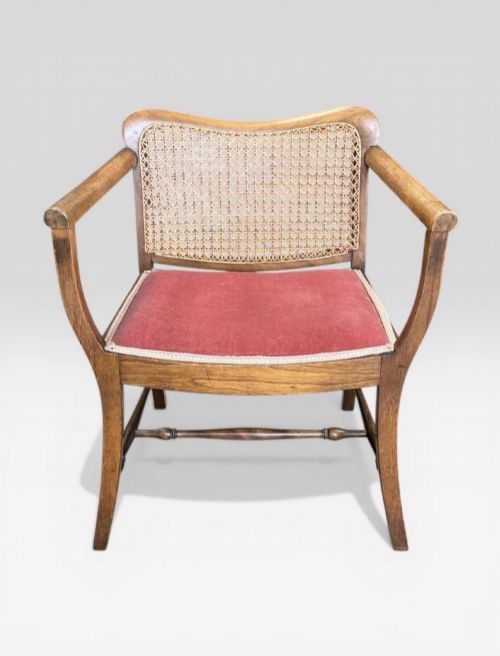


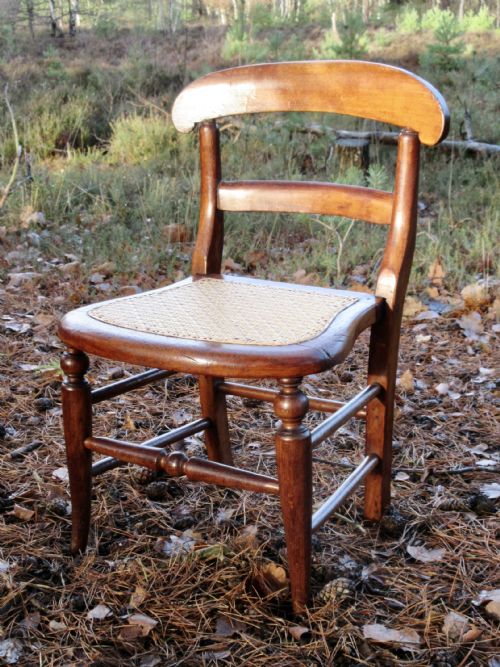


Caned Nursery Chair
These caned nursery chair examples are small seating pieces woven in cane, offering charm and utility for child spaces across several historic periods.
Caned Nursery Chair
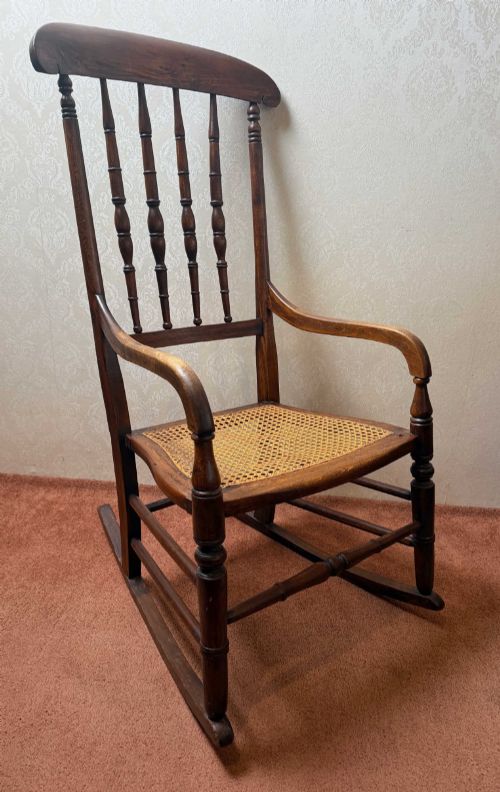
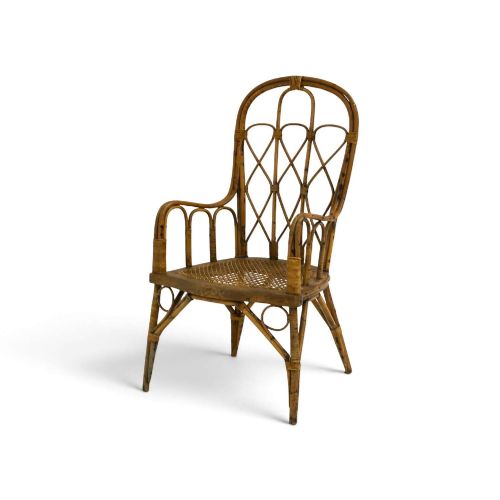
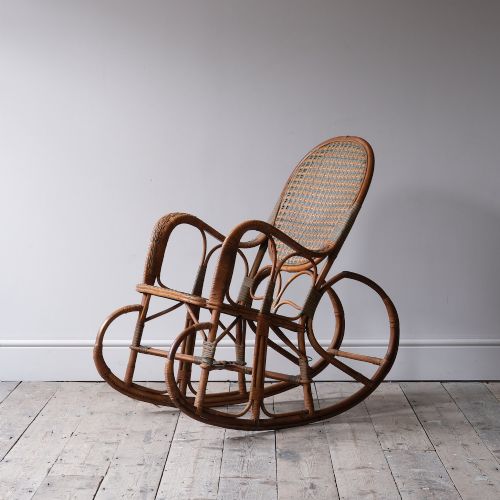
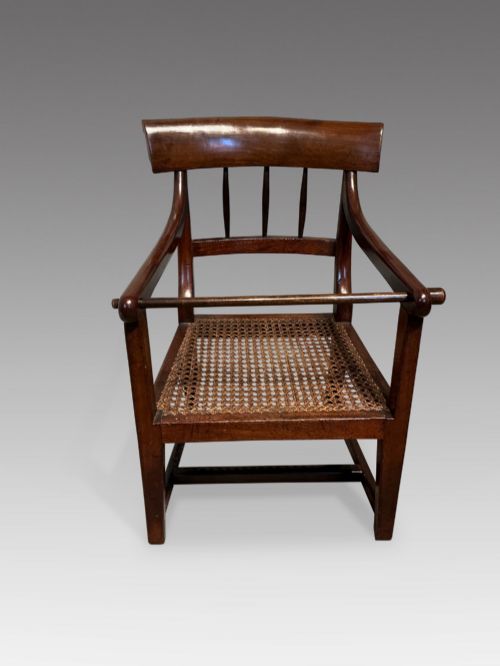
A caned nursery chair serves as diminutive seating constructed for children, encompassing armchairs, rockers, high chairs, and tub chairs found across this page. The listings showcase pieces from the Georgian, Regency, and Victorian eras, alongside Edwardian designs.
Most entries feature woven cane seats and backs, often styled as bergere chairs, correction chairs, or bentwood rockers. Mahogany and beech appear frequently alongside bamboo-effect frames and ebonised wood.
Buyers will encounter various historic forms ranging from formal mahogany high chairs to practical bentwood items by Thonet. These small chairs reflect the domestic seating styles of their respective centuries tailored for smaller occupants.
How they were made
Cabinetmakers utilised hardwoods such as mahogany and beech to construct the sturdy frames required for children's seating. Woodturning techniques produced bobbin-turned legs and uprights on specific Victorian examples.
Rattan cane was woven by hand into seats and backs, providing a resilient and flexible surface. Steam-bending methods shaped the beech frames seen on the bentwood pieces from the later periods.
Caned Nursery Chair Retail Price Guide 2026
Typical asking prices for caned nursery chair among the pieces listed under this phrase on Sellingantiques today, from the lower quarter to the upper quarter. They describe what is for sale here now, not the wider market.
The listings on this page span the Georgian, Regency, Victorian, and Edwardian periods, utilising mahogany, beech, and rattan cane.
What varies in quality
The refinement of the timber framing and the tightness of the cane weaving distinguish the finer examples from standard workshop production. Superior pieces display carefully turned spindles, well-proportioned arms, and high-grade mahogany or beech stock.
Makers such as James Shoolbred or Thonet brought distinct manufacturing standards to their output, evident in the precision of the bentwood curves or the execution of the bergere panels.
James Shoolbred·Thonet
The Caned Nursery Chair Glossary
- Bergere
- An upholstered armchair with enclosed sides, though in these smaller versions, the back and sides frequently feature woven cane panels.
- Bentwood
- Wood softened by steam and pressed into curved shapes, a technique famously utilised by makers like Thonet for lightweight chairs and rockers.
- High chair
- A raised child's chair designed to allow an infant to sit at a standard dining table height, often constructed in mahogany during the Georgian and Victorian periods.
- Correction chair
- A nineteenth-century seating form with a high back intended to encourage straight posture for children.
- Bobbin turned
- A style of furniture leg or stretcher shaped on a lathe to resemble a series of wooden bobbins or spools, seen on Victorian ebonised examples.
Caned Nursery Chair: Frequently Asked Questions
What is a caned nursery chair?
A caned nursery chair is a small historical seat made for children, featuring a woven rattan cane seat or back panel.
These pieces mirror the prevailing furniture styles of the Georgian, Regency, and Victorian eras in miniature scale.
How do I date a child's chair?
Dating relies on identifying the timber species, construction joints, and stylistic markers such as bobbin turning or bentwood framing.
Earlier Georgian and Regency examples often utilise solid mahogany, while later Victorian and Edwardian pieces introduce beech, bentwood, and ebonised finishes.
Were these chairs used daily?
Historical children's chairs served practical daily roles in domestic nurseries, dining rooms, and schoolrooms.
High chairs aided with feeding, while standard armchairs and rockers provided seating for young children.
Can I use an antique nursery chair?
Many buyers place these small chairs in modern living spaces as decorative items or display stands for dolls and teddy bears.
Due to their antique status and smaller dimensions, structural limits should be considered if intended for active juvenile seating.