


Cane Side Table
A cane side table brings natural texture and lightness into a room, offering a convenient surface crafted from woven materials and sturdy timber.
Cane Side Table
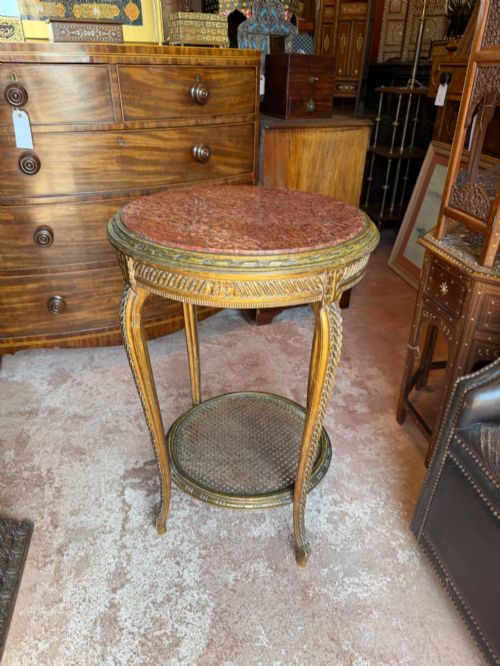
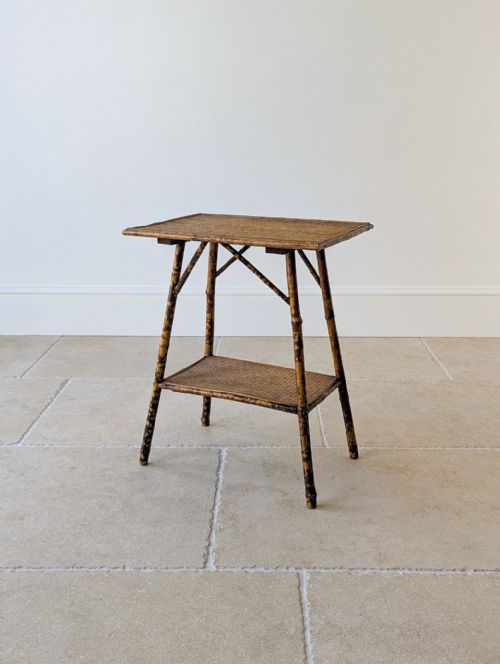
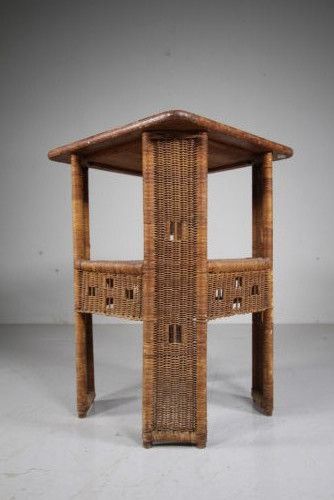
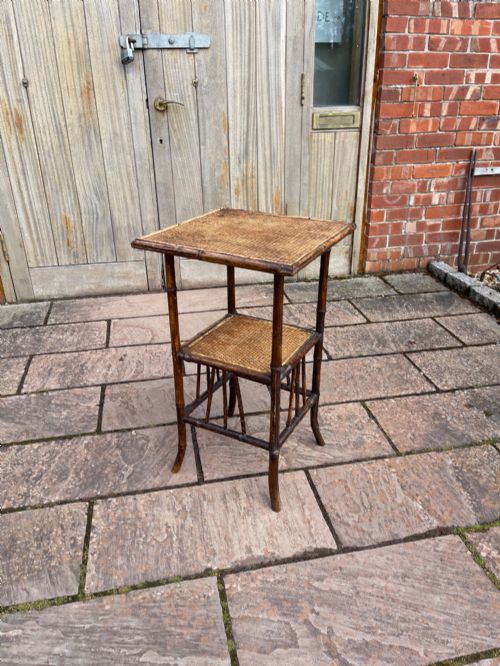
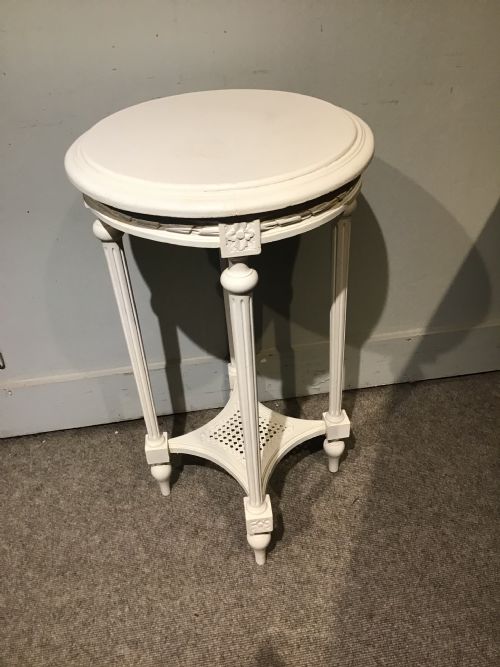
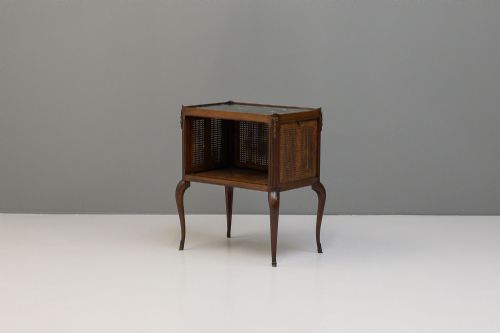
A cane side table is a compact surface piece designed for occasional use in sitting rooms, bedrooms, or boudoirs, frequently taking the form of a gueridon, bedside table, or two-tier etagere. The pieces seen here span from the nineteenth century through the 1930s, encompassing Victorian, Edwardian, and Arts and Crafts examples.
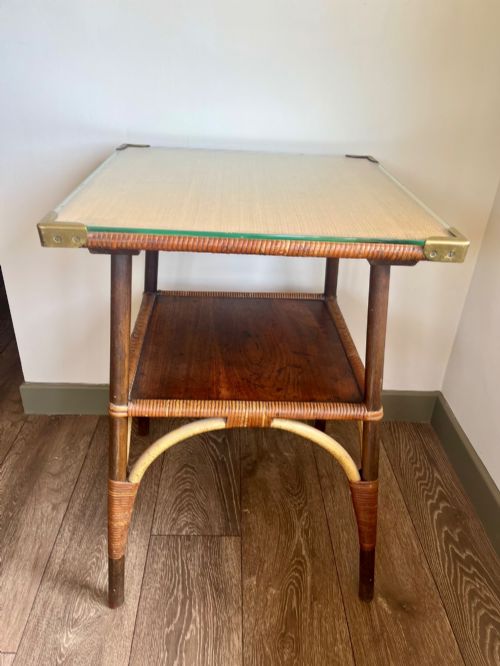
Buyers will encounter varied forms on this page, ranging from English bamboo and wicker pieces to French occasional tables and Anglo-Indian designs. Many feature multiple tiers for storage or display, incorporating canework, rattan, or woven reed alongside solid timber frames.
How They Were Made
These tables combine timber frameworks such as oak, mahogany, or ebonised bamboo with woven elements like cane, rattan, and wicker. Makers secured the pliable plant materials tightly into wooden channels or frames to create durable, resilient surfaces.
Additional surface treatments include marble tops, leather inserts, and hand-carved painted woodwork. Metal accents like brass often appear on mounts and gallery rails, while finishing touches involve traditional polishing and paint.
The object types recorded range from compact bedside tables and etageres to multi-tiered occasional and coffee tables.
What Varies in Quality
The standard of a cane side table depends on the tightness and integrity of the weave, alongside the selection of timber used for the structural frame. Finer examples display meticulous hand-weaving that remains taut and even across every tier.
Design sophistication and maker attribution also separate pieces, with marked items or specific firm output carrying greater distinction. The integration of high-grade inset materials like polished marble or quality leather elevates the overall construction.
Dryad of Leicester·Liberty and Co·Krieger of Paris
The Cane Side Table Glossary
- Cane
- Strips derived from the outer bark of the rattan palm, traditionally used for weaving resilient seating and table panels. It provides a light yet strong surface texture.
- Etagere
- A piece of furniture consisting of a set of open shelves for displaying small objects. These tiered tables offer vertical surface space in compact footprints.
- Rattan
- A climbing palm with strong, pliable stems utilised extensively in furniture making. It forms both the structural framing and woven components of lighter decorative tables.
Cane Side Table: Frequently Asked Questions
Where should I place a cane side table?
These tables suit sitting rooms as convenient lamp stands or serve beside beds as compact surfaces for night-time essentials. Their relatively light construction allows them to move easily between rooms as needed.
Because many designs incorporate open lower tiers, they also work well in smaller spaces where solid furniture might feel too heavy or visually intrusive.
How do I care for cane and rattan?
Dust the woven surfaces regularly with a soft brush or vacuum attachment to prevent dirt from settling between the strands. Avoid placing the furniture in direct sunlight or beside intense heat sources to keep the natural fibres from drying out.
Applying a very light damp cloth occasionally helps maintain the suppleness of the cane without causing moisture damage to the wooden framework.
Are these tables sturdy enough for daily use?
Most examples are designed for holding small items such as books, lamps, or tea services rather than heavy loads. The longevity of the piece depends largely on the original construction quality and how well the woven panels have been maintained.
Tables featuring solid hardwood frames and tight cane work offer reliable daily utility when treated with reasonable care.
How do I distinguish Victorian bamboo tables?
Victorian bamboo pieces often reflect the nineteenth-century fascination with exotic and Aesthetic Movement interior styles. They frequently combine natural or ebonised bamboo with woven panels, lacquer, or brass hardware.
Examining the joinery and finish helps identify the period, as nineteenth-century workshops employed specific construction methods distinct from later twentieth-century reproductions.