
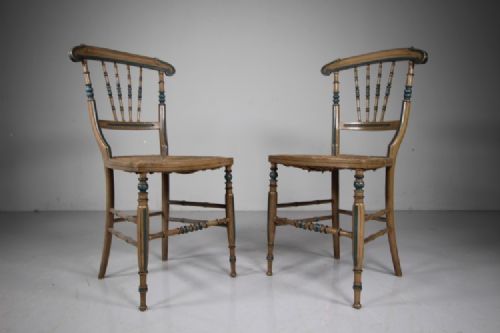
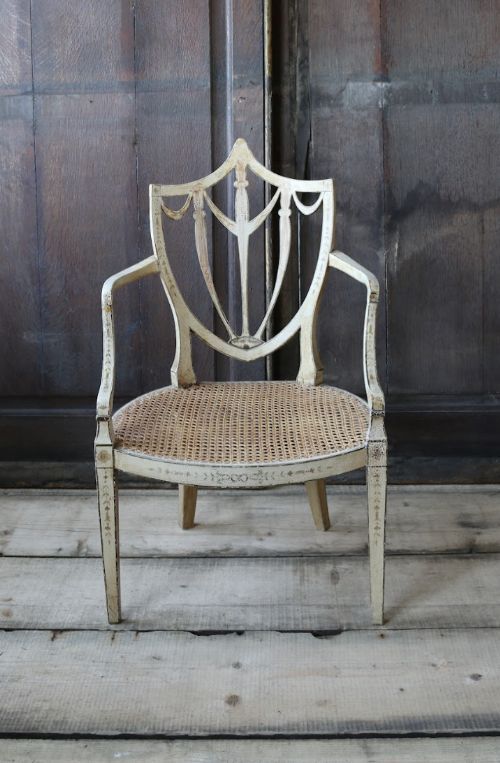


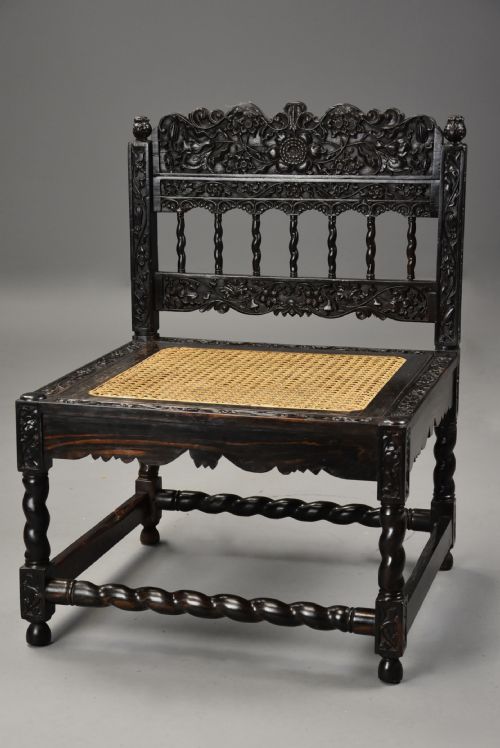


Cane Seat Wooden Chairs
Cane seat wooden chairs bring historic texture and resilient seating into a room, combining timber frames with woven panels.
Cane Seat Wooden Chairs
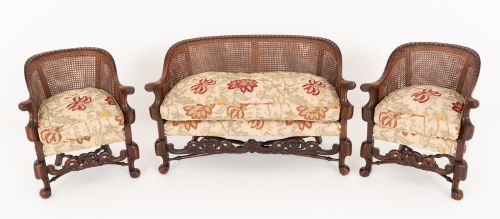
When you search for cane seat wooden chairs, you encounter a diverse array of seating forms ranging from simple side chairs to elaborate armchairs, bergere suites, and settees. These pieces bridge structural timber framing with pliable woven plant materials to create resilient yet lightweight seating.
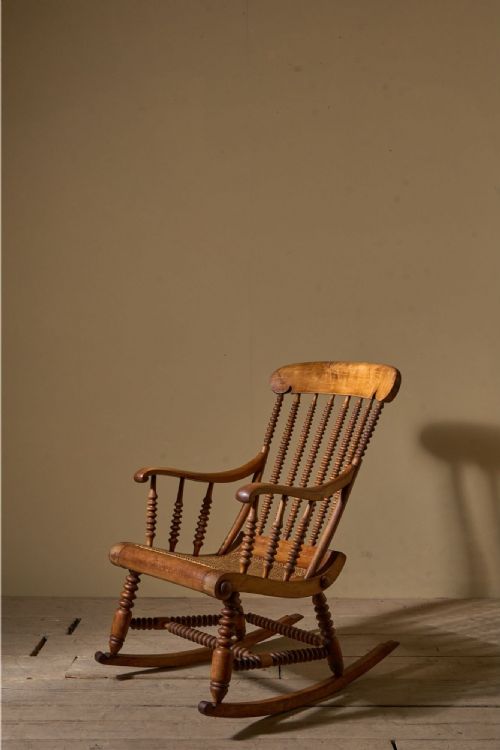
The selection on this page spans numerous periods and regional tastes, including Regency, Victorian, Edwardian, and Georgian eras alongside revivalist styles like Carolean and Hepplewhite. You will frequently find dining chairs, hall chairs, rocking chairs, and occasional bedroom chairs sharing space with larger library or throne chairs.
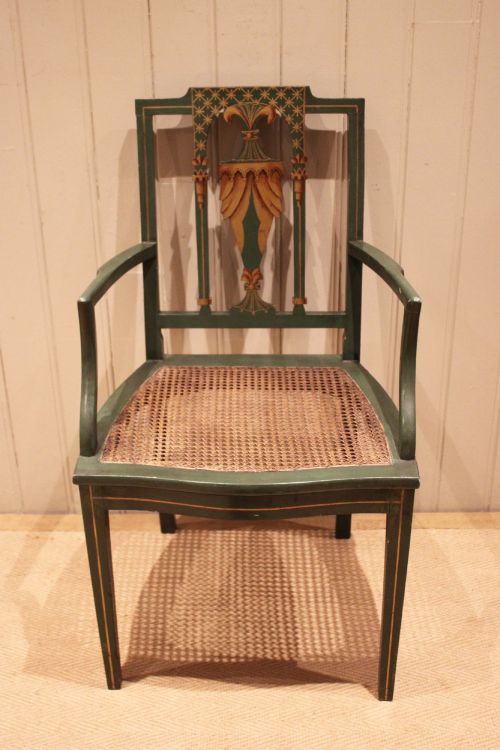
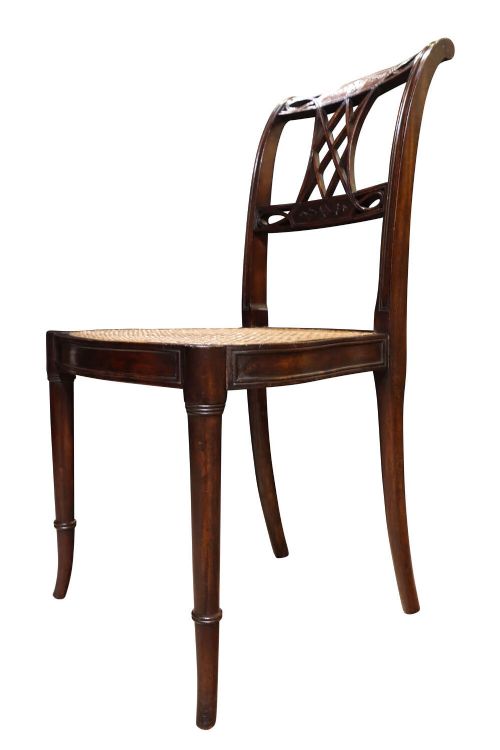
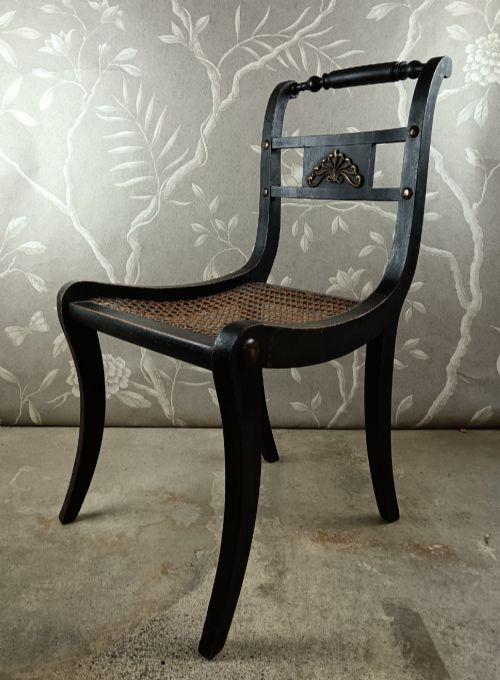
Makers utilised various regional timbers to construct these frames, shaping them into specific forms such as sabre legs, shield backs, or tub high chairs. The presence of woven seating panels defines the category, whether applied to a simple side chair or a French-inspired bergere.
Materials and construction methods
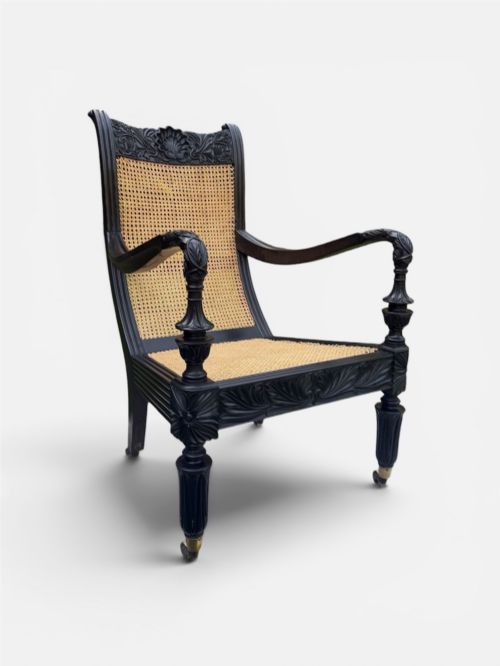
Craftsmen built the structural frames of these seats using hardwoods such as mahogany, oak, walnut, satinwood, and ebony, occasionally applying paint, gilt, or simulated rosewood finishes. These timbers were carved, turned, or inlaid to form the legs, rails, and backrests that support the woven inserts.
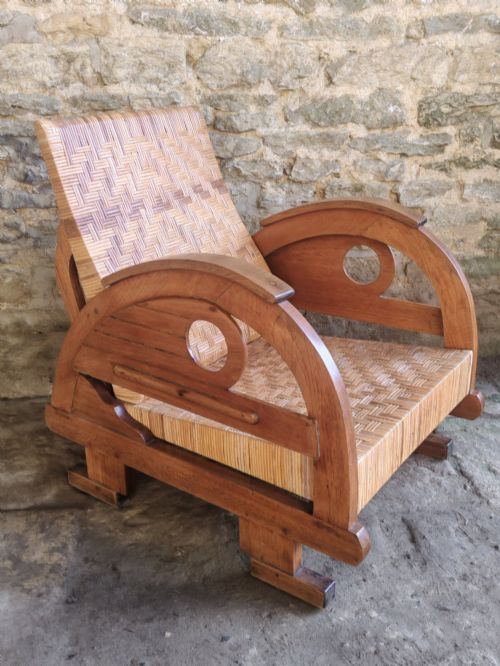
The characteristic seating panels employ natural cane or rattan, threaded through drilled holes or channeled frames to create breathable, flexible surfaces. Additional materials like brass fittings, fabric upholstery, and lacquer occasionally supplement the primary wood and cane construction.
Several examples cater to the smallest household members through miniature tub high chairs and folding campaign seats.
Distinctions in quality and execution
The standard of a piece rests heavily on the precision of the timber carving and the tightness of the frame joints. Superior examples display crisp detailing on elements like shield backs, sabre legs, or applied scrollwork, whereas lesser versions rely on softer lines or simpler turned spindles.
Weaving density and pattern regularity also determine excellence, with finer cane work demonstrating uniform tension and meticulous strand placement across the seat or backrest. The selection of dense, richly figured hardwoods further separates standard utility furniture from finer salon and parlour pieces.
The Cane Seat Wooden Chairs Glossary
- Cane
- A material derived from the peeled outer bark of rattan palms, utilised for flexible woven seat and back panels. It provides a resilient and breathable surface.
- Bergere
- An enclosed upholstered or caned armchair with wooden framing, originating in French design traditions. These seats often feature padded armrests and substantial wooden show-frames.
- Sabre leg
- A curved, outwardly tapering chair leg that mimics the sweeping shape of a cavalry sabre. This form appears frequently in Regency dining and side chairs.
- Carolean
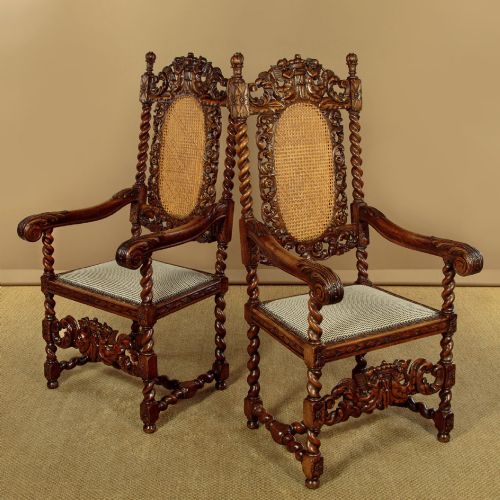
- A style reflecting late seventeenth-century British design, characterised by rich carving, scrolling foliage, and tall cane-backed chairs. Revival versions emerged during later centuries.
- Shield-back
- A chair back shaped in the outline of a heraldic shield, popularised during the eighteenth century. This design often incorporates carved splats and painted decoration.
Cane Seat Wooden Chairs: Frequently Asked Questions
How do I clean a cane seat?
Maintain cane panels by dusting them gently with a soft brush and wiping them occasionally with a damp cloth to restore moisture. Avoid harsh chemical cleaners that can dry out the natural plant fibres.
Keep the timber frames polished with appropriate wax while ensuring excess moisture does not seep into the woven cane holes during cleaning.
Are cane seats comfortable for daily use?
Woven cane provides a surprisingly springy and supportive surface that adapts slightly to the sitter. This makes them well suited for dining rooms and studies where firm support is preferred.
For extended lounging, adding a loose cushion can enhance comfort while protecting the woven panel from direct concentrated wear.
How do I tell Regency chairs apart from Victorian ones?
Regency chairs typically exhibit cleaner classical lines, such as sabre legs, simulated rosewood finishes, and painted or gilded decorations influenced by ancient Greek and Roman forms. They often look lighter and more restrained in profile.
Victorian pieces tend to be heavier and more robust, frequently featuring rich carved walnut or oak, darker finishes, and eclectic revival motifs that lean into heavier upholstery and ornate detailing.
Can broken cane seats be repaired?
Skilled restorers can re-weave damaged cane panels using traditional hand-caning techniques that match the original hole-drilling patterns. This preserves the structural integrity and appearance of the antique frame.
Partial repairs are sometimes possible for small breaks, though a complete re-weaving is often recommended if the surrounding strands have lost their tension.