

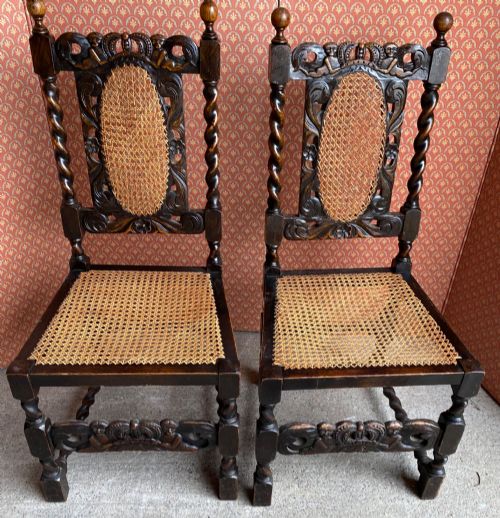
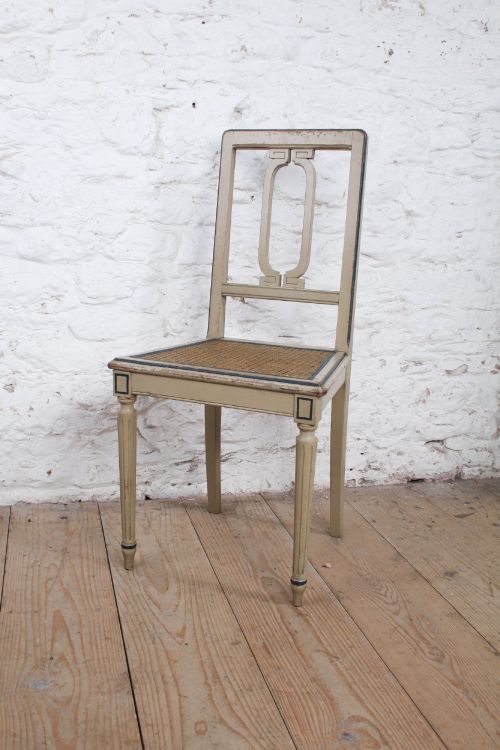
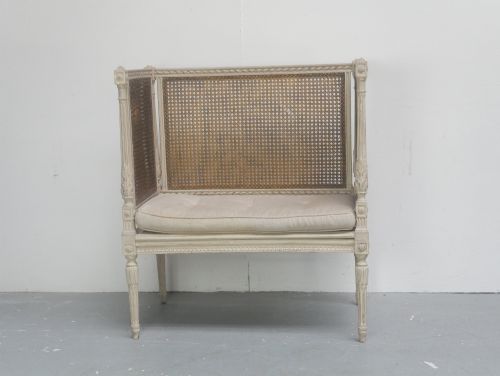
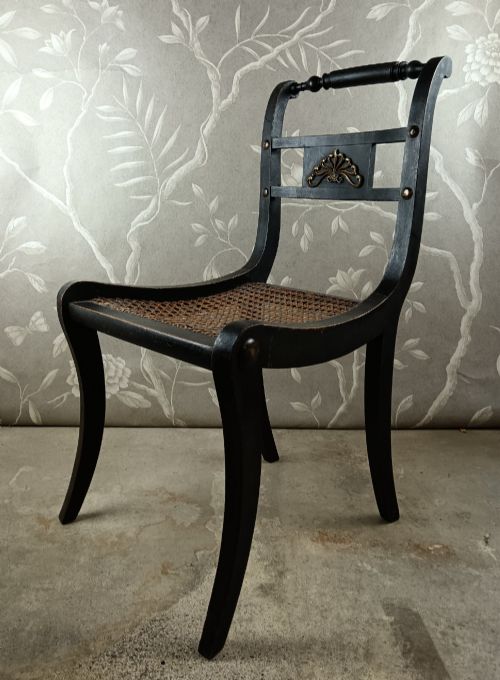
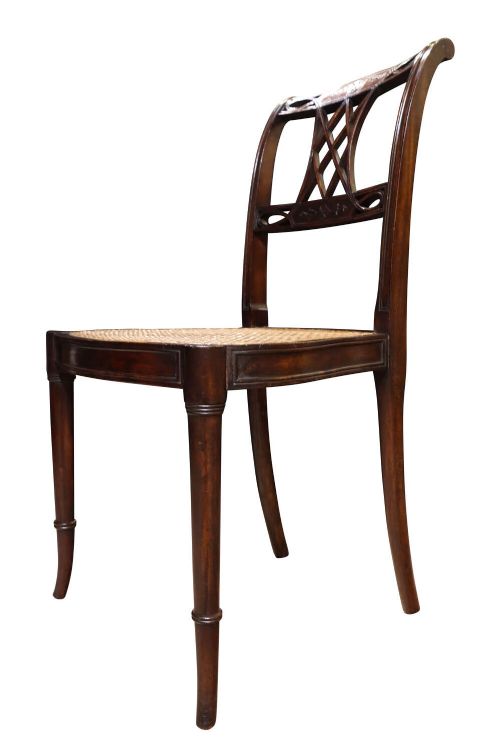
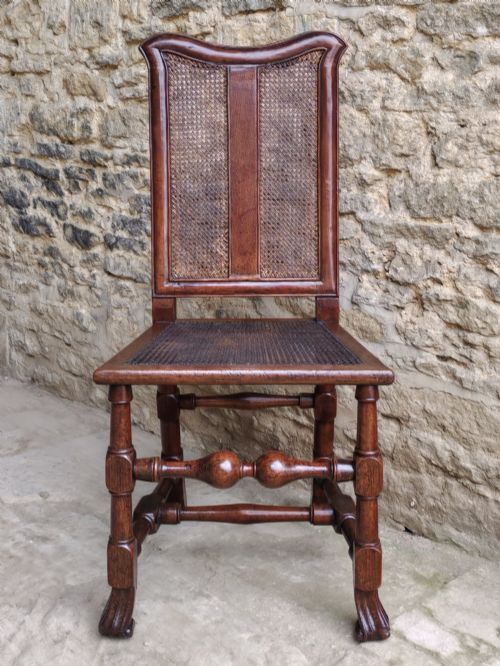
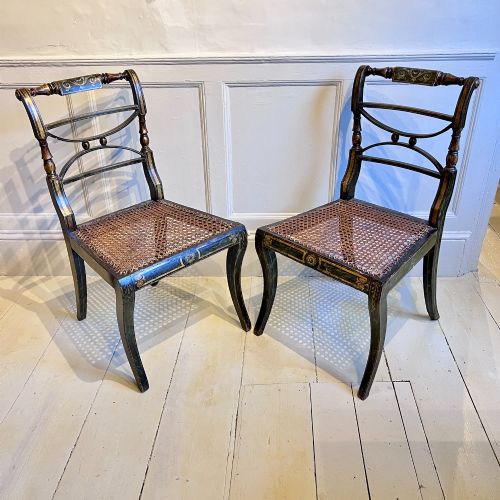
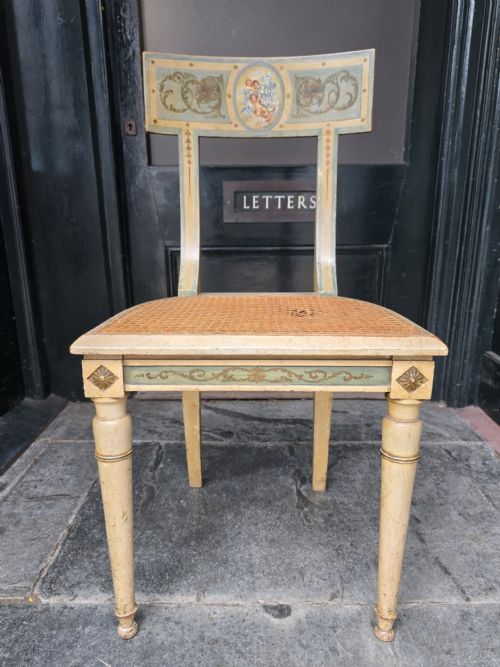
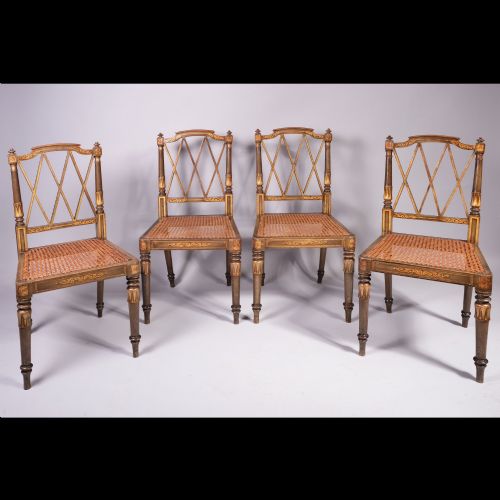
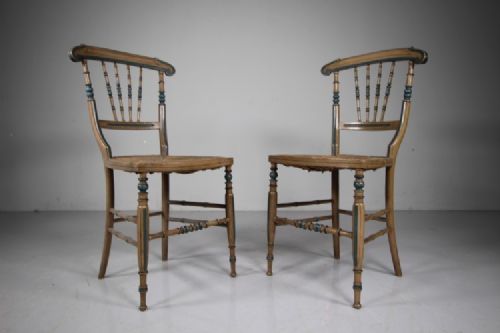

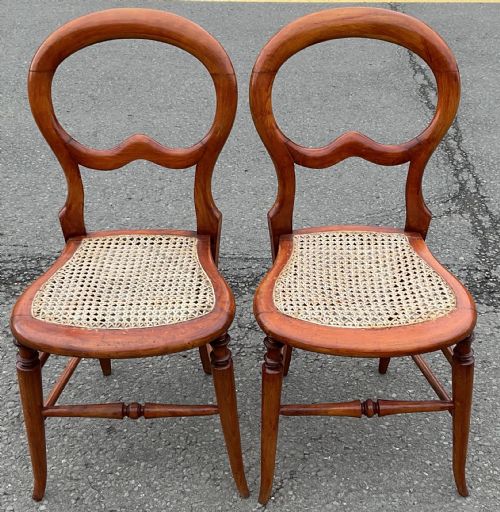


Cane Seat Hall Chairs
These cane seat hall chairs offer a striking mix of sturdy timber frames and woven seating, bringing period character directly into an entryway.
Cane Seat Hall Chairs
Cane seat hall chairs combine solid timber frames with woven seating surfaces, serving as practical and decorative furnishings for hallways and corridors. The selection ranges from early geometric revivals to refined Regency designs and later Victorian interpretations.
Makers utilised various woods including oak, walnut, mahogany, and painted or ebonised surfaces to shape these seats. Different regional workshops adapted popular styles like the Regency sabre leg or Jacobean twist turning to suit domestic entryways.
Construction and Materials
Frames rely on traditional joinery using timbers such as oak, walnut, and mahogany, shaped by hand through turning, carving, and painting. Ebonising and Japanning techniques provided dark, polished finishes that emulated exotic hardwoods.
The characteristic woven panels utilise natural cane or rattan threaded through drilled holes along the seat rails. This technique created a resilient yet flexible surface capable of supporting daily use without excess bulk.
Cane Seat Hall Chairs Retail Price Guide 2026
Typical asking prices for cane seat hall chairs among the pieces listed under this phrase on Sellingantiques today, from the lower quarter to the upper quarter. They describe what is for sale here now, not the wider market.
Some chairs sport bobbin legs that look suspiciously like rows of threaded wooden beads waiting to be spun.
Factors of Quality
Superior examples display crisp hand-carving and precise turning on the legs and back supports, whereas simpler pieces show softer detailing. The choice of dense timbers like walnut or finely grained mahogany elevates the overall presence.
The tightness and regularity of the cane weave indicate the standard of craftsmanship, alongside the survival of original painted or gilded decoration. High-quality seating retains stable joinery and balanced proportions without clumsy repairs.
Waring & Gillow·Gillows
The Cane Seat Hall Chairs Glossary
- Cane
- A material derived from the peeled outer bark of rattan palms, woven into decorative mesh patterns for seats and panels. It provides a flexible yet durable surface.
- Regency
- A British design period spanning the early 19th century, characterised by classical Greco-Roman influences, sabre legs, and ebonised or painted finishes. Pieces from this era often feature clean lines.
- Jacobean Revival
- A 19th-century style looking back to the 17th century, featuring sturdy oak construction, barley twist legs, and rectilinear panel backs. These forms project a heavy, substantial appearance.
- Ebonised
- Wood treated with a chemical stain or black finish to imitate expensive ebony. This technique was widely utilised during the Regency and Victorian periods for dramatic contrast.
- Bergere
- An upholstered or cane-sided armchair with a solid wooden frame. The style often incorporates enclosed cane panels on the back and arms.
Cane Seat Hall Chairs: Frequently Asked Questions
How do I care for cane seats?
Keep cane seating away from direct heat sources and radiators to prevent the natural fibres from drying out and snapping.
Periodically wiping the weave with a damp sponge helps maintain the moisture and elasticity of the material.
Where should I place a hall chair?
These pieces suit narrow corridors, landings, or entrance spaces where a full-size armchair would obstruct movement.
They function well as standalone decorative items or paired against a wall beneath a mirror.
Are these chairs sturdy enough for daily use?
Most examples are structurally sound, but the woven cane panels require sensible treatment compared to solid wood.
Checking the stability of the frame and the tension of the weave ensures safe everyday seating.