



Cane Library Armchairs
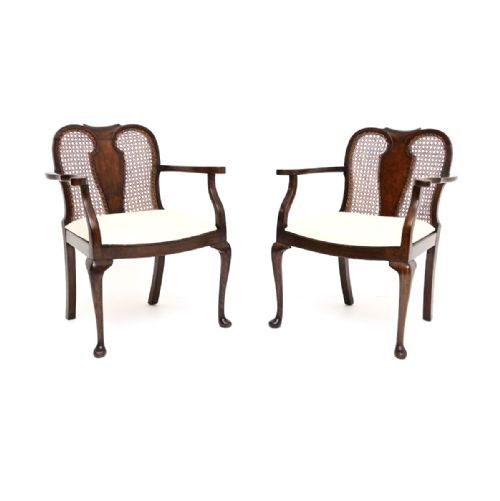
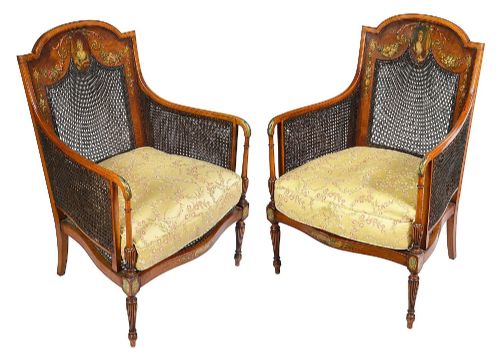
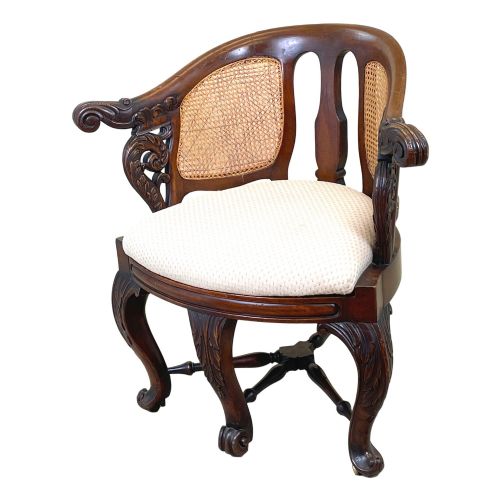
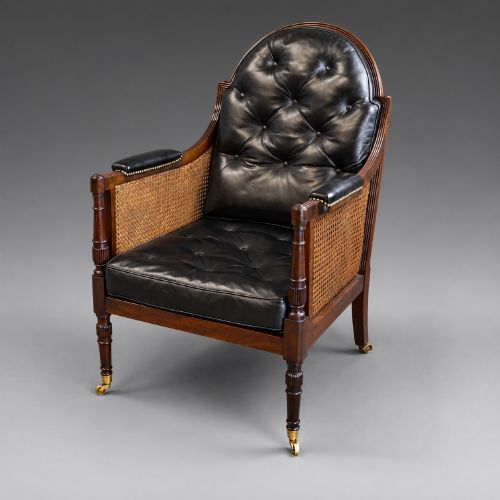
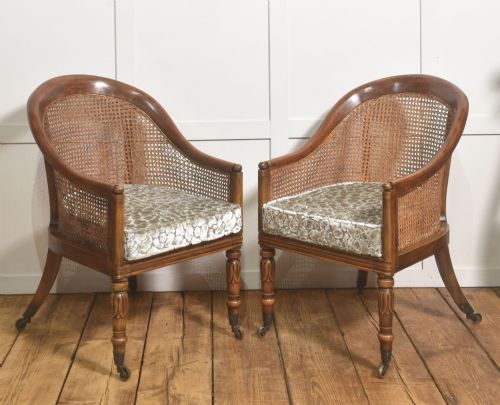
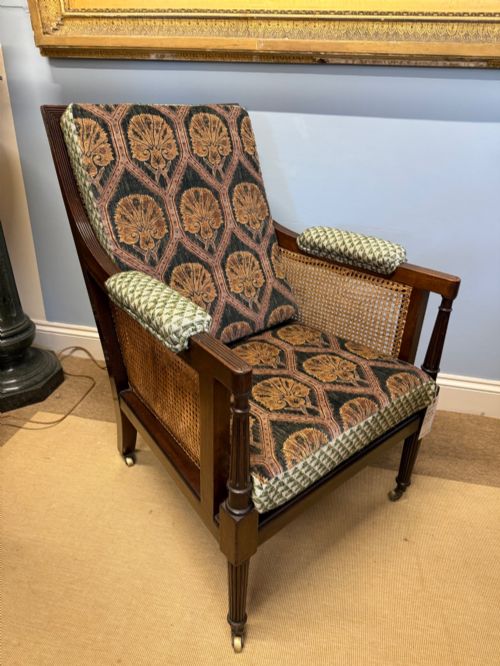
Cane library armchairs offer deep seating and woven panels, bringing comfortable reading height and traditional proportions into a study.
Cane Library Armchairs
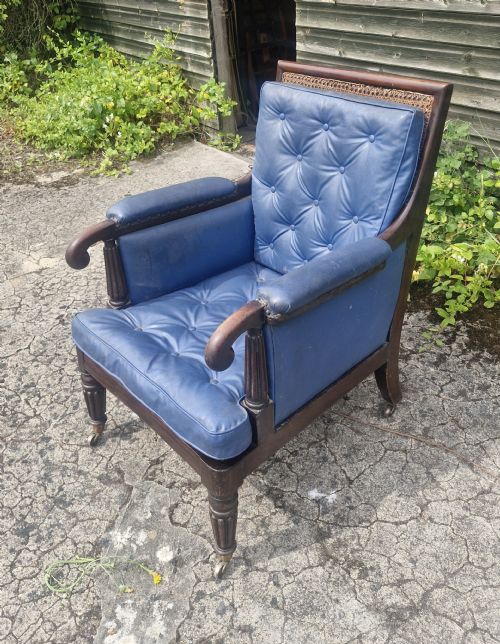
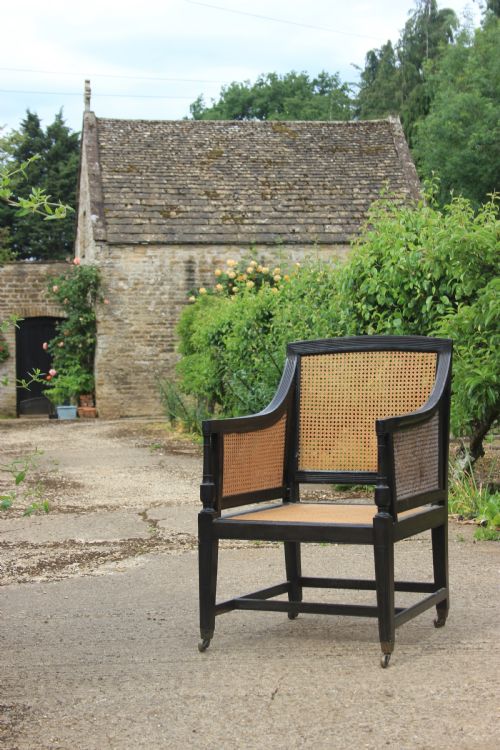
Cane library armchairs are traditional reading seats defined by woven panels and sturdy timber frames designed for studies and libraries. The versions most commonly met on this page date from the Regency and Victorian periods, alongside later Edwardian and twentieth-century revivals.
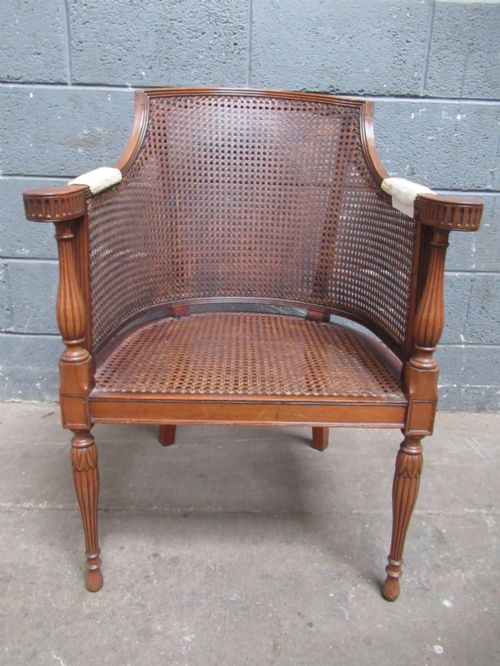
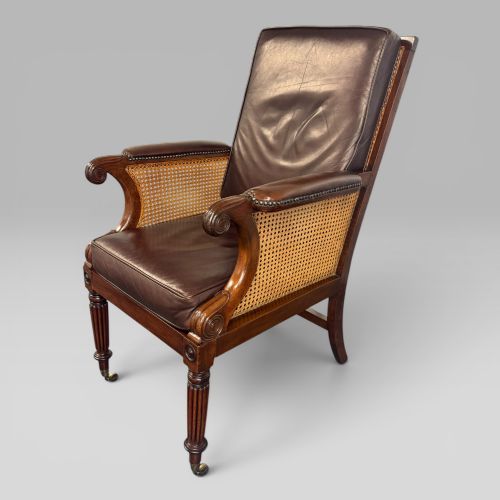
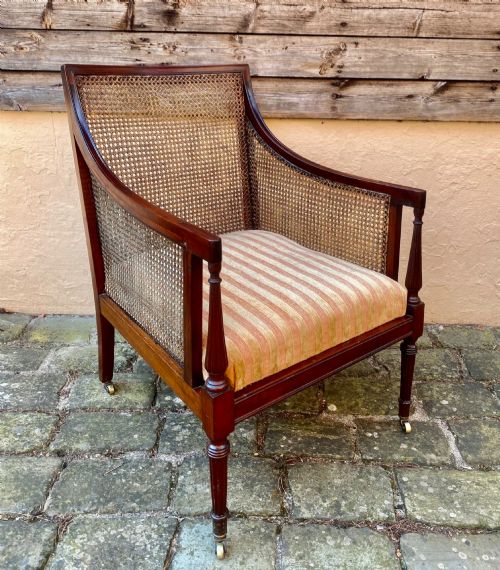
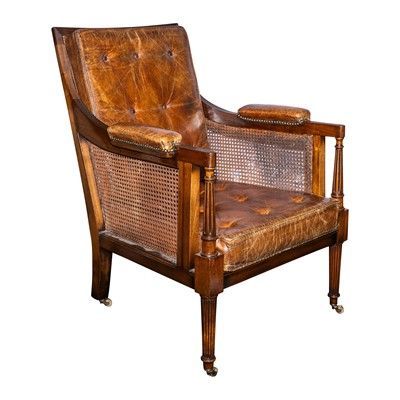
These armchairs typically present low profiles and generous proportions built to accommodate loose cushions in leather or fabric. Many examples adopt tub shapes or enclosed bergere forms that wrap around the sitter for added support.
Materials and construction methods
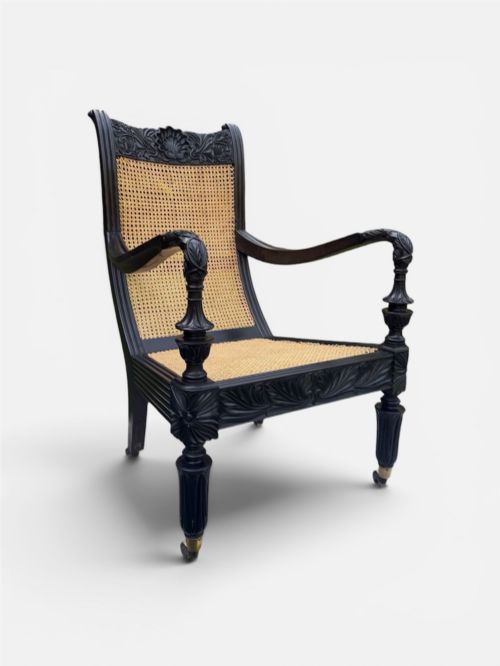
Cabinetmakers constructed the supportive frames using dense timbers like mahogany, rosewood, and ebony, shaped with turned legs or sweeping arm supports. Joinery relied on traditional mortise and tenon techniques to withstand the daily weight placed upon the seat.
The characteristic caning involves meticulous hand-weaving of rattan cane through drilled holes along the frame channels. This flexible mesh provides resilient support while allowing air to circulate around the sitter.
Cane Library Armchairs Retail Price Guide 2026
Typical asking prices for cane library armchairs among the pieces listed under this phrase on Sellingantiques today, from the lower quarter to the upper quarter. They describe what is for sale here now, not the wider market.
Judging quality and execution
The refinement of the carved details and the tightness of the cane work separate standard seating from exceptional examples. Well-drawn frames show balanced proportions, harmonious turning on the legs, and crisp mouldings along the arm terminals.
The preservation of the original timber patina and the uniformity of the woven mesh indicate superior craftsmanship. Pieces retaining integrated elements like folding steps or brass castors demonstrate thoughtful design.
Gillows
The Cane Library Armchairs Glossary
- Bergere
- An enclosed upholstered armchair with a wooden frame and woven cane back and sides. This French-inspired form became a staple of English libraries during the Regency period.
- Cane
- Woven material split from the outer bark of rattan palms. It provides a durable, breathable surface for seat panels and backrests.
- Tub chair
- An armchair featuring a rounded, continuous back and armrest shaped like a half-barrel. These low-slung seats often incorporate caned panels.
- Regency style
- A design movement spanning the early nineteenth century defined by classical restraint and Greek revival motifs. Furniture from this era often utilises dark mahogany and brass accents.
- Sheraton Revival
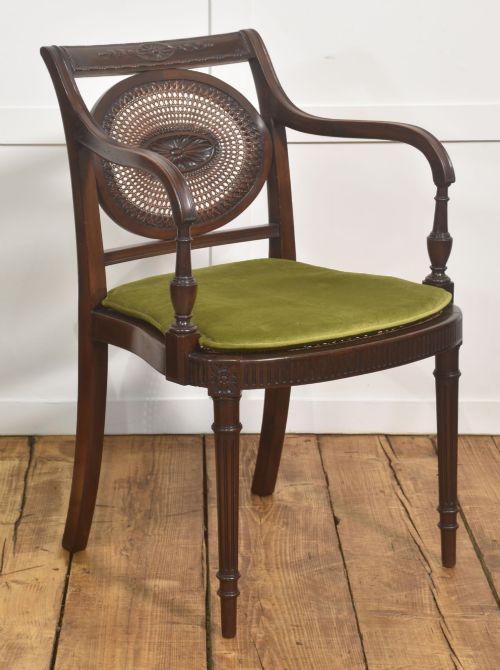
- A late nineteenth and early twentieth century design current that reinterpreted eighteenth-century classical lightness. These pieces frequently feature delicate mahogany frames and subtle inlay.
Cane Library Armchairs: Frequently Asked Questions
What is a bergere chair?
A bergere chair is a French-style enclosed armchair characterised by a wooden frame with woven cane panels on the back and sides. These seats typically feature low profiles designed for relaxed reading.
Unlike standard upholstered chairs, the exposed cane allows for lighter visual weight while maintaining structural strength.
How do I care for cane furniture?
Cane requires moderate humidity to prevent the rattan material from drying out and becoming brittle. Regular dusting with a soft brush keeps the woven mesh clear of debris.
Avoid placing these chairs near direct heat sources or in harsh sunlight. Occasional damp wiping helps maintain the flexibility of the natural fibres.
Are library armchairs comfortable?
Library armchairs were specifically built for long hours of reading and study. They incorporate generous proportions and supportive curved backrests to encourage good posture.
Most surviving examples accommodate custom loose cushions upholstered in leather, velvet, or fabric. This combination provides a firm yet comfortable seat for daily use.
How do I identify a Regency armchair?
Regency armchairs typically feature dark mahogany frames, sabre or turned legs, and classical proportions. Many incorporate caned back panels and armrests inspired by ancient Greek and Roman forms.
Makers from this period often employed subtle brass mounts or ebonised details to enhance the architectural lines of the wood.
What woods were used for library chairs?
Mahogany served as the predominant timber for library seating throughout the nineteenth and early twentieth centuries. Its strength and rich grain made it ideal for carved frames.
Cabinetmakers also utilised rosewood, ebony, and simulated rosewood finishes to create distinct visual variety across different decorative periods.