



Traditional Cane Reading Chair
A traditional cane reading chair offers deep-seated comfort for long hours with a book, uniting sturdy timber frames with open woven panels.
Traditional Cane Reading Chair
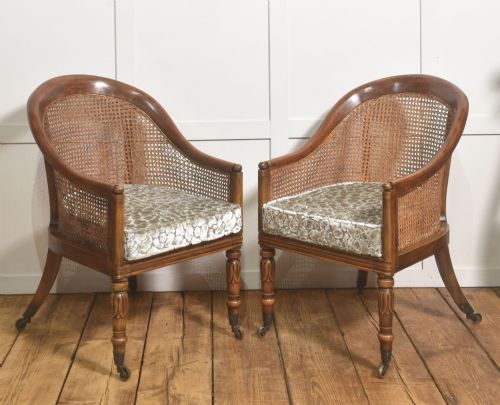
A traditional cane reading chair is a dedicated seat designed for comfort and extended reading, featuring an enveloping form with open sides. These armchairs appear in various historical iterations from the Georgian era through the Regency period and into the early twentieth century.
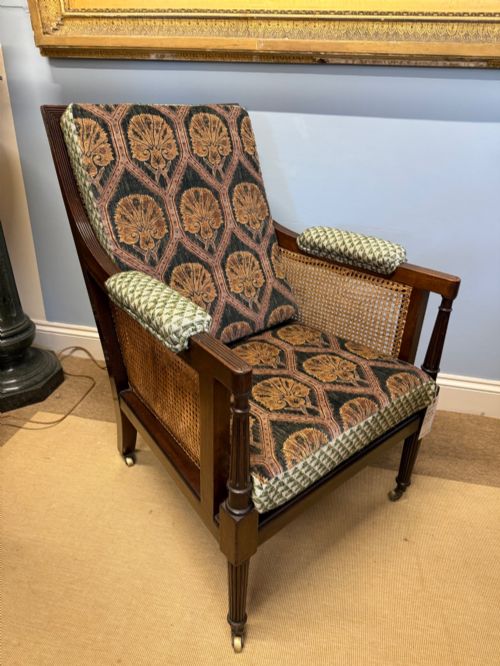
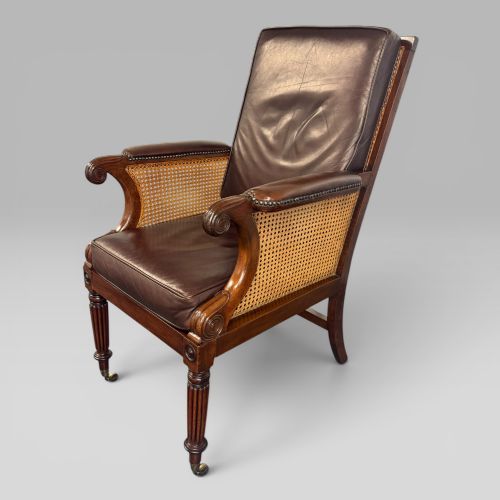
The version most commonly encountered on this page is the mahogany framed bergere armchair, often dating from the nineteenth century. These seats incorporate woven panels within wooden structures, presenting distinct styles from Regency elegance to Edwardian simplicity and Art Deco lines.
How they were made
Cabinet makers built these chairs using solid timber frames, predominantly selecting mahogany alongside some examples fashioned from oak. The structural integrity relied on traditional joinery methods to support the weight and movement of a seated reader.
Caning was meticulously woven by hand into the wooden channels of the frame, creating a resilient and flexible support for the back and sides. Many designs were completed with brass accents and upholstered seat cushions covered in fabric, leather, or velvet.
Traditional Cane Reading Chair Retail Price Guide 2026
Typical asking prices for traditional cane reading chair among the pieces listed under this phrase on Sellingantiques today, from the lower quarter to the upper quarter. They describe what is for sale here now, not the wider market.
Some nineteenth-century readers clearly requested extra lumbar support, resulting in sturdy library chairs built to endure marathon reading sessions.
What varies in quality
The standard of a traditional cane reading chair depends heavily on the crispness of the timber carving and the precision of the frame construction. Finer examples display harmonious proportions and careful selection of timber grain, particularly in mahogany or oak.
The intricacy and preservation of the woven caning separate standard utility pieces from finer library seating. Quality is also reflected in the integrity of the original framing, where firm joints and clean lines demonstrate superior craftsmanship.
The Traditional Cane Reading Chair Glossary
- Bergere
- A type of enclosed upholstered armchair with a wooden frame and caned back and sides. This French-inspired form became a staple of British library and reading room seating.
- Caning
- The practice of weaving rattan or split cane plants into an open patterned mesh. This technique provides flexible and breathable support for chair backs and panels.
- Tub chair
- An armchair characterised by a continuous curved back and arms that form a single semi-circular enclosure. It offers an embracing posture suited to prolonged sitting.
- Library chair
- A heavy, durable armchair designed specifically for reading spaces and study rooms. These pieces often prioritise ergonomic comfort and sturdy wooden construction.
- Regency style
- A design aesthetic reflecting the neoclassical tastes of the early nineteenth century. It frequently incorporates graceful curves, dark timbers, and classical proportions.
Traditional Cane Reading Chair: Frequently Asked Questions
What is a traditional cane reading chair?
A traditional cane reading chair is a comfortable armchair featuring a timber frame with woven cane panels on the back and sides. These seats were designed to provide ergonomic support during extended periods of reading.
They appear across multiple historical periods, ranging from Georgian and Regency eras to Edwardian and Art Deco interpretations.
How do I identify a bergere chair?
A bergere chair is recognised by its enclosed upholstered shape combined with woven cane panels set into a wooden frame. The arms and back usually flow together in a continuous, curved line.
Most examples seen here are constructed from mahogany or oak, often paired with loose seat cushions.
Where were these chairs used?
These chairs were primarily placed in libraries, studies, and drawing rooms where residents spent hours reading or writing. Their open cane panels allowed for lighter furniture designs that remained structurally strong.
Today, they function well as accent seating in living rooms and reading corners.
How do I care for cane furniture?
Cane panels require gentle dusting and occasional light moisture to prevent the natural plant fibres from becoming brittle. Keeping the chairs away from direct heat sources helps preserve the elasticity of the weave.
The solid mahogany or oak frames benefit from standard wood care using appropriate waxes or polishes.
What woods were used for these chairs?
The primary timber used in these traditional reading chairs is mahogany, appearing across Regency, Victorian, and later revival pieces. Oak is also utilised, particularly in specific twentieth-century iterations.
These durable hardwoods provided the necessary strength to support both the wooden frames and the tension of the woven cane.