

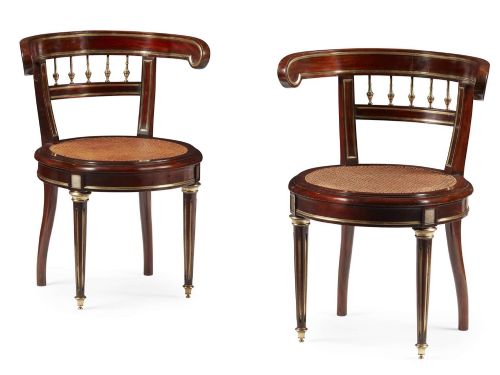
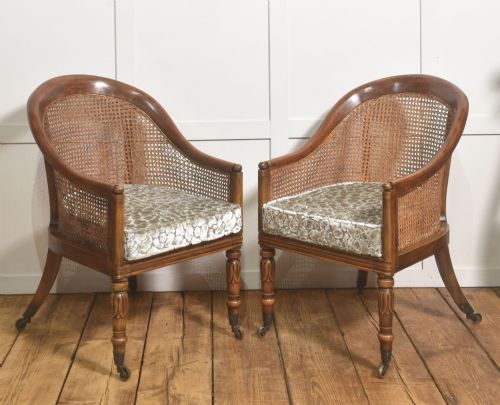
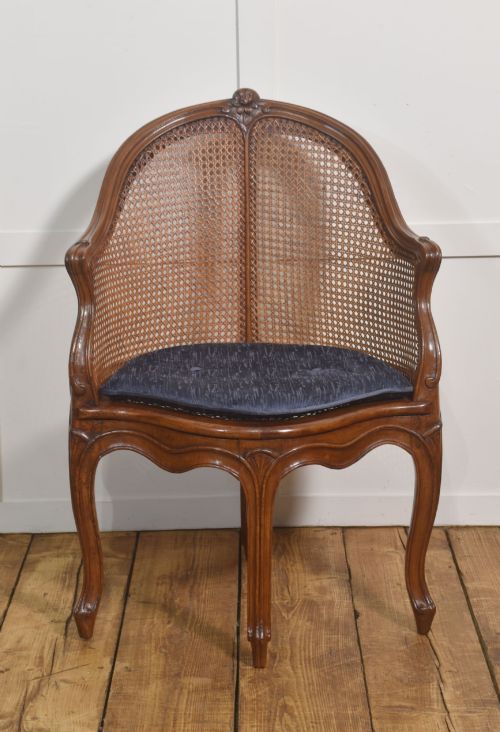

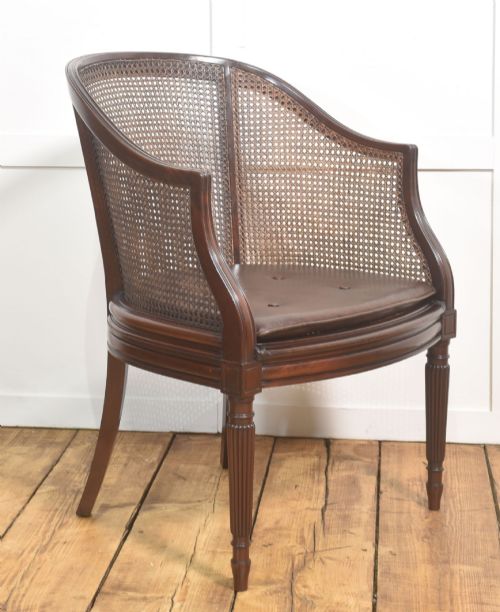
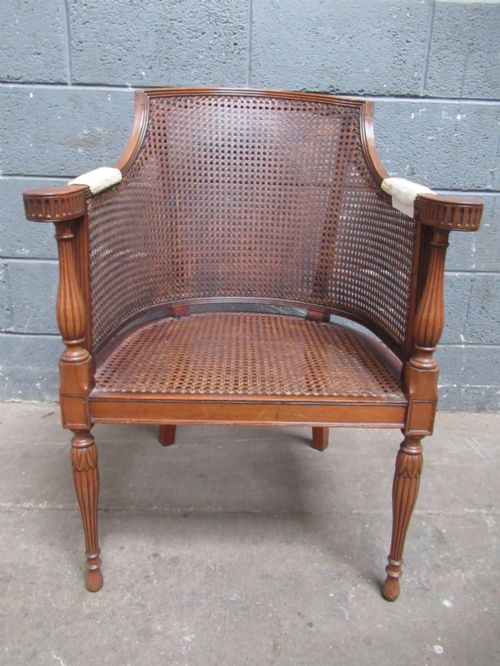

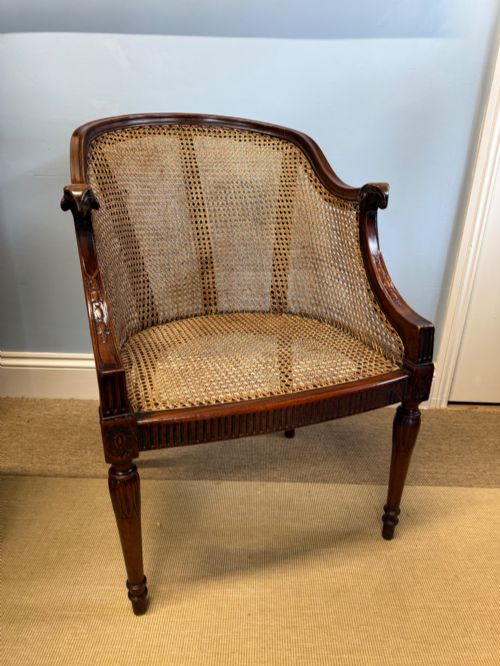


Brown Cane Tub Armchair
These brown cane tub armchairs bring rich wood and woven seating together with curved comfort.
Brown Cane Tub Armchair
A brown cane tub armchair combines a rounded enclosing back with woven panels and timber frames, creating a supportive seat for a library or study. When searching for a brown cane tub armchair, buyers encounter various iterations spanning the nineteenth and early twentieth centuries, including Edwardian pieces and revival styles.
How they were made
Frames rely on solid timbers such as mahogany, walnut, and oak, shaped into curved tub profiles to support the occupant. Joinery methods secure the circular backrests and arms.
Cane and rattan cane are hand-woven into the wooden framework of the back and sides to create flexible, breathable panels. Brass details and leather or fabric additions complete the construction.
Brown Cane Tub Armchair Retail Price Guide 2026
Typical asking prices for brown cane tub armchair among the pieces listed under this phrase on Sellingantiques today, from the lower quarter to the upper quarter. They describe what is for sale here now, not the wider market.
Even chairs intended for quiet reading rooms occasionally bear the marks of hurried nineteenth-century apprentices.
What varies in quality
The sophistication of the timber carving and the tightness of the cane weaving separate standard examples from finer works. Attributions to documented makers like Gillows or Dryad of Leicester elevate the standing of a piece.
The choice of primary wood, whether rich mahogany or figured walnut, alongside the preservation of the woven panels, dictates the overall character of the chair.
Gillows·Dryad of Leicester
The Brown Cane Tub Armchair Glossary
- Tub chair
- A seating form with a continuous curved back and arms that form a deep, enclosing shape. This design offers a compact and supportive sit.
- Bergère
- An enclosed upholstered armchair with wooden framing and cane sides or back. It frequently incorporates a loose seat cushion.
- Cane
- Woven material strips derived from the outer portion of rattan palms. It provides a durable and flexible screen for chair backs.
- Regency style
- A British design movement drawing inspiration from classical antiquity and French empire aesthetics. It uses dark timbers and restrained ornamentation.
- Edwardian
- The period spanning the reign of King Edward VII, noted for lighter furniture forms and revivals of earlier styles. Pieces often blend mahogany with canework.
Brown Cane Tub Armchair: Frequently Asked Questions
How do I care for cane furniture?
Cane panels benefit from occasional gentle dusting and should be kept away from direct heat sources to prevent drying and snapping. Maintaining moderate humidity helps preserve the natural flexibility of the rattan.
Applying a damp cloth lightly to the woven surface keeps the material clean without soaking the wood frame.
Are these chairs comfortable?
The curved wooden backrest provides solid support around the body, while woven cane offers a yielding, breathable surface. Many examples include a fitted cushion for added softness.
Their ergonomic rounded shape makes them well-suited for reading or relaxing over extended periods.
How do I identify Regency pieces?
Regency items date from the early nineteenth century and typically employ dense mahogany with classical restraint in their lines. Details may include sweeping curves and refined joinery.
Later revival pieces often emulate these distinct proportions without dating to the original period.