



Camphor Wood Military Box
A camphor wood military box offers sturdy portable storage shaped by nineteenth-century travel and colonial service.
Camphor Wood Military Box
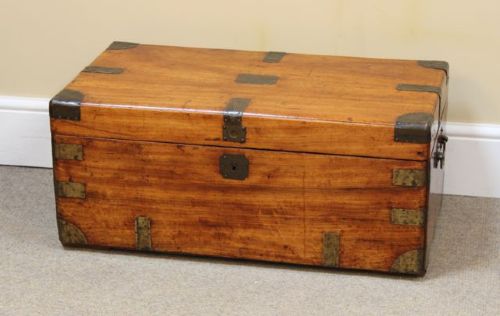
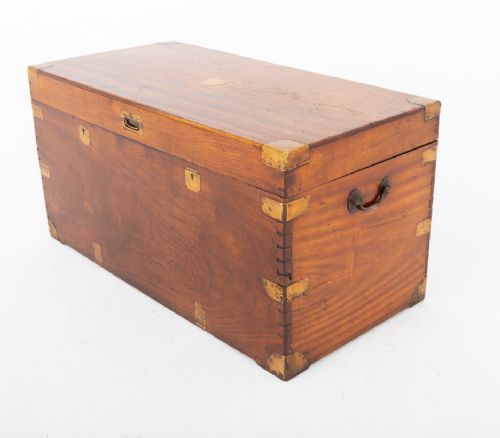
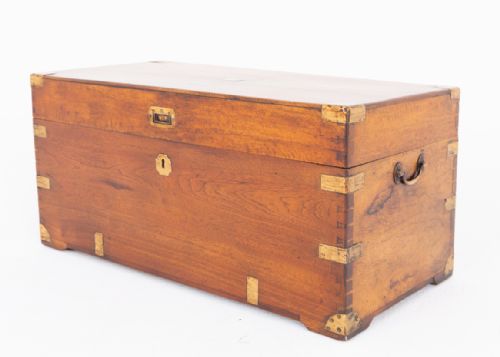
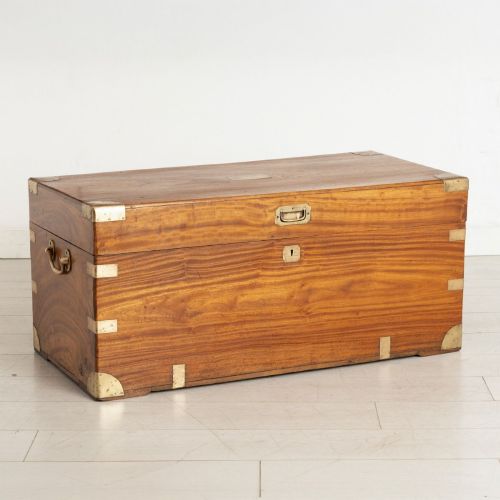
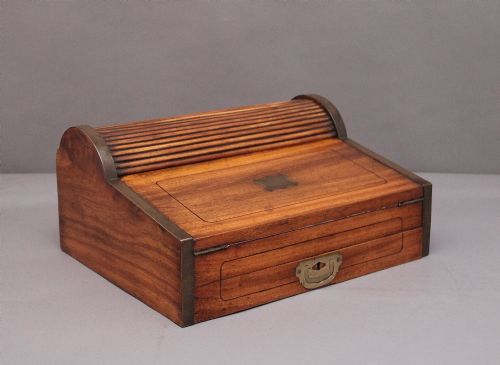
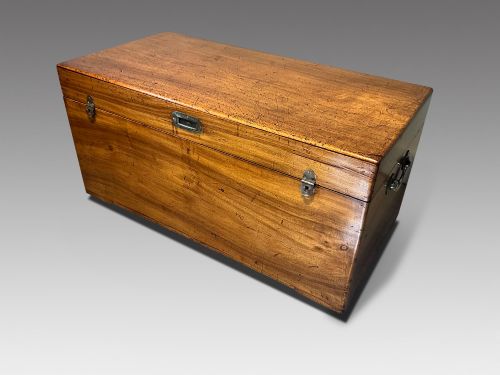
A camphor wood military box serves as a portable container used by officers and travellers during the nineteenth century. These pieces encompass large campaign trunks, blanket boxes, storage chests, and smaller writing slopes or document boxes.
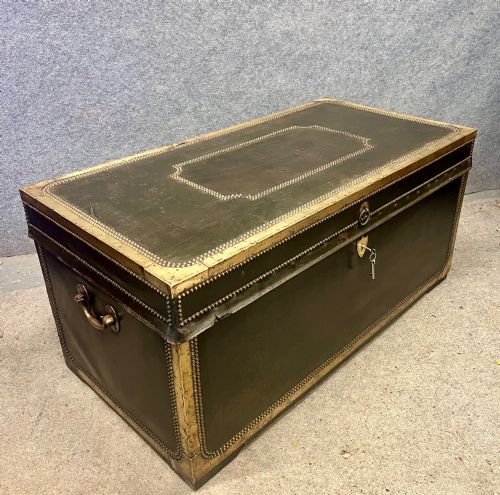
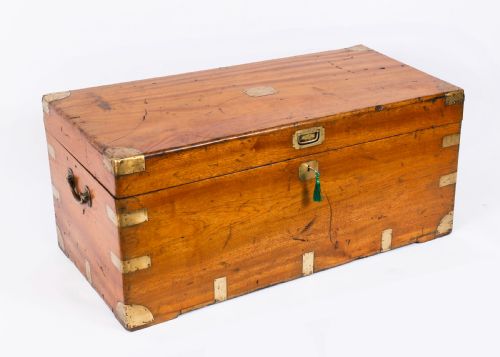
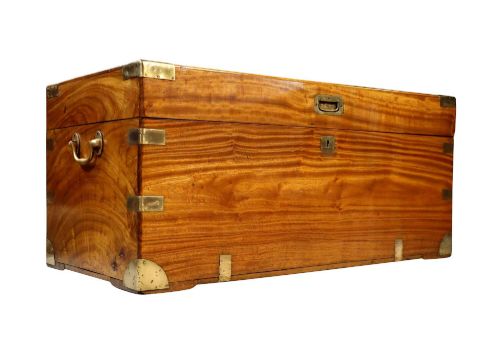
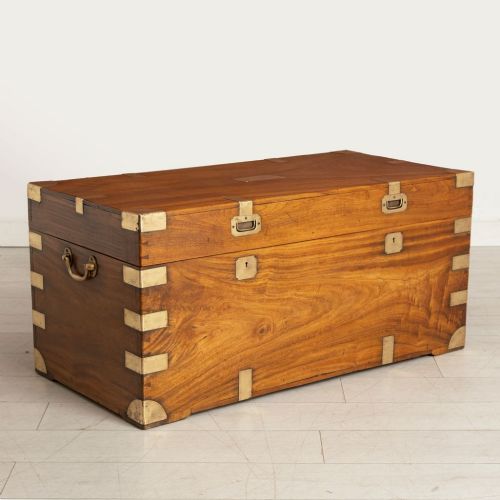
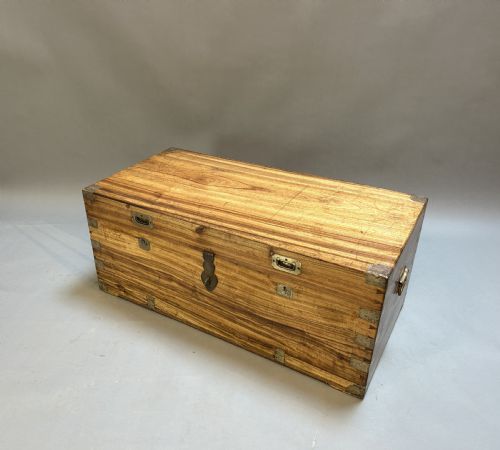
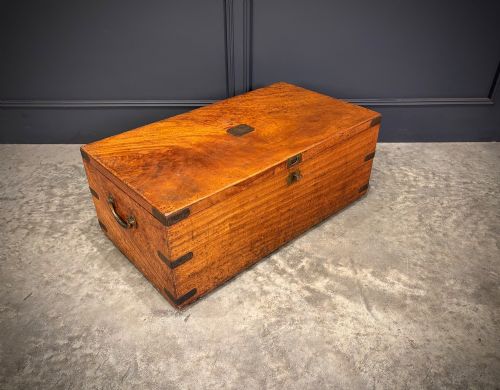
The version most commonly met on this page is the nineteenth-century campaign trunk, typically fitted with brass hardware to protect the corners and edges during transit. China Trade and Victorian examples appear frequently across the selection.
Makers constructed these objects for mobility, often incorporating recessed carrying handles and solid timber construction to withstand harsh climates and long voyages.
How they were made
Carpenters utilised aromatic camphor wood for its natural insect-repellent properties, protecting uniforms and documents from pests in humid environments. They often selected solid boards with prominent grain patterns for the main body of the trunk.
Metalwork played a structural role, with brass corners, straps, and corner brackets fastened securely to reinforce the box against heavy handling. Iron and leather elements also appear on specific travel pieces and writing boxes.
Joinery had to accommodate the natural movement of solid timber subjected to varied climates, relying on robust construction methods suited to military life.
Listings feature nineteenth-century camphor wood combined with brass, iron, and leather across campaign trunks and writing slopes.
What varies in quality
The integrity of the original brass hardware and fittings distinguishes superior examples from heavily altered pieces. Retaining original hinges, carrying handles, and locks significantly alters the character of a chest.
Timber selection and grain presentation set individual trunks apart, as workshops chose boards for visual depth and consistency. The condition of the internal fittings, such as candleboxes or writing slope compartments, also influences the standard of the piece.
The Camphor Wood Military Box Glossary
- Campaign trunk
- A robust portable chest designed for military officers on active service, featuring protective brass corners and recessed handles.
- China Trade
- Goods manufactured in China during the nineteenth century specifically for export to Western markets, often utilising local camphor wood.
- Writing slope
- A portable slant-topped box that opens to reveal a slanted writing surface, inkwells, and storage compartments for stationery.
- Candlebox
- A small internal compartment built inside a chest, originally intended to store tallow candles securely during travel.
- Brass bound
- A method of reinforcing wooden box edges and corners with metal strips and brackets to withstand rough transit.
Camphor Wood Military Box: Frequently Asked Questions
What are camphor wood military boxes?
These pieces are portable wooden containers built during the nineteenth century for officers and travellers on the move. They combine durable timber with metal reinforcement for practical transit.
Craftsmen utilised aromatic wood to protect stored garments and papers from insects during long voyages. The category includes large blanket trunks, chests, and smaller writing slopes.
How were these boxes used?
Officers utilised them to transport uniforms, maps, and personal documents across distant stations and campaign trails. Their sturdy construction allowed them to double as impromptu furniture or desks.
Inside, compartments and small internal boxes kept loose items organised. The solid lids and robust locks kept contents secure in transit.
How do I care for camphor wood?
Keep the wood away from direct heat sources and sudden humidity changes to prevent the solid timber from splitting. Dust gently with a dry cloth to maintain the surface finish.
Avoid applying heavy modern polishes that might seal the wood or dull the natural grain. The characteristic aroma requires no artificial enhancement and persists naturally.
How can I tell the period?
Nineteenth-century pieces show construction methods, brass casting styles, and locking mechanisms typical of the Victorian era and Regency period. China Trade pieces often reflect specific regional joinery.
Examine the screws, hinges, and interior layout for clues to the decade of manufacture. Unaltered examples retain clear indicators of their 1850 to 1900 origins.